Food & shopping decisions
Is a bigger bag of dog food better value?
Compare the same food by unit price, cash needed today, expected supply and the space you have to store it.
THE DIRECT ANSWER
Not automatically. Check the price per kilogram of the same recipe, the total you would pay, how many days the bag would cover at your current use, and whether your storage setup follows the food’s instructions. A lower unit price is useful information; choosing a bag also depends on the purchase fitting your budget and routine.
Sources: NIST: Unit Pricing Guide (2025) · FDA: storing pet food and treats
THREE QUESTIONS BEFORE YOU CHOOSE
Start with the part you still need to check.
What does it cost?
Compare the same food per kg, then check the total you would pay today.
Compare package pricesHow long will you use it?
Use the daily amount you already feed. Work out supply without changing the portion.
Calculate days of supplyWhere will the bag fit?
Check the original bag, opening and lid clearance. Keep your current setup if it works.
Check storage fitUse these checks together. A low unit price alone does not choose the bag for you. Keep a preparation checklist ↓
Compare the same food on the same price basis
Start with two bag sizes of the exact food you already use: check the recipe and product variant as well as the brand. NIST’s unit-pricing guidance explains why a common unit makes different package sizes easier to compare. For these bags, divide each price by its net food weight in kilograms. Comparing a price per pound with a price per kilogram directly would give the wrong impression.
Use one currency and a consistent total for each option. Our practical approach is to include the delivery charges and taxes that apply to that purchase, then subtract only discounts you can actually use. Keep a one-time offer separate from an ongoing price. If delivery covers several unrelated items, choose a clear, consistent basis rather than assigning the whole order’s charge to just one bag.
Sources: NIST: Unit Pricing Guide (2025)
FICTIONAL EXAMPLE · THE SAME FOOD
Less per kg. More to pay today.
Both packages are used at an example total of 200 g per day.
Package A 3 kg
USD 8per kg- Pay upfront
- USD 24
- Supply at 200 g/day
- 15 days
Package B 8 kg
USD 7per kg- Pay upfront
- USD 56
- Supply at 200 g/day
- 40 days
B costs 12.5% less per kg, but USD 32 more upfront. The extra days of supply still need a workable storage plan.
These amounts and prices are invented. The daily amount is not a feeding recommendation; 15 and 40 days are supply estimates, not freshness or safe-storage deadlines.
Use your own package prices →A lower unit price can still mean paying more today
In our fictional example, 3 kg costs USD 24 and 8 kg costs USD 56, with no extra charges. Dividing each price by its weight gives USD 8 and USD 7 per kilogram. The larger bag costs less for each kilogram but requires more money at checkout. These are two different questions worth answering before placing the order.
The difference is USD 1 per kilogram: (8 − 7) ÷ 8 × 100 = 12.5% lower unit cost for the 8 kg bag. Its upfront total is USD 32 higher. That does not mean this purchase saves USD 32, and the percentage is not a promise about real shop prices or future offers.
| Comparison | What it answers | What still needs checking |
|---|---|---|
| Unit price | Cost for the same weight of food | The total you need to pay today |
| Upfront total | Cash needed for this purchase | Whether the extra quantity fits your use |
| Supply days | Coverage at your entered daily use | The food’s storage and post-opening instructions |
| Bag and space dimensions | Whether your setup can hold the bag | Access, closure and the storage location |
Check where the original bag will go
FDA recommends keeping pet food in its original packaging and putting the whole bag inside an additional storage container when using one. Keep the product and batch information available, wash and dry the container between bags, and store dry food somewhere cool and dry. FDA specifies a temperature below 80°F, about 27°C.
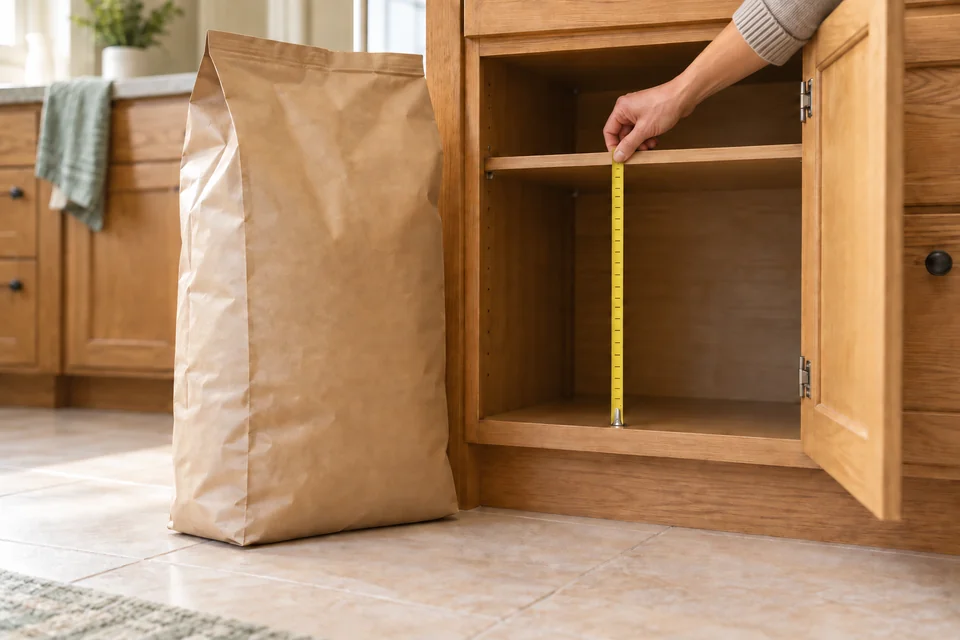
Our practical fit check starts with the space you already have. Can the bag stand or sit there as intended, can you close it as directed, and can you open the cupboard or container lid comfortably? Compare the bag’s dimensions with the container’s opening and interior. A container’s advertised food-weight capacity alone does not settle those questions. Include the cost of any needed container when deciding whether changing bag size is worthwhile.
Sources: FDA: storing pet food and treats
TAKE SOMETHING USEFUL WITH YOU
Check the bag size before you buy
Tick the preparation steps you have done. Save this guide to keep the checklist for your next visit.
0 of 3 preparation steps checked · Not a health or safety score
Saved only on this browser. No account or reminder is created. Clearing browser data removes the saved list.
Estimate supply using your current daily use
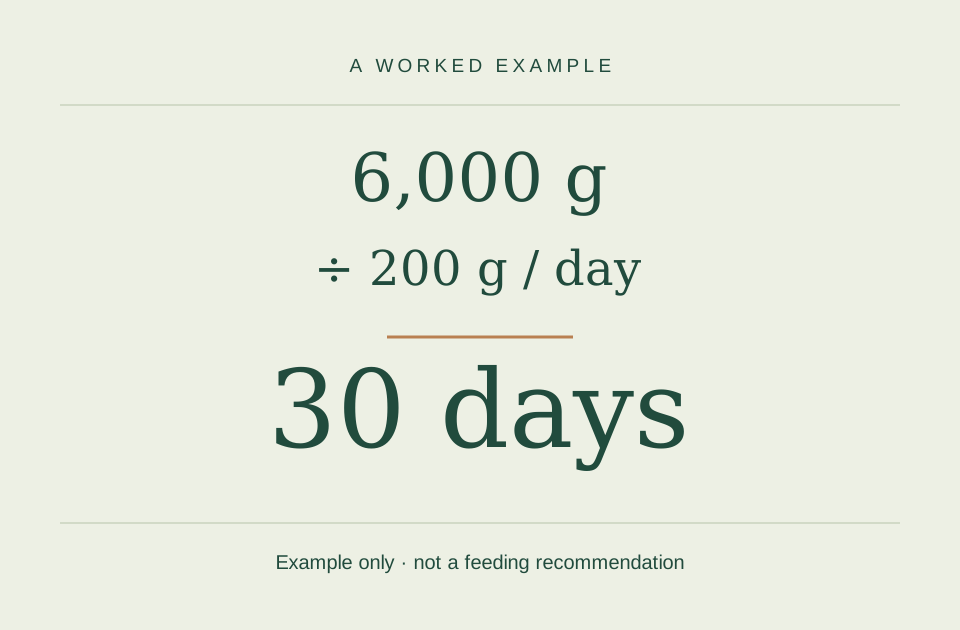
Convert the bag to grams and divide by the total grams currently taken from it each day. At an illustrative 200 g per day, the 3 kg bag covers 3,000 ÷ 200 = 15 days; the 8 kg bag covers 8,000 ÷ 200 = 40 days. The 200 g is invented for this example. It is not a feeding recommendation, and neither result establishes how long opened food stays fresh.
Count all current uses of that bag, including food taken for training or for another pet. The estimate assumes this total stays constant. Read the exact food’s storage and post-opening instructions separately; if they are unclear, ask the company named on the label. A calculated 40-day supply does not override those instructions. Our bag calculator can repeat the arithmetic with your own amounts without choosing a portion or assessing the food.
Choose a size for this refill, then recheck next time
Bring the four answers together: unit price, upfront total, expected supply and storage fit. A bigger bag may be worth considering when its actual unit price is lower, its total fits your budget, and you have checked the food’s instructions against your use and storage. A smaller bag can be a reasonable purchase even when its unit price is higher.
Use the price comparison tool to check two current offers, then the bag calculator to estimate supply. If your present storage works, keep it. If a larger bag creates a specific fit problem, the storage guide can help you compare dimensions and access before spending more.
Recheck when prices, bag weights or your household’s use change. A saved supply estimate or a chosen check-in date can help you return to the question; it does not track the remaining food automatically or create an expiry date.
THE NEXT QUESTIONS
What else might you be wondering?
Is the printed best-by date the same as my supply estimate?
No. The printed date comes from the product’s label; supply days come from dividing a quantity by daily use. One does not calculate or extend the other. Read the label’s wording and the manufacturer’s storage and post-opening instructions, and keep the original bag’s details available.
Sources: FDA: storing pet food and treats
Can I use the same arithmetic for dry cat food?
Yes. Price divided by weight and weight divided by current daily use work for dry cat food too. Compare sizes of the same cat-food recipe. Neither calculation chooses a portion, evaluates a diet or sets a freshness limit.
Can a lower price per kilogram tell me to change recipes?
No. This guide compares package sizes of the same food. A weight-based price comparison does not account for differences in recipes, energy content or individual needs, so it cannot recommend a food change.
LOOK CLOSER AT THE EVIDENCE
Sources & what they establish
Official guidance, research findings and PetCheck’s practical interpretations have different roles. These notes explain how the sources were used.
UNIT-PRICING METHOD
A shared unit makes prices comparable
NIST’s guide supports using a consistent unit of measure to compare package prices and distinguishing the unit price from the retail total.
Limit: It does not establish that a larger pet-food bag is always cheaper or the right purchase for a household.
Sources: NIST: Unit Pricing Guide (2025)
PUBLIC STORAGE GUIDANCE
Packaging and storage need their own check
FDA informs the original-packaging, container-cleaning and storage-location advice. Our dimension and budget checks are practical shopping suggestions.
Limit: This FDA page does not provide a universal time limit for an opened bag of dry food. Follow the specific food’s instructions.
Sources: FDA: storing pet food and treats
PETCHECK WORKED EXAMPLE
Fictional numbers show the tradeoff
The prices, weights and daily use are illustrative. We calculate unit cost, the upfront difference and supply days directly from those numbers.
Limit: No products were tested, no current prices were collected, and the example does not establish nutritional suitability or freshness.
Sources checked 2026-10-04. Examples are fictional and illustrate reasoning, not patient outcomes. This is an editorial source review, not independent veterinary review. How we prepare these guides →
PUT THIS GUIDE TO USE
Check value before choosing a bigger bag.
Compare packages of the same recipe, then put price beside the days of supply and the space you have. A lower unit price is only one part of the decision.
Check price, supply & storageKeep the guide for another visit, too.
ONE QUESTION CAN LEAD TO ANOTHER
A useful next read.
Choose the question that fits what you want to understand next.
 Worked arithmetic example
How long does a bag of dog food last?
Understand what a supply estimate from your current daily use can and cannot tell you.
Read the guide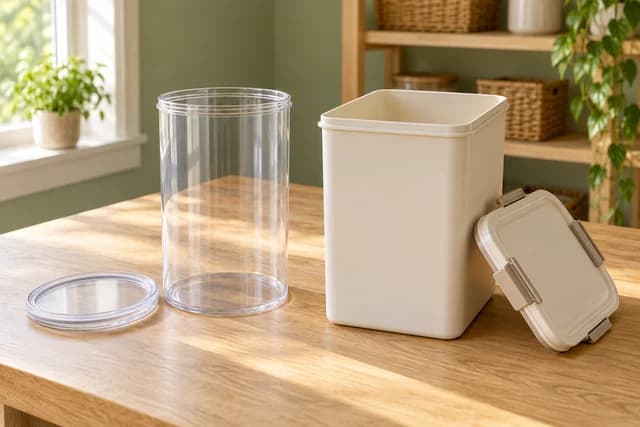 AI-generated editorial scene
Pet food storage containers: compare bag fit & access
Check the actual bag and available space before keeping or changing your storage setup.
Explore the buying guide