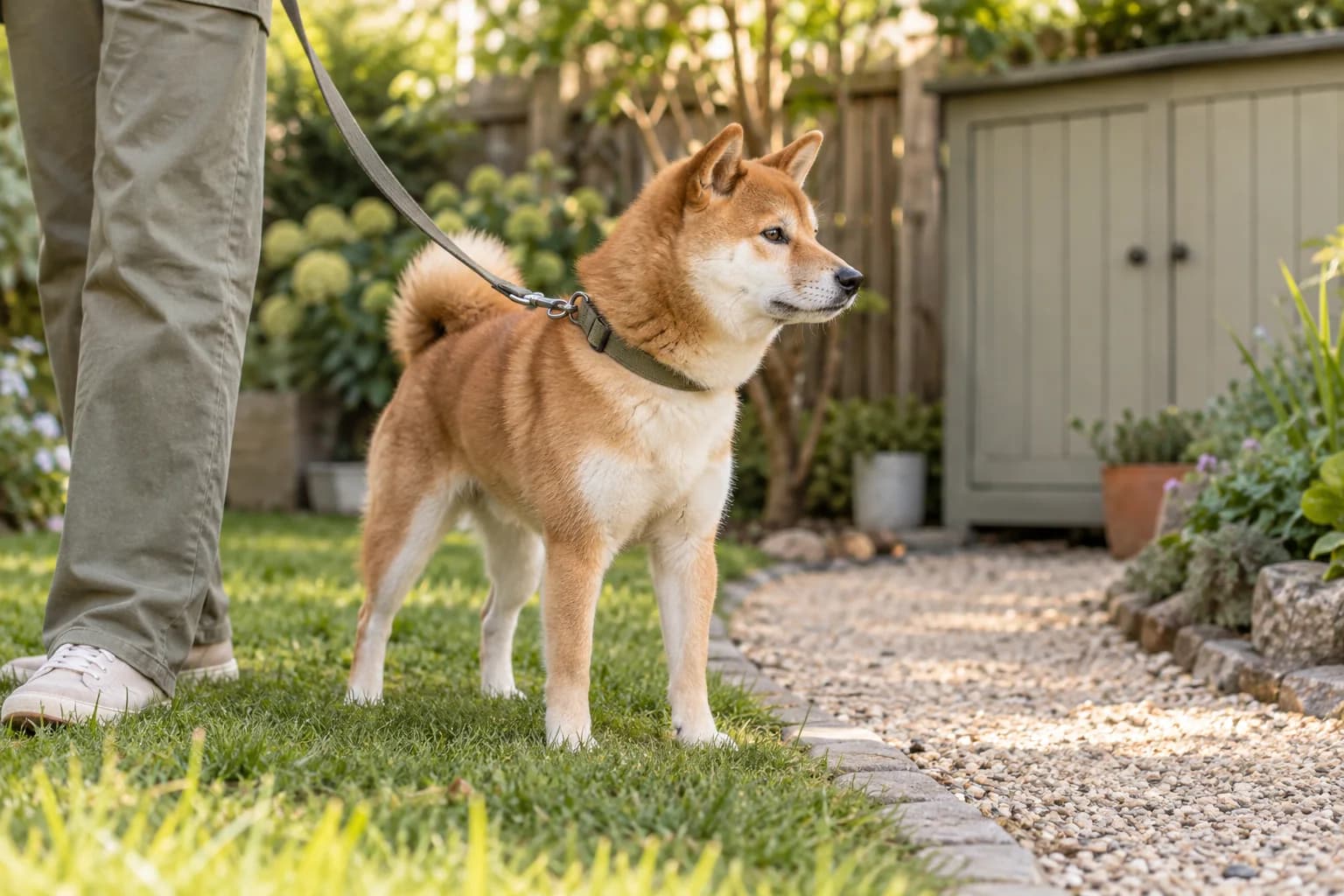
Dotted terms open a short explanation. Stay on the page as you read.
01 / AN OBSERVATION BEFORE AN EXPLANATION
“There is green in it”
can describe different things.
You notice something green after a walk. A search result offers an appealing shortcut: grass, IN PLAIN ENGLISHBileA fluid made by the liver that helps with fat digestion and carries some waste products into the intestine.A green or yellow appearance does not, by itself, explain what happened to bile or the liver.MSD Veterinary Manual Source checked or poison. But those words name possible explanations, not things a stool photograph can prove.
Start with a smaller question. Are there distinct blade-like pieces? Does a wider area look greenish? Or is the color hard to judge in that photograph? Separating these observations is more useful than forcing all of them into the same label.
ORIGINAL REFERENCE DRAWINGS / NO SEVERITY SCALE
Three descriptions. Not three diagnoses.
Separate what is visible before assigning an explanation.
Pieces in the stool
“I can see green, blade-like pieces.”
The description does not identify a plant or explain the dog’s condition.A green-looking area
“Much of the material looks greenish.”
A hue does not tell you which pigment or substance produced it.An uncertain photograph
“The surroundings are green; the color is uncertain.”
Keep uncertainty in the record. Do not edit the image to match a chart.Teaching illustrations, not patient samples, plant identification or a toxicology test. No swatch here means “safe.”
VCA’s puppy guidance notes that yellow/green loose stool may accompany faster movement through the intestine. That is one possible digestive context—not a way to diagnose bile, infection or an organ problem from the shade. Shape, persistence and the dog’s other signs still matter. [1][8]
A history of eating grass is worth mentioning, but it is not proof that the dog was sick beforehand or that grass explains everything afterward. Many dogs eat grass without the commonly assumed illness-and-vomiting sequence. Chemicals used on a lawn and toxic plants are a separate question. [2]
Describe the visible clue.
Keep the explanation open.
For the role of digestion, the Yellow guide follows pigment and water. Here the important distinction is between seeing a color and identifying something the dog may have encountered.
02 / COLOR AND CHEMISTRY ANSWER DIFFERENT QUESTIONS
Two baits can look alike.
Their effects can be different.
Rodent bait is a useful example of why a picture has limits. ASPCA warns that different ingredients may appear in similar-colored, similar-shaped products. Even a familiar brand or an old memory of its packaging is not enough to identify the exact formulation. [3]
PUT THE OBSERVATION IN CONTEXT
Keep appearance and access separate.
A green-looking image and possible access to a substance are different pieces of information.

What you saw
Describe the color or visible pieces without identifying an ingredient from appearance.
What access is known
State what you know about the surroundings and what remains uncertain.
What can be identified
Use the real product name or packaging when seeking advice about possible exposure.
The unmarked prop is not a poison example. Possible exposure needs the action described in the guide, not a color match.
The active ingredient matters because different products act in different ways: some interfere with clotting, others affect the nervous system or calcium balance. A color match cannot choose between those mechanisms, much less choose a treatment. [4]
ONE FICTIONAL EVENT / TWO ACCOUNTS
The color stays the same.
The useful evidence changes.
The owner saw green-looking stool after yard access and found a damaged bait package. Ingestion was not witnessed.
Fictional teaching example, not a poisoning diagnosis or a home-observation plan. A normal-colored stool would not remove this exposure concern.
The fuller account does not say that poisoning has occurred. It says that possible access has been identified, which warrants immediate professional assessment. Equally, a green photograph with no known exposure is not proof that poisoning occurred. Neither “green means poison” nor “not green means safe” is a reliable inference. [3]
Pigment, active ingredient and exposure—three different ideas.
A pigment or dye changes appearance. An active ingredient produces a product’s intended biological effect. Exposure describes contact that may have occurred. A photograph of stool establishes none of these identities on its own. Report what you saw separately from what you suspect; let the clinician interpret the product information. [4]
03 / LOOKING WELL CAN BE AN EARLY SNAPSHOT
Why not wait
until the dog looks ill?
Consider anticoagulant rodenticides, one class rather than all rat poisons. They disrupt vitamin K recycling, which is needed to produce several functional clotting factors. Factors already circulating do not disappear at once; their decline helps explain why obvious bleeding can lag behind an exposure. [5]
ONE TOXIN CLASS / NOT A TIMETABLE
Existing factors can hide a growing problem.
An anticoagulant example: replacing functional clotting factors can be impaired before bleeding becomes obvious.
Functional factors remain.
Clotting proteins that were made earlier do not all vanish at the moment of exposure.
Replacement is affected.
Blocking vitamin K recycling interferes with the production of functional vitamin K–dependent factors.
Looking well is not clearance.
As functioning factors decline, bleeding may become apparent later. Seek advice after possible exposure—not after proof of illness.
Other baits have different mechanisms. This drawing gives no dose, clock, safe interval or treatment choice.
Original conceptual illustration. Dots are not measured protein counts or test results, and panel spacing is not elapsed time. Prompt assessment is needed for suspected ingestion of any bait.
This is a mechanism, not a countdown. The absence of visible bleeding or a normal-looking stool cannot confirm that no harm is developing. Do not use the diagram to decide how long to wait, or assume that all baits follow the same course. The appropriate response depends on the actual substance and circumstances. [5][4]
The practical insight is larger than stool color: some important information arrives before symptoms do. A damaged package or witnessed access may be more actionable than a sharper photograph. Prompt advice is appropriate even when the amount or ingredient remains unknown. [6]
Why this guide does not recommend vomiting, charcoal or an antidote.
The substance, time, animal’s condition and hazards of the intervention matter. Do not induce vomiting or give a home antidote without professional instructions. A product described as “rat poison” is not a diagnosis and does not imply a single treatment. Contact your veterinarian or animal poison service instead of choosing a remedy from a color chart. [7][4]
04 / THE MOST USEFUL PHOTO MAY BE THE LABEL
Make the call easier.
Do not make it later.
Keep the dog away from the possible source. Tell the clinic how the dog is now, what may have been accessible and when. If safely available, the original packaging or product information can help. You do not need every detail before calling. [6]
THE CALL COMES FIRST / DETAILS SUPPORT IT
Bring the product information.
Do not turn the color into an ingredient.
Share what you already know. Missing information should not delay the call.
The dog now
Current signs, approximate weight, age, and when you last saw the dog behaving as usual.
The actual product
The exact package or a clear label photo if safely available. Include active ingredient, concentration and supplier details.
The possible access
What was witnessed, the possible time window and what may be missing. Say “unknown” rather than guessing an amount.
- Product / manufacturer
- Copy the exact wording.
- Active ingredient
- Read from the actual label—not the color.
- Concentration
- Report the printed value and units.
These details support professional identification. They are not a do-it-yourself antidote selector.
Do not handle loose bait, contaminated material or vomit to improve this record. Follow the clinic’s instructions for bringing or photographing anything.
“Green poop after the yard. Probably grass; the dog looks fine.”
A possible explanation is treated as a conclusion. The package and uncertain access are left out.
“I found a damaged bait package after yard access. I did not see ingestion and do not know the amount. The dog is alert now. I am calling and have a photo of the package.”
Observed facts, unknowns and current condition stay separate. This is a prompt call, not permission to monitor at home.
If there is no known exposure concern, still report persistent color changes together with stool form, vomiting, appetite and energy. A grass history does not erase new illness; the clinician can decide what examination or testing is needed. [8]
Keep the observation.
Do not guess the ingredient.
PetCheck can organize an existing stool photo and your observations. It does not identify bait, detect poison or provide emergency clearance. Contact the clinic first when exposure is possible.
Describe an existing stool photoNo photo selected. No check has run. These examples are not saved, sent or prefilled. Do not delay veterinary care to use this tool.SOURCES, SCOPE & LIMITS
A picture explains a concept.
It does not identify a toxin.
The sources support the stated explanations, not PetCheck as a product. This AI-assisted article has not been independently veterinarian-reviewed. Original drawings and fictional accounts are not clinical photographs, product-identification charts, toxicity thresholds or treatment instructions. Animal poison services and contact arrangements vary by location.
- 01VCA Animal HospitalsPuppy poop colors and eco-friendly scooping ↗
Yellow/green loose stool can accompany faster intestinal passage. A puppy-focused description, not a diagnostic rule or a universal safety threshold.
- 02VCA Animal HospitalsWhy do dogs eat grass? ↗
Grass eating does not invariably mean illness. Lawn chemicals and toxic plants are separate exposure concerns; a grass history is not a diagnosis.
- 03ASPCA Poison ControlFact vs. myth: pets and rodenticide ↗
Baits with similar color and form may contain different active ingredients. Packaging and supplier information help identification; suspected ingestion needs immediate professional advice.
- 04MSD Veterinary ManualOverview of rodenticide poisoning in animals ↗
Different rodenticide ingredients affect different body systems. Color, shape and brand are not a sufficient identification method; a clinician must assess unknown exposures.
- 05MSD Veterinary ManualAnticoagulant rodenticide poisoning in animals ↗
Vitamin K recycling and functional clotting-factor production are affected. Existing factors can delay obvious bleeding. This explains urgency after possible exposure, not a safe waiting interval.
- 06ASPCA Poison ControlWhat to do if your pet is poisoned ↗
Prevent further exposure, assess the animal and contact professionals. Packaging, possible amount and timing can assist the call; severe signs need emergency care.
- 07Pet Poison HelplineWhat to do if your pet is poisoned ↗
Immediate professional consultation after suspected exposure. Do not induce vomiting or give home antidotes without veterinary direction; service availability and fees vary.
- 08Cornell University College of Veterinary MedicineDiarrhea ↗
Vomiting, poor appetite, lethargy, persistent diarrhea or blood/tarry stool change the care question. The photograph does not replace a whole-dog assessment.
FOR ANOTHER VISIT
Keep this guide close.
Save it to read again, or copy a link to share.
ONE QUESTION CAN LEAD TO ANOTHER
A useful next read.
Choose the question that fits what you want to understand next.
 AI-generated editorial scene
Why do dogs eat grass?
Explore the separate behavior question when you actually saw your dog eating grass.
Read the guide AI-generated editorial scene
A sudden change
Keep a possible exposure and a visible change distinct when describing the sequence.
Read the guide