HOME ROUTINE · PET LAUNDRY
How should I wash pet bedding and soft toys?
Check covers, inserts and toys separately. Build a wash-and-dry handoff that follows the care label and does not confuse a clean smell with disinfection.
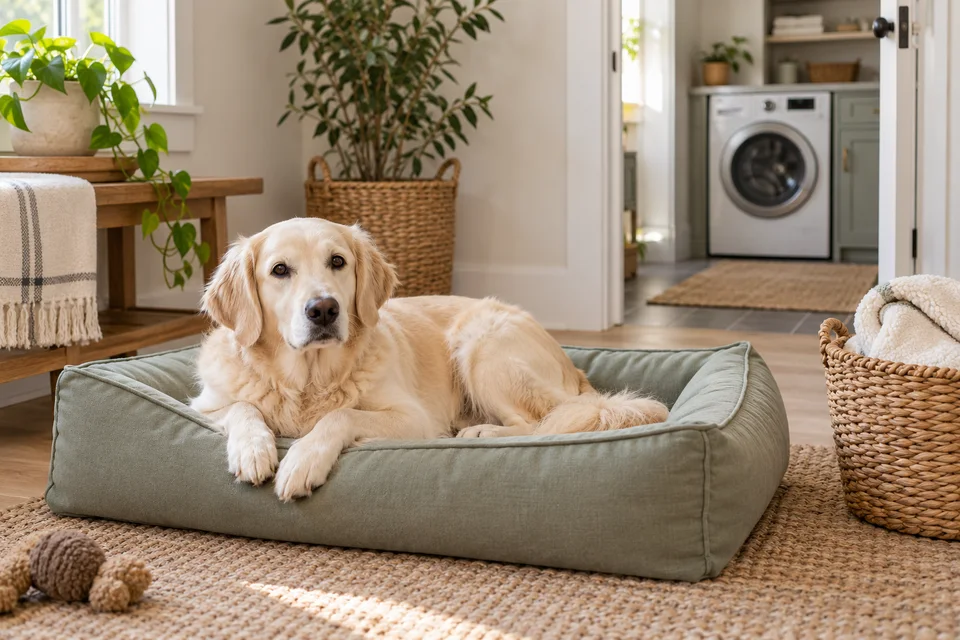
THE DIRECT ANSWER
Check the care instructions for each cover, insert and toy before washing. Choose compatible wash and drying methods, allow the item to finish drying, and check its condition before returning it. A bed cover’s instructions do not automatically apply to the filling. For illness, contamination or vulnerable household members, ask about an appropriate cleaning and disinfection plan instead of assuming an ordinary laundry cycle is sufficient.
Read the label on the part you are washing
CDC says to follow item-specific cleaning instructions. Its example schedule lists weekly cleaning for beds and blankets and monthly cleaning for toys, with more frequent cleaning when needed. These are starting points, not permission to leave a visibly soiled item until its calendar date.
A removable cover creates two jobs: cleaning the cover and deciding what the insert’s instructions allow. Do not treat ‘washable cover’ as ‘washable whole bed.’ A toy may contain a squeaker, filling or another component with different care requirements.
PetCheck’s suggested first step is an item inventory before the washer is loaded. Keep the instructions available after packaging is discarded, for example with a photograph of the actual care label. Our generated scenes are not care labels or evidence that a particular material tolerates a setting.
| Item | Check separately | Question before washing |
|---|---|---|
| Removable bed cover | Cover label and fastenings | Which wash and drying methods does this cover allow? |
| Bed insert or foam | Insert instructions | Is this component washable at all? |
| Blanket | Fabric and care label | What method will clean it and leave time to dry? |
| Plush or rope toy | Whole toy, internal parts and condition | Is the suggested method compatible with every part? |
| Unclear or uncleanable item | Manufacturer information and current condition | Can the maker clarify, or does it need replacement? |
Name the job before choosing a setting
Cleaning removes material; disinfection is an additional process. CDC’s laundry guidance uses detergent and a fabric-appropriate cycle and water temperature. Its specified disinfection step is the highest dryer heat for 30 minutes. That is not a direction to ignore a care label that rules out heat.
If those requirements conflict with the item’s instructions, do not declare an air-dried or low-heat item disinfected. Ask the manufacturer and, when infection control is relevant, your veterinary team about a compatible option. This article does not offer a substitute chemical recipe.
For an ordinary household task, write the process actually completed: ‘cover washed using label directions; drying.’ Avoid labels such as ‘sterile’ or ‘germ-free’ that your household check cannot establish. A pleasant scent tells you about smell, not the success of a disinfection process.
Plan where the pet will rest while the item dries
The bottleneck may be drying rather than washing. A cover can look ready while seams, padding or the underside are still damp. Build a final condition check into your own routine instead of treating the washing-machine end signal as the return-to-use signal.
If you already have a suitable clean spare, put it into use first. This removes the pressure to return the washed item early. Do not buy a duplicate automatically; consider the pet’s other suitable resting places and how long the allowed drying method takes in your home.
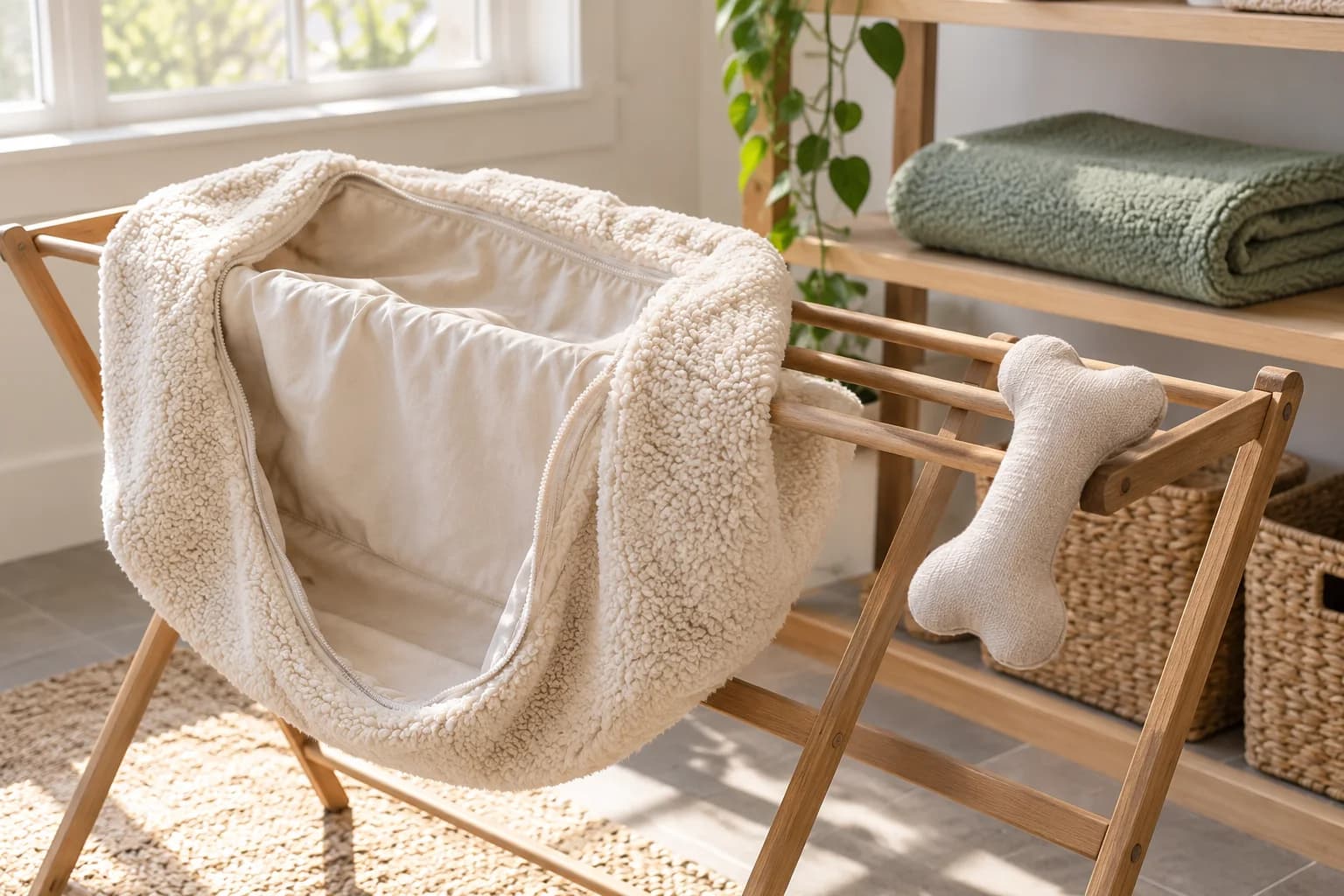
Use a clear household handoff: which part was washed, where it is drying, who will check it, and whether the bed has been reassembled. The photograph illustrates a drying setup, not a tested disinfection method or a measured drying time.
- The spare resting place is ready.
- Each part follows its own care directions.
- Drying and reassembly have a named next step.
- The finished item is checked before it goes back.
A fictional weekend load with three different outcomes
Fictional example: Jo has a dog-bed cover, its foam insert and a plush toy. The imagined cover’s label permits machine washing and air drying; the imagined insert has a spot-clean-only instruction. The toy has a loose seam. These instructions are invented for the example and must not be applied to your items.
Jo follows the cover’s instructions and leaves it drying. The insert stays out of the washing machine because it has its own directions. The damaged toy is removed from use while Jo decides whether it can be safely repaired or should be replaced; washing would not fix the loose seam.
The household note does not say ‘all pet things cleaned.’ It says which task is complete and which is still open. That distinction lets the next person finish the right job without repeating a wash or returning a damp cover.
| Item | Action in this example | Status after the wash finishes |
|---|---|---|
| Removable cover | Machine washed as its invented label allows | Air drying; not yet back on the bed |
| Foam insert | Handled separately under its invented spot-clean directions | Check its condition and drying separately |
| Plush toy | Loose seam noticed before loading | Removed from use; washing is not a repair |
Keep the next routine specific to your household
CDC identifies illness and higher-risk household circumstances as reasons for more frequent cleaning and disinfection. Use a veterinary or medical professional’s situation-specific advice when that applies, rather than treating this routine laundry example as an infection-control protocol.
A useful recurring note needs only a few fields: item, instructions location, last completed cleaning, what is still drying, and a next check you choose. When something changes—new bed, damaged toy, different care directions—update that item’s note rather than copying an old method forward.
My Pet Notes can hold a dated household record in this browser. It does not sense cleanliness, certify disinfection or send a cleaning reminder. For feeding equipment, use the separate bowl guide; fabric laundry is not a replacement for the bowl’s own routine.
FROM THE GUIDE · INTO THEIR EVERYDAY
A fabric-care handoff
Keep cover, insert and toy instructions separate. This note does not certify disinfection.
Draft my laundry handoffChoose their notebook, add your own details, then save. Free, no account. Notes stay in this browser.
THE NEXT QUESTIONS
What else might you be wondering?
Can the entire bed go in the washing machine?
Only follow what the actual component instructions permit. A removable washable cover does not establish that its insert, foam or whole assembly can be machine washed.
Does air drying count as the CDC disinfection step?
No. Do not label a process disinfecting merely because the item dried. Where disinfection is required, resolve the method and material compatibility before choosing a process.
Should I wait for the weekly or monthly date if an item is dirty?
No. The example schedule is not a reason to postpone cleaning a dirty item. Check its instructions and the household circumstances.
LOOK CLOSER AT THE EVIDENCE
Sources & what they establish
Official guidance, research findings and PetCheck’s practical interpretations have different roles. These notes explain how the sources were used.
Public-health guidance
CDC: pet supplies and laundry
Distinguishes routine cleaning from disinfection and prioritizes care instructions.
Limit: It does not test your bed, certify a household cycle or override a product’s material limits.
Original editorial handoff
Component inventory and Jo’s fictional load
Makes drying, condition and unfinished tasks visible.
Limit: The imagined care labels are not product recommendations or a measured hygiene result.
Sources checked 2026-10-20. Examples are fictional and illustrate reasoning, not patient outcomes. This is an editorial source review, not independent veterinary review. How we prepare these guides →
FOR ANOTHER VISIT
Keep this guide close.
Save it to read again, or copy a link to share.
ONE QUESTION CAN LEAD TO ANOTHER
A useful next read.
Choose the question that fits what you want to understand next.
 AI-generated editorial scene
How often should you clean pet bowls?
Keep feeding-equipment cleaning on its own appropriate routine.
Read the guide AI-generated editorial scene
How can I help my cat get comfortable with a carrier?
For cats, use appropriate familiar bedding when preparing a carrier.
Read the guide