Daily care
How often should you clean pet bowls?
A practical washing routine matters more than a special “antibacterial” label.
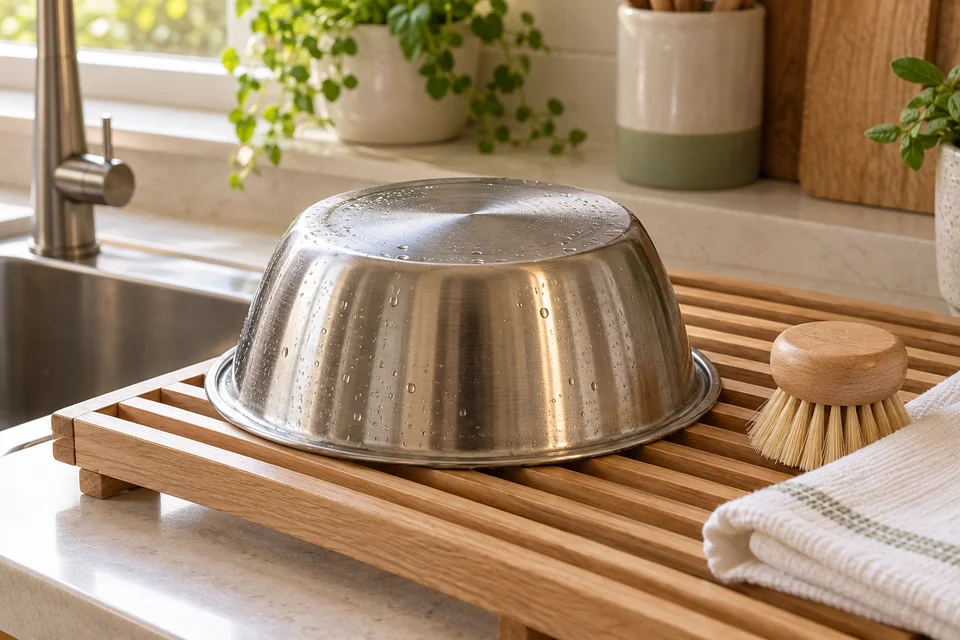
THE DIRECT ANSWER
For a simple household routine, wash food bowls after each meal and water bowls daily. FDA recommends washing food bowls and utensils after each use. CDC’s example schedule specifies after each use for wet food, and daily for dry food and water. These recommendations are not identical: choosing the more frequent food-bowl routine is a practical way to avoid tracking two schedules. Visible residue calls for cleaning sooner.
Sources: FDA: safe handling of pet food · CDC: cleaning and disinfecting pet supplies
How often: read the recommendations precisely
A bowl that has been licked empty has still been used. Start with what it held and when it was washed, not whether it looks polished. Refilling water changes the contents; it does not clean the surfaces holding them.
FDA gives a broad after-use food-bowl instruction. CDC provides an example schedule separated by food type. PetCheck’s daily-life recommendation above uses the more frequent option for food bowls so that changing between wet and dry meals does not also require changing the household rule.
| Bowl use | Published guidance | Practical application |
|---|---|---|
| Wet food | CDC: after each use. FDA: food bowls after each use. | Wash after the meal; do not put the next meal onto old residue. |
| Dry food | CDC: daily. FDA: food bowls after each use. | An after-meal habit follows the more frequent recommendation. |
| Water | CDC and FDA: daily. | Wash the bowl as well as replacing the water. Clean sooner if dirty. |
| Illness or a more vulnerable household | CDC advises more frequent cleaning and disinfection in relevant situations. | Agree a suitable routine with the professional advising your household. |
Sources: FDA: safe handling of pet food · CDC: cleaning and disinfecting pet supplies · FDA: storing pet food and treats
Follow the surfaces, not just the water.
- Reach the inside and rim.
- Check the underside and any removable base.
- Plan where the next clean bowl will come from.
Cleaning removes material; disinfection is an additional step
CDC distinguishes washing away dirt and germs from disinfecting. For hand washing, use detergent or soap and water, scrub, rinse and dry. A dishwasher is an option when the item is labelled suitable; CDC distinguishes ordinary washing from the hotter settings used for disinfection.
The useful design question is whether you can reach all the places that get dirty. Check the inside rim, underside and any removable base. Follow the instructions for each component rather than assuming that the material name describes the whole assembled product.
A routine needs an end point: a clean, rinsed, dry bowl ready for use. If the household repeatedly stops at “quickly rinse,” identify what makes the remaining steps awkward. Is the brush inaccessible? Is the clean bowl still in the dishwasher? Solve that friction before buying a new material.
Sources: CDC: cleaning and disinfecting pet supplies
A clean bowl, ready for next time.
Choose how you use and wash your bowls. Turn the advice into a household handoff.
Preparing your planner… · No account neededAdvice becomes easier when it fits your day.
Choose an answer in each group. You’ll get a practical sequence and a clear “keep or compare” next step.
Use again at the next bowl wash.
Choices follow you between these guides in this tab. Unsaved choices reset on reload. Only kept for later when you choose Save. Find saved routines in My saved guides on this browser; no account sync or reminders. Clearing browser data removes saved routines.
What bowl research tells us—and what it does not
Luisana and colleagues reported 417 owner surveys and a one-week hygiene study involving 68 food dishes. Groups given hygiene instructions had reductions in measured aerobic bacterial counts. The study measured contamination on bowls; it did not demonstrate that a particular brand prevented illness.
That difference matters when reading a product claim. A bacterial count is a measurement of a surface under a test method. It is not a count of sick dogs and cannot, by itself, give you a household disease-risk percentage.
In follow-up, only 8% of respondents in the instructed groups said they were likely to keep following the protocols long term. This is a report of intention, not a measurement of future behavior. For a household, it makes repeatability an important design question: which parts of the routine will still be easy next month?
Our interpretation is to compare a process you can sustain, not a bowl’s shine. Neither this study nor a product photograph establishes a medical benefit for a named model.
Sources: Luisana et al. (2022): household feeding and bowl hygiene study
Make the safe routine easy to repeat
CDC advises following cleaner and disinfectant labels and taking extra care when a pet is sick or the household is more vulnerable. Keep pets away during treatment and follow the relevant rinsing, drying and contact-time instructions. We do not prescribe a homemade chemical mixture.
Separate a routine failure from an equipment failure. If every available bowl is waiting to be washed at feeding time, rotating a clean spare may help. If a removable part is repeatedly missed, include it in the washing sequence. Neither change requires a premium or “antibacterial” label.
What to check before replacing a bowl
Compare the whole routine: the pet’s feeding space, the person who lifts the bowl, and the sink or dishwasher where it is cleaned. A bowl can fit one part of the routine and be awkward in another.
Read whether the body, base and removable parts can all be cleaned by your intended method. Check that you can reach the surfaces and reassemble the item correctly. If the current bowl already works, spend effort on the routine before replacing it.
The buying guide below turns those questions into a product comparison. It does not rank bowls by an invented hygiene score or claim that a purchase treats digestive symptoms.
- Confirm cleaning instructions for the complete item.
- Check access beneath rims and removable parts.
- Plan where the next clean bowl will come from.
- Compare size and stability against your actual feeding space.
THE NEXT QUESTIONS
What else might you be wondering?
Is rinsing a water bowl enough?
Refreshing the water and washing the bowl are different tasks. Include washing the surfaces in the daily routine rather than repeatedly topping up the same unwashed bowl.
Can pet bowls go in the dishwasher with household dishes?
CDC permits this for dishwasher-safe items. Check the manufacturer’s instructions, including removable parts; use the appropriate cycle if disinfection is needed.
Will stainless steel mean I can wash less often?
A material label does not replace a cleaning schedule. Choose an item that fits your routine and can be cleaned thoroughly; do not infer a lower washing frequency from a product image or marketing phrase.
LOOK CLOSER AT THE EVIDENCE
Sources & what they establish
Official guidance, research findings and PetCheck’s practical interpretations have different roles. These notes explain how the sources were used.
Public-health guidance
FDA and CDC: two schedules, explained
Both support regular washing; CDC separates wet-food use from daily dry-food and water cleaning. FDA uses an after-use food-bowl instruction.
Limit: These are hygiene recommendations, not proof of zero infection risk.
Sources: FDA: safe handling of pet food · FDA: storing pet food and treats · CDC: cleaning and disinfecting pet supplies
Household intervention study
Luisana et al. (2022)
A short intervention measured lower bowl bacterial counts in the instructed groups.
Limit: A one-week contamination study is not a clinical trial of illness prevention or a test of named products.
Sources: Luisana et al. (2022): household feeding and bowl hygiene study
Sources checked 2026-09-21. Examples are fictional and illustrate reasoning, not patient outcomes. This is an editorial source review, not independent veterinary review. How we prepare these guides →
Preparation checklist Optional · separate from your routine
TAKE SOMETHING USEFUL WITH YOU
Set up a routine you can repeat
Tick the preparation steps you have done. Save this guide to keep the checklist for your next visit.
0 of 3 preparation steps checked · Not a health or safety score
Saved only on this browser. No account or reminder is created. Clearing browser data removes the saved list.
PUT THIS GUIDE TO USE
Make a washing routine you can use.
Bring your food and water bowls into one practical routine, using the care instructions discussed above. Save it on this browser for the next wash.
Build my bowl-care routineKeep the guide for another visit, too.
ONE QUESTION CAN LEAD TO ANOTHER
A useful next read.
Choose the question that fits what you want to understand next.
 AI-generated editorial scene
How should I store opened wet cat food?
Separate the refrigerated remainder from food already served, then check the exact product’s storage instructions.
Read the guide AI-generated editorial scene
Easy-clean pet bowls: compare size & washing
If your current bowl is awkward to wash, compare size, base design and cleaning instructions before buying.
Explore the buying guide