HOME RECORD · MEASUREMENT
How should I record my pet's weight at home for the veterinarian?
Keep scale, unit, timing and handling consistent so a small change is not mistaken for a diagnosis.
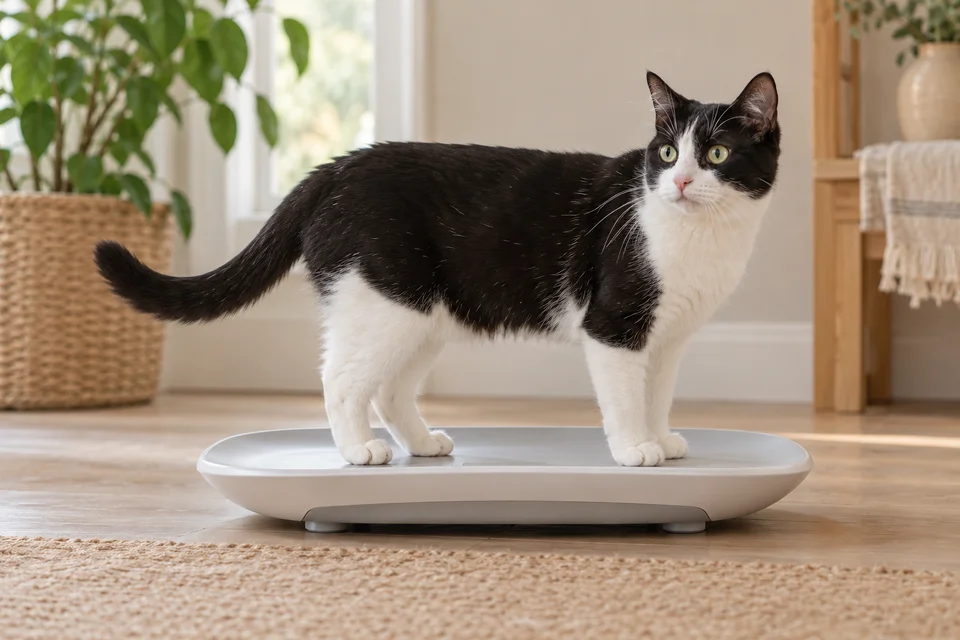
THE DIRECT ANSWER
Use a suitable scale and a safe method your pet tolerates, ideally the same scale under similar conditions each time. Record the date, time, displayed value and unit, scale or location, and whether a towel, carrier or equipment was included or subtracted. Follow the scale's instructions for zeroing and capacity. If a reading is surprising, check the setup and repeat only if safe; do not change food from that number alone. Ask your veterinarian how often to measure and how to interpret the record alongside body condition, appetite and health.
Sources: Association for Pet Obesity Prevention: Pet weight recheck and measurement conditions · AAHA: Is my pet overweight?
Choose a repeatable method the pet can tolerate
APOP recommends consistent scales and conditions and describes small-pet scales or a person-plus-pet subtraction method. Neither is mandatory if it is unsafe for you or the pet. A clinic weigh-in is a reasonable alternative.
Before trying at home, check the actual device's capacity, minimum measurable load, unit and display increments. A kitchen food scale is not automatically suitable for an animal. A small decimal on a screen is not a promise of accuracy.
Write the method in the record once, then note any departure from it. This makes a clinic measurement and a home estimate visibly different rather than silently merging them.
| Field | Example entry style | Why it matters |
|---|---|---|
| Value and unit | Copy the actual display and kg or lb | Avoid silent unit changes |
| Scale/method | Home pet scale; direct reading | Different methods are not identical |
| Included equipment | Towel zeroed; no harness | Avoid counting gear as pet mass |
| Conditions | Time; before/after usual meal | Make changed conditions visible |
| Reading quality | Settled, moving or not obtained | A moving display is not a precise result |
Sources: Association for Pet Obesity Prevention: Pet weight recheck and measurement conditions
Distinguish displayed mass from the pet-only result
If a towel or carrier is used, follow the scale's tare instructions or record its separately measured mass. Do not subtract it twice. Keep the original readings so arithmetic can be checked later.
For a person-plus-pet method, the result is the difference between two readings, each with its own uncertainty. If your scale changes in large increments relative to your pet's size, small differences may be uninformative.
Our record design therefore includes both the original display and the calculated result, with the method named. Do not add decimal places that the device never displayed.
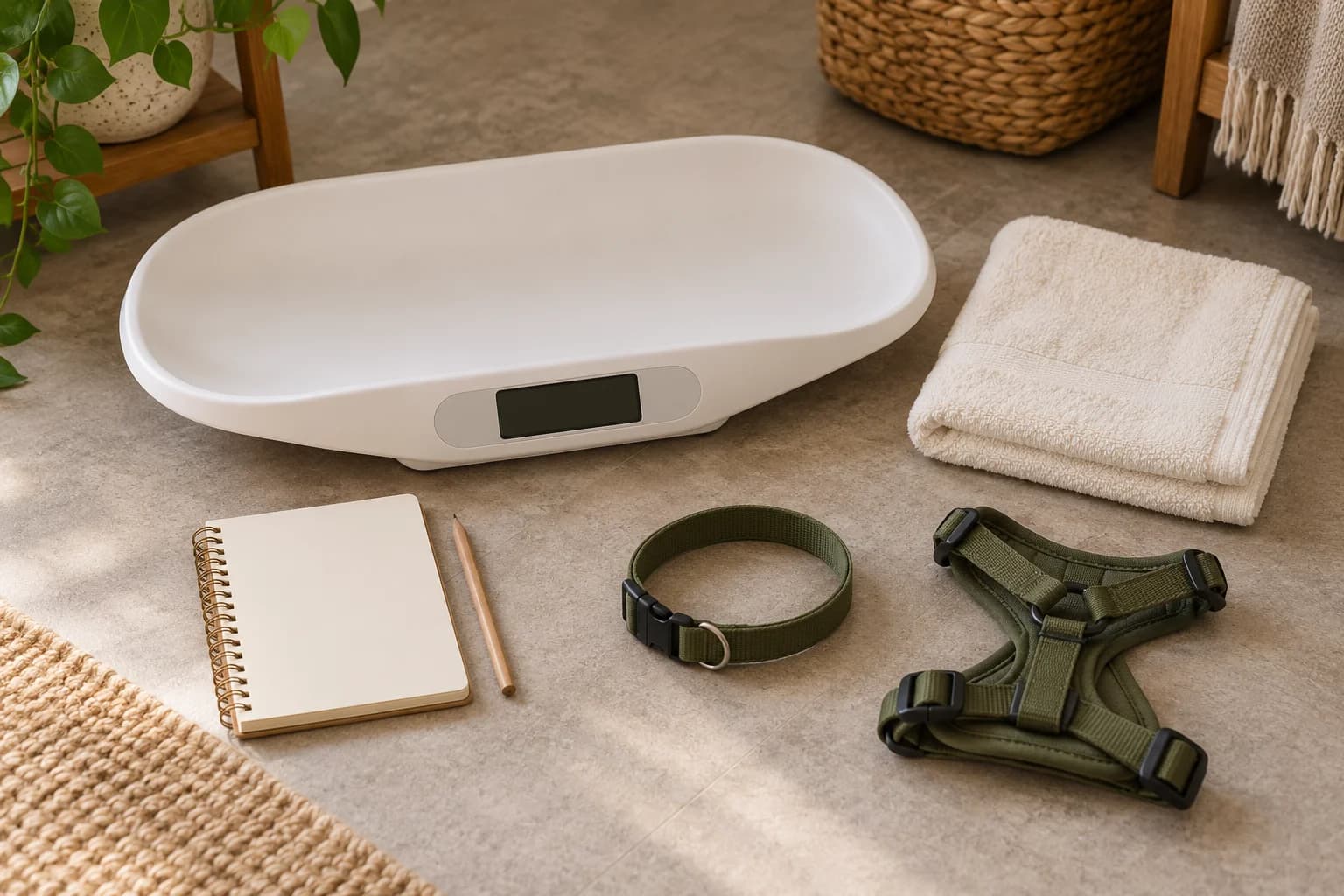
A fictional carrier subtraction—and a comparison to avoid
Fictional arithmetic: a suitable scale displays 5.80 kg for a cat plus carrier. The same empty carrier, with the same towel, displays 1.40 kg. The calculated cat-only result is 5.80 − 1.40 = 4.40 kg. This is not a recommended weight or a product accuracy test.
Suppose an earlier clinic entry was 4.30 kg. The arithmetic difference is 0.10 kg, but the scales and conditions differ. Do not label that single difference true tissue gain or cut the next meal.
Keep both entries, flag the method change, and ask the clinic how to obtain the next comparable measurement. If the pet is unwell, make that contact promptly rather than waiting for another data point.
| Reading | Value | Meaning |
|---|---|---|
| Cat + carrier + towel | 5.80 kg | Gross reading |
| Same empty carrier + towel | 1.40 kg | Subtract once only |
| Calculated cat mass | 4.40 kg | 5.80 − 1.40 |
| Earlier clinic reading | 4.30 kg | Different setup; do not overinterpret 0.10 kg |
Weight, body condition and feeding instructions are different records
AAHA distinguishes a scale number from body-condition assessment. A pet's appropriate weight and feeding plan require individual veterinary context; this guide supplies neither a target nor a rate of loss.
Keep three headings in your visit packet: measured values, observed appetite or routine changes, and current feeding instructions. A new value belongs in the first heading until the clinician advises what it means for the third.
The existing cups/grams guide helps express an already chosen food amount. The food-bag calculator estimates supply from that amount; neither interprets body weight or prescribes calories.
Sources: AAHA: Is my pet overweight?
Save a series with visible gaps
A missed reading should remain 'not measured,' not copied from last week. If the pet moves or leaves, record that the attempt did not produce a usable number. That is a valid outcome, not a reason to force another attempt.
Use My Pet Notes to keep this local record and your veterinarian's requested recheck interval. PetCheck does not connect to a scale, calculate a health score or send the record to a clinic.
Before the visit, highlight the date the method changed and any accompanying appetite or behavior changes. Bring the original entries, not only a rounded summary.
- Every value has a unit and a scale/method.
- Tare or subtraction is documented once.
- Unusable readings and missed dates stay visible.
- No feeding change was made solely from a home number.
FROM THE GUIDE · INTO THEIR EVERYDAY
A comparable weigh-in record
Keep the original reading, unit, scale and equipment accounting together.
Draft my weigh-in recordChoose their notebook, add your own details, then save. Free, no account. Notes stay in this browser.
THE NEXT QUESTIONS
What else might you be wondering?
How often should I weigh my pet?
Ask your veterinary team for an interval appropriate to the reason for monitoring. This record does not impose a schedule or weight-loss program.
Sources: Association for Pet Obesity Prevention: Pet weight recheck and measurement conditions
Can I compare pounds directly with kilograms?
No. Preserve original units and clearly label any conversion. Prefer one consistent unit in the comparison, without replacing the original entry.
Sources: Association for Pet Obesity Prevention: Pet weight recheck and measurement conditions
Should I reduce food after one higher reading?
No. Check measurement conditions and discuss the result in context with the veterinarian. Weight alone does not determine body condition or a new ration.
Sources: Association for Pet Obesity Prevention: Pet weight recheck and measurement conditions · AAHA: Is my pet overweight?
LOOK CLOSER AT THE EVIDENCE
Sources & what they establish
Official guidance, research findings and PetCheck’s practical interpretations have different roles. These notes explain how the sources were used.
Veterinary obesity organization guidance
APOP measurement consistency
Supports the same scale, similar timing, equipment accounting and checking unexpected readings.
Limit: PetCheck does not adopt the source calculator's alert thresholds or general weight-loss ranges as an individual prescription.
Sources: Association for Pet Obesity Prevention: Pet weight recheck and measurement conditions
Veterinary organization owner guidance
AAHA body-condition context
Separates scale weight from assessment of body condition and individualized management.
Limit: Neither a generated photograph nor a home weight record can establish ideal weight or diagnose obesity.
Sources: AAHA: Is my pet overweight?
Sources checked 2026-10-26. Examples are fictional and illustrate reasoning, not patient outcomes. This is an editorial source review, not independent veterinary review. How we prepare these guides →
FOR ANOTHER VISIT
Keep this guide close.
Save it to read again, or copy a link to share.
ONE QUESTION CAN LEAD TO ANOTHER
A useful next read.
Choose the question that fits what you want to understand next.
 AI-generated editorial scene
What should I write down before my pet’s vet visit?
Bring measurement conditions and appetite changes into a factual visit timeline.
Read the guide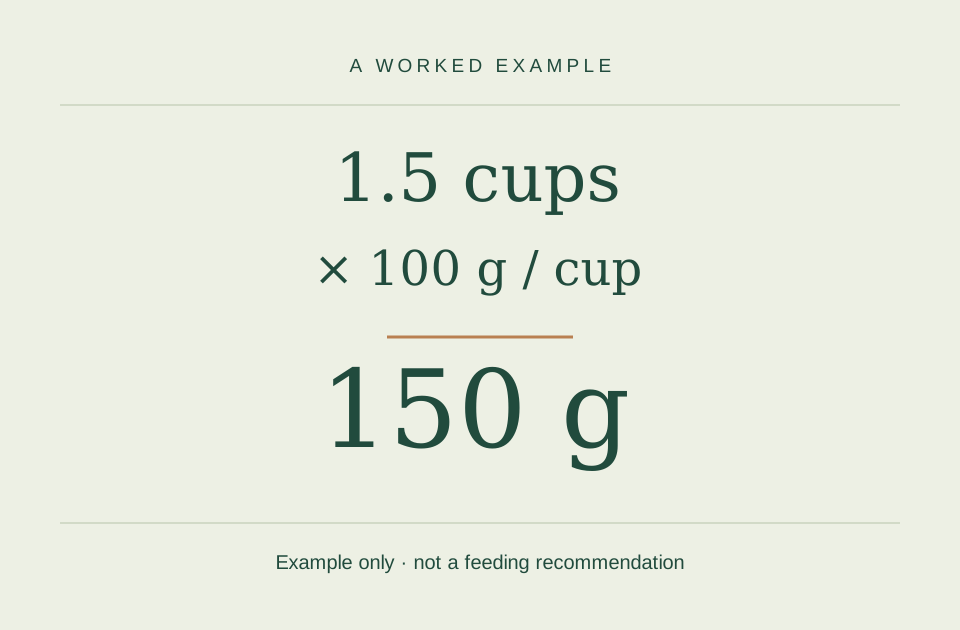 Worked arithmetic example
Should you measure dog food in cups or grams?
Express an already prescribed amount clearly; body weight alone does not set a new ration.
Read the guide