VET VISIT · HOME OBSERVATIONS
What should I write down before my pet’s vet visit?
Turn scattered observations into a concise timeline: what changed, when you saw it, what you did not see, and the questions you want to ask.
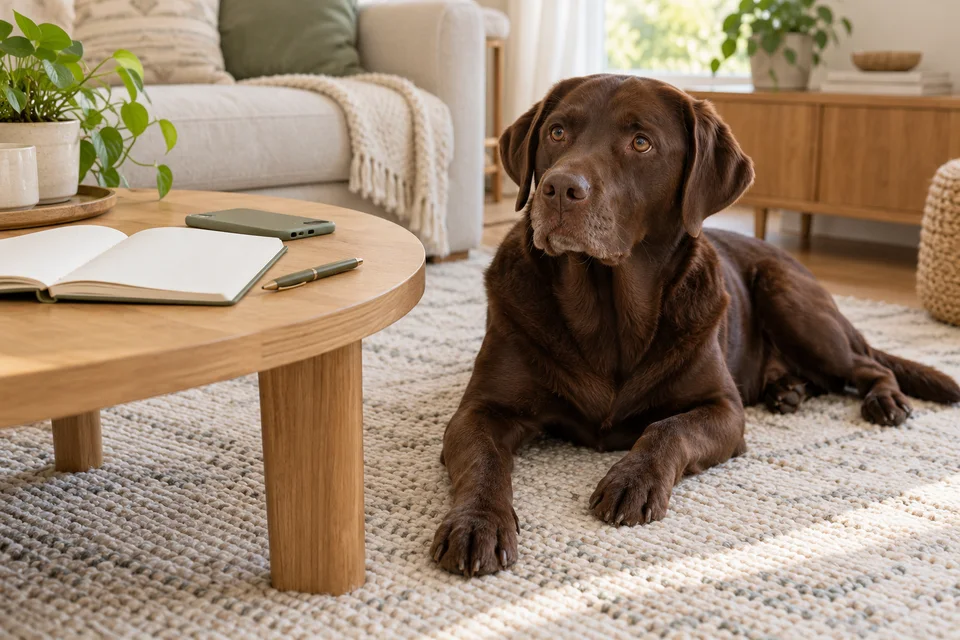
THE DIRECT ANSWER
Start with your main concern, then record dated observations, the pet’s usual pattern, relevant changes and current medicines or supplements. Separate what you saw from what you suspect, and mark gaps instead of filling them with guesses. Bring a short summary and the original details; ask the clinic how it wants to receive them. A note supports the conversation—it cannot diagnose your pet or decide whether care can wait.
Sources: Cornell University Hospital for Animals: Urgent Care—what to bring · AAHA: 2023 Senior Care Guidelines—history and home videos
Give the conversation a clear starting point
Cornell’s urgent-care preparation page asks owners to bring current medication and vaccination information plus written notes on the start and progression of signs. Its appointment arrangements are specific to Cornell; check your own clinic’s instructions.
Our suggested opening is one sentence: ‘I’m concerned about [observed change], first noticed [date or approximate period], and I want to ask [question].’ That sentence helps the reader understand why the details follow. It should not turn a suspicion into an established diagnosis.
For a routine appointment with several concerns, list them at the start so the veterinary team can help prioritize. For a new or worsening problem, contact the clinic about timing rather than simply adding it to a future appointment note.
Sources: Cornell University Hospital for Animals: Urgent Care—what to bring
Describe the event before explaining it
‘Paused at the stairs twice this evening’ describes an event. ‘Has arthritis’ is an interpretation unless a veterinarian has established it. Likewise, ‘I did not see the cat drink’ describes your observation window; it does not establish that the cat drank nothing all day.
Use consistent units where you already have a measurement, and otherwise keep the wording descriptive. Do not convert ‘a little’ into a made-up number. If two people report the same event, identify it as one event with two witnesses rather than counting it twice.
The following structure is an editorial communication aid, not a validated clinical score. Leave a field blank or write ‘unknown’ when you cannot answer it.
| Field | Useful entry | Avoid |
|---|---|---|
| Date and time | When the event happened; mark approximate times | Using the note-writing time as the event time |
| What happened | Specific action or visible change | A diagnosis inferred from appearance |
| Context | Meal, rest, walk or other relevant circumstances | Assuming the nearby event caused it |
| Usual pattern | What is different for this pet | Comparing only with an internet example |
| Observation gap | Who was present and when nobody was watching | Turning an unobserved period into a symptom-free period |
| Action taken | Who contacted the clinic; advice received and from whom | A plan presented as something already done |
A timeline can remain useful when part of it is unknown
Fictional example: Alex calls the clinic about a change in dog Pepper’s willingness to climb the stairs. The clinic has arranged an assessment. Alex is not testing Pepper’s movement or waiting for more evidence; the log organizes observations already made.
The household initially writes ‘Pepper has been stiff for three days.’ On review, one person remembers two pauses, another was away, and the first observation was only yesterday. The revised note is less sweeping and more accurate.
The timeline below does not demonstrate a cause, severity or safe waiting period. Its value is the distinction between a witnessed event, an unobserved interval and a completed phone call.
| When | Observation or action | Limit to retain |
|---|---|---|
| Monday, about 7 p.m. | Alex saw Pepper pause at the first stair twice | No measured duration; no attempt to reproduce it |
| Tuesday, 9 a.m.–noon | No household member was home | Movement during this interval is unknown |
| Tuesday, noon | Sam saw Pepper choose the floor instead of the usual sofa | Choice observed; reason unknown |
| Tuesday, 12:15 p.m. | Alex called the clinic and noted its appointment advice | Follow the clinic’s instructions if the situation changes |
Choose supporting material that answers a question
AAHA’s senior-care guidance highlights everyday behavior, household changes and all medicines or supplements as useful history. It also discusses home movement videos as an aid to veterinary assessment in senior pets. That is support for sharing context, not proof that a clip can diagnose a problem.
If you already have a relevant photo or short video, retain the original with its time and circumstances. Ask the clinic whether it wants the file and how to send it. Do not provoke a symptom, make a reluctant pet repeat a movement, or delay care for a better shot.
Make an inventory of what you are bringing: previous clinic records, a current product list and any requested material. A photograph of a label can clarify a product’s identity, but the generated photographs in this guide are only editorial scenes.

Sources: AAHA: 2023 Senior Care Guidelines—history and home videos
Preview the summary before handing it over
My Pet Notes lets you keep dated care notes, select a pet and date range, choose saved notes, and preview a text collection before copying or downloading it. Use the note text to record the event time if it differs from the note’s date. Review that the selected notes belong to the intended animal.
The notebook is browser-local and is not the clinic’s medical record. Copying or downloading does not send anything to a veterinarian. Its care-note backup does not include the separate memory photos. Keep original media separately and share it only through the channel the clinic requests.
Finish with the questions you need answered, not a long list of proposed diagnoses: What should I watch for? Which changes require another call? What should I record after this visit? Write down the team’s answers so the next note has a clear purpose.
- My main concern is at the top.
- Times, witnesses and unobserved gaps remain clear.
- Current products and relevant records are available.
- I previewed the selected notes and confirmed the clinic’s sharing method.
FROM THE GUIDE · INTO THEIR EVERYDAY
A clear visit timeline
Keep observations and unknowns separate. This does not diagnose your pet or send records to a clinic.
Draft my visit notesChoose their notebook, add your own details, then save. Free, no account. Notes stay in this browser.
THE NEXT QUESTIONS
What else might you be wondering?
How many days of notes do I need?
There is no required waiting period for this worksheet. Use the information you already have and ask the clinic what additional observations, if any, it needs. Do not delay a call to fill a date range.
What if I remember an event but not its exact time?
Mark it approximate—such as ‘after the evening meal’—and distinguish that from a recorded time. Precision you do not possess is less helpful than an honest estimate.
Should I send my entire notebook?
Ask what the clinic wants. A focused summary with relevant original details is easier to navigate; retain omitted records in case the team asks for them. Preview private information before sharing.
LOOK CLOSER AT THE EVIDENCE
Sources & what they establish
Official guidance, research findings and PetCheck’s practical interpretations have different roles. These notes explain how the sources were used.
Hospital preparation guidance
Cornell: notes and current records
Supports bringing a history of signs and current medication information.
Limit: Cornell’s service details are local; this article does not assign a triage category.
Sources: Cornell University Hospital for Animals: Urgent Care—what to bring
Veterinary practice guideline
AAHA: context and home observations
Supports discussing behavior, household changes, products and relevant videos.
Limit: The cited guideline concerns senior dogs and cats. The worksheet is an editorial communication format, not a clinical assessment instrument.
Sources: AAHA: 2023 Senior Care Guidelines—history and home videos
Original editorial example
Pepper’s timeline
Shows how to retain uncertainty while making notes easier to read.
Limit: Entirely fictional; no diagnosis, treatment or outcome is implied.
Sources checked 2026-10-20. Examples are fictional and illustrate reasoning, not patient outcomes. This is an editorial source review, not independent veterinary review. How we prepare these guides →
FOR ANOTHER VISIT
Keep this guide close.
Save it to read again, or copy a link to share.
ONE QUESTION CAN LEAD TO ANOTHER
A useful next read.
Choose the question that fits what you want to understand next.
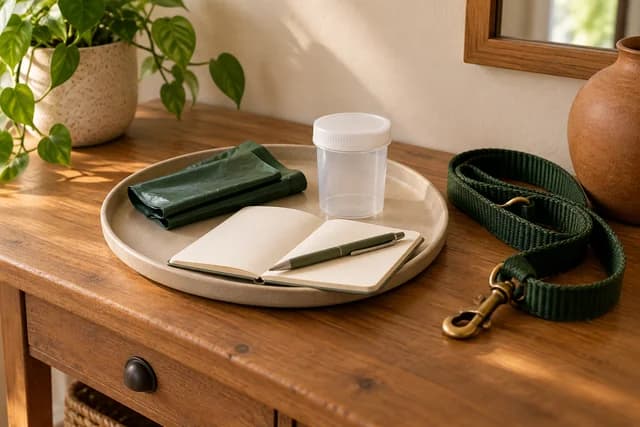 AI-generated editorial scene
How to collect a dog stool sample for the vet
If your clinic asks for a dog stool sample, follow its separate collection instructions.
Read the guide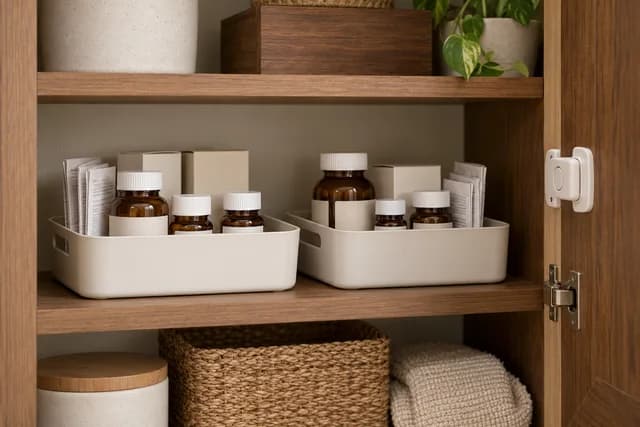 AI-generated editorial scene
How should I organize and store pet medicines at home?
Keep actual product labels and unresolved medicine questions ready for the conversation.
Read the guide