VET VISIT · RECORD TRANSFER
How should I prepare my pet's records for a new veterinarian?
Request the original clinical record, confirm receipt, and give the new team a current medication-and-timeline index.
THE DIRECT ANSWER
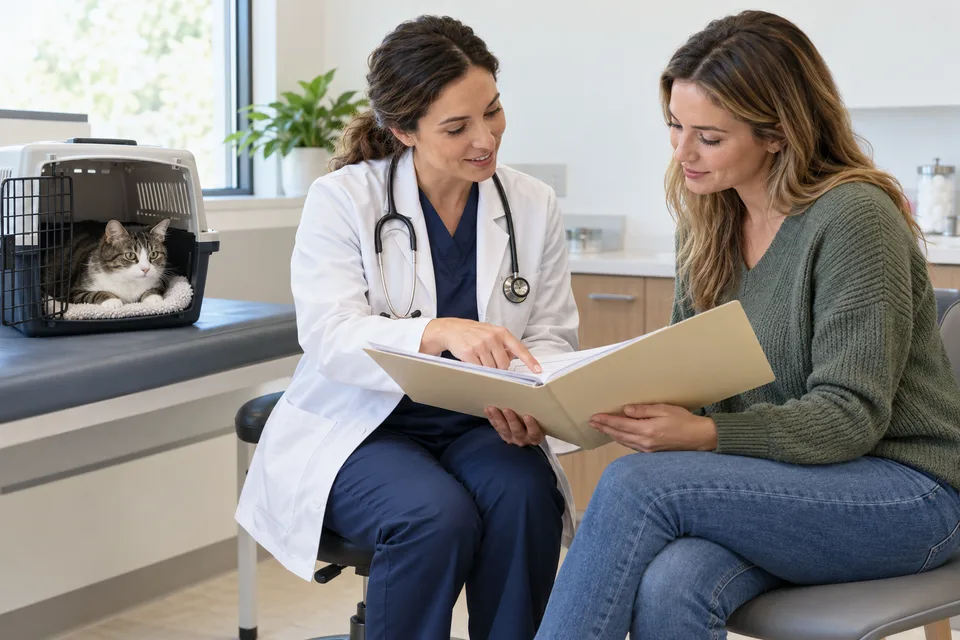
Ask the prior practice how to authorize a complete record transfer to the new veterinarian, including visit notes, laboratory results, imaging reports or files, vaccination history, medication and allergy information, and referral letters when applicable. Confirm the new practice's accepted format and that the files arrived before the visit. Separately prepare a one-page owner index with current medication names, labeled dose and frequency, who actually gives them, current food, the reason for the visit, a dated recent timeline, and unanswered questions. Your summary helps navigation but does not replace the original medical record, consent process or the new veterinarian's history and examination.
Sources: UC Davis: Maximize your veterinary visit · UC Davis: Small Animal Internal Medicine referrals · UC Davis: Schedule an appointment and submit records · AAHA: The team approach and standardized history · AVMA: Animal health information standards
Request the clinical record, then confirm receipt
Ask the old and new practices about authorization, accepted delivery method, required identifiers and timing. UC Davis referral guidance asks for prior records, medications, imaging and referral material where relevant.
List components rather than asking only for 'everything.' Confirm whether imaging files themselves, not just reports, are needed.
AVMA supports interoperable animal-health information in principle, but transfer duties and access rules vary. Do not infer a local legal deadline from this guide.
| Record | Requested | Receipt confirmed |
|---|---|---|
| Visit notes and problem list | Date/channel | New practice confirms |
| Laboratory results | Date range | Readable files confirmed |
| Imaging | Reports and files clarified | Viewer/access confirmed |
| Medication/vaccine/allergy history | Current and prior context | Gaps marked |
Sources: UC Davis: Small Animal Internal Medicine referrals · UC Davis: Schedule an appointment and submit records · AVMA: Animal health information standards
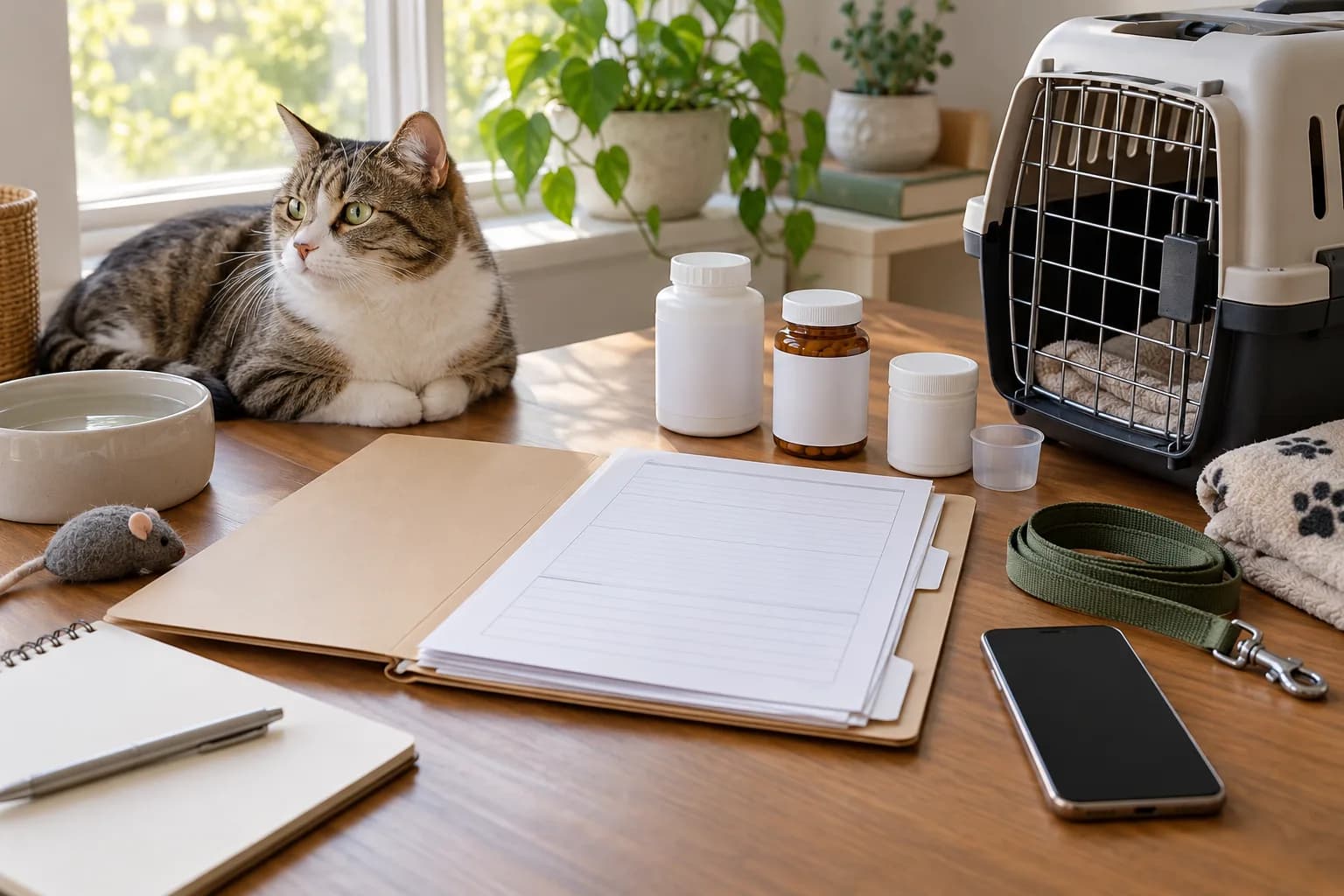
Add a one-page index without rewriting the record
UC Davis advises bringing written medication names, dose and frequency and having the person who administers them provide the details when possible. Include current food and observable concerns.
Put the reason for transfer or visit first, then a recent dated timeline and top questions. Link each claim to a record, label, photo/video date or direct observation.
Do not copy an old medication list forward as current without checking actual containers and the latest veterinary plan.
Sources: UC Davis: Maximize your veterinary visit · AAHA: The team approach and standardized history
A fictional transfer index
Fictional example: Priya requests Otis's records on October 25 and the new clinic confirms receipt of notes and lab results on October 27. The imaging report arrived, but the original images did not, so that gap stays visible.
The owner index lists one current medicine exactly from the label, the person who gives it, current food, three dated observations and two questions.
This example demonstrates tracking. It does not imply that every transfer needs the same files or timeline.
| Item | Status | Next action |
|---|---|---|
| Notes/labs | Received Oct 27 | None |
| Imaging report | Received | Keep with index |
| Original images | Not confirmed | Ask both practices |
| Owner summary | Current as of visit | Update changed facts |
Make gaps and uncertainty easy to see
Separate 'not in the received file,' 'owner does not know,' and 'not asked.' Those are different gaps for the new team.
Keep approximate dates labeled approximate. A short current timeline should not erase years of original notes or laboratory context.
If a photo or video is relevant, retain the original date and describe what it does and does not show. UC Davis notes home video can help in some specialty contexts, but it is not a diagnosis.
Sources: UC Davis: Small Animal Internal Medicine referrals · AAHA: The team approach and standardized history
Prepare the visit packet without transmitting private data here
My Pet Notes can draft a local checklist and owner index. It does not request records, upload medical files or send data to either clinic.
Use the practices' approved secure channels for medical records and confirm receipt directly. Avoid putting sensitive identifiers into public share links.
Update the index after the visit, but preserve the prior version if it documents what the new team originally received.
- The old practice's release process was followed.
- The new practice confirmed actual receipt.
- Current medications were checked against labels and the latest plan.
- Missing files and approximate dates are clearly marked.
FROM THE GUIDE · INTO THEIR EVERYDAY
A veterinary-record transfer ledger
Track requested, received and missing records, then add a current owner index.
Draft my transfer ledgerChoose their notebook, add your own details, then save. Free, no account. Notes stay in this browser.
THE NEXT QUESTIONS
What else might you be wondering?
Is my one-page summary enough?
No. It is an index for the new team, not a substitute for the original clinical record, history-taking or examination.
Sources: UC Davis: Small Animal Internal Medicine referrals · AAHA: The team approach and standardized history
Should I include medication dose and frequency?
Yes—copy current details from the actual label and latest veterinary plan, and identify who gives the medicine. Mark uncertainty instead of guessing.
Does PetCheck send records to the new clinic?
No. The note is local. Follow the practices' approved record-transfer channels and confirm receipt directly.
Sources: UC Davis: Schedule an appointment and submit records
LOOK CLOSER AT THE EVIDENCE
Sources & what they establish
Official guidance, research findings and PetCheck’s practical interpretations have different roles. These notes explain how the sources were used.
University veterinary visit and referral guidance
UC Davis record and visit preparation
Supports prior records, medication details, imaging/referral material and confirmed submission workflows.
Limit: Requirements differ by service and practice; the pages do not establish local record-release law.
Sources: UC Davis: Maximize your veterinary visit · UC Davis: Small Animal Internal Medicine referrals · UC Davis: Schedule an appointment and submit records
Veterinary information and team guidance
AAHA history structure and AVMA interoperability
Supports structured history and transferable animal-health information for continuity.
Limit: Standards and guidance do not replace consent, privacy, ownership or retention rules in a specific jurisdiction.
Sources: AAHA: The team approach and standardized history · AVMA: Animal health information standards
Sources checked 2026-10-25. Examples are fictional and illustrate reasoning, not patient outcomes. This is an editorial source review, not independent veterinary review. How we prepare these guides →
FOR ANOTHER VISIT
Keep this guide close.
Save it to read again, or copy a link to share.
ONE QUESTION CAN LEAD TO ANOTHER
A useful next read.
Choose the question that fits what you want to understand next.
 AI-generated editorial scene
What should I write down before my pet’s vet visit?
Add a concise recent timeline without replacing the transferred clinical record.
Read the guide AI-generated editorial scene
How should I organize and store pet medicines at home?
Check current labels and storage before copying the medication index.
Read the guide