URGENT HANDOFF · POSSIBLE POISONING
What information should I collect after a possible pet poisoning?
Move your pet away from the source, contact veterinary or poison help promptly, and keep the product, time and uncertainty together.
THE DIRECT ANSWER
Remove your pet from further exposure if you can do so safely, then call your veterinarian, emergency clinic or an animal poison-control service promptly. Have the species, age, weight if known, current signs, exact product or plant, packaging or photo, possible amount, earliest and latest exposure times, and anything already done. Keep unknowns explicit. Do not wait to complete a form, give a home antidote or induce vomiting unless a veterinarian or animal poison professional instructs you for this exposure.
Sources: FDA: Who Do You Call if You Have a Pet Emergency? · Pet Poison Helpline: What to do if your pet is poisoned
The first task is expert contact, not a perfect inventory
FDA directs pet owners with emergencies to a veterinarian, emergency animal hospital or animal poison-control resource rather than FDA's regulatory office. Contact the appropriate service promptly even if the amount or time is uncertain.
Pet Poison Helpline advises removing the pet from the area, checking immediate safety, and not giving home antidotes or inducing vomiting without professional instruction. The service charges a fee; a veterinarian or another animal poison service may be the route you use.
Keep the call open while another adult, if available, gathers packaging. Never re-enter a dangerous chemical area or handle an unknown substance without protecting people.
| Category | Bring or say | Keep uncertainty visible |
|---|---|---|
| Pet | Species, age, current weight if known, health conditions | Do not guess a weight or diagnosis |
| Source | Exact product, ingredient panel, plant or original packaging | Similar-looking products are not interchangeable |
| Exposure | Route, earliest/latest possible time and possible amount | Say 'unknown' or give a range |
| Current state | Signs and when each was first observed | Absence during one window is not a guarantee |
| Actions | Anything removed, rinsed, fed or administered | Do not hide an attempted remedy |
Sources: FDA: Who Do You Call if You Have a Pet Emergency? · Pet Poison Helpline: What to do if your pet is poisoned
Keep the exact package separate and readable
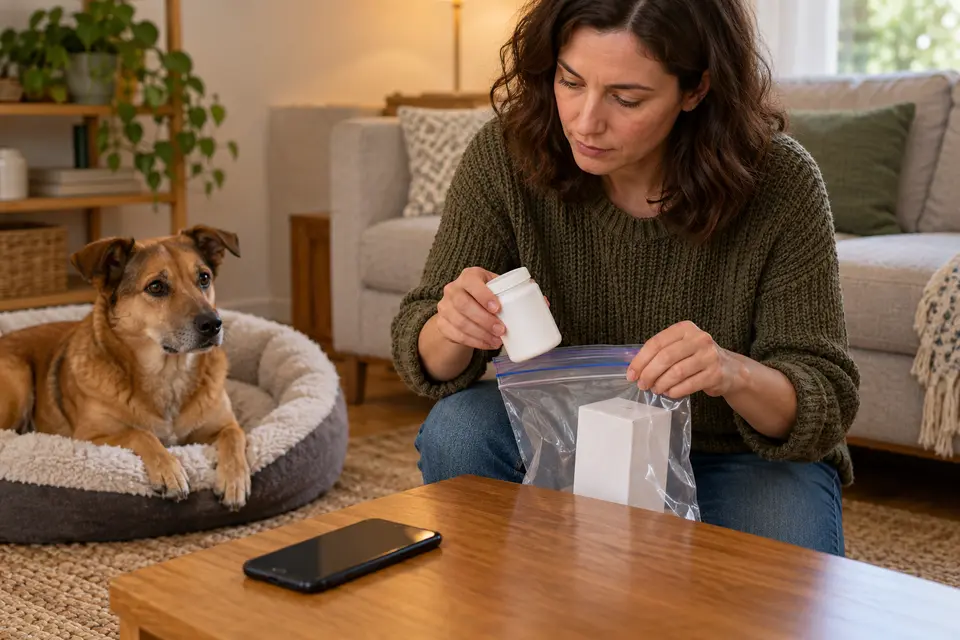
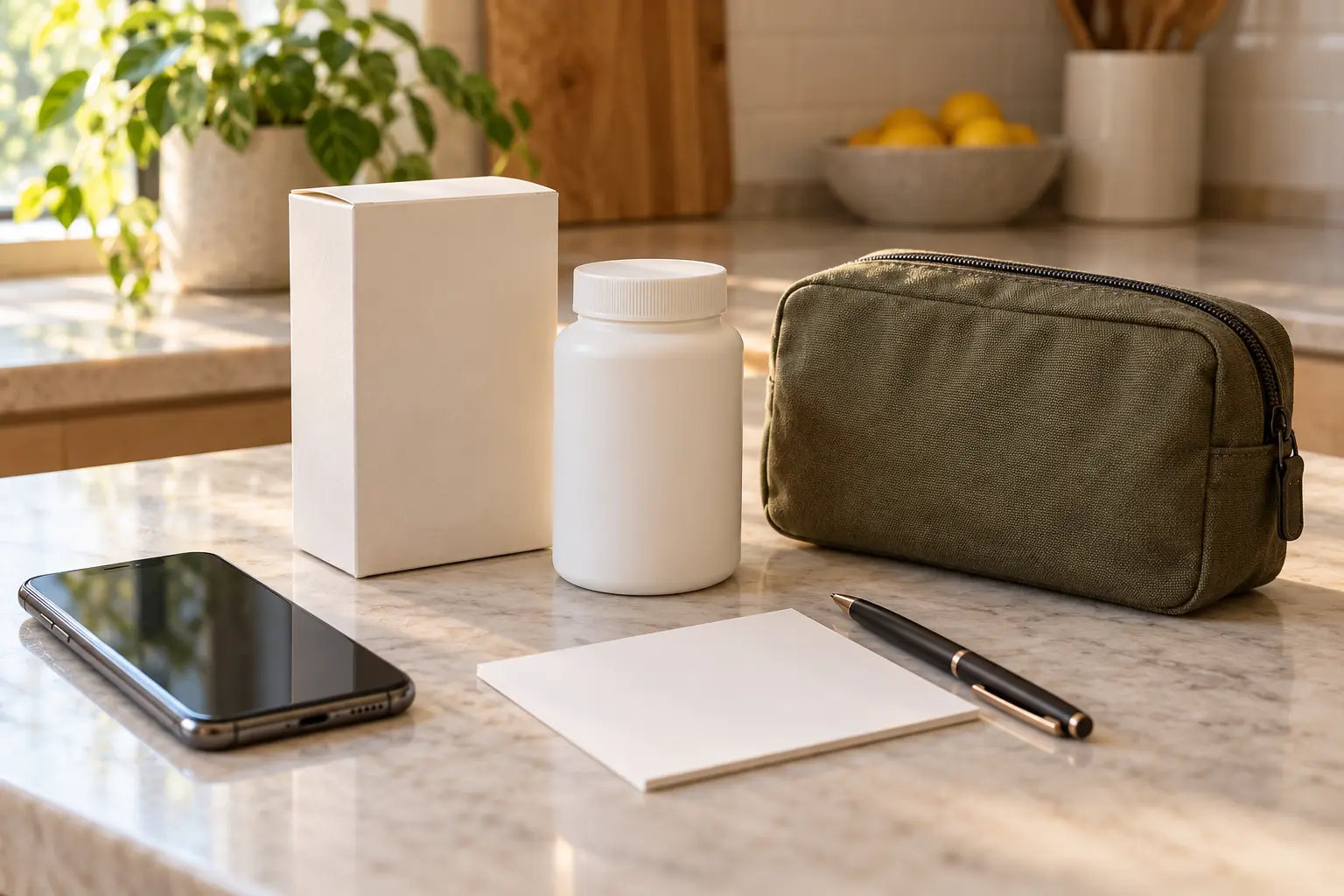
Photograph all sides of the product, including ingredients and identifiers, without exposing the pet or yourself again. If safe, place the closed package in a separate bag for transport as the professional directs.
For a plant, collect a safe photo of the whole plant and relevant part rather than asking an image search to decide toxicity. Do not bring loose contaminated material into a clinic without instructions.
A chewed bottle, torn packet or spilled area may help estimate exposure, but it does not prove the amount swallowed. Record missing quantity as uncertain.
Sources: Pet Poison Helpline: What to do if your pet is poisoned
A fictional handoff that preserves a range
Fictional example: Mia finds cat Sol beside an open cabinet at 6:20 p.m. A plain household packet is torn, but Mia last saw it intact at 5:40. No one saw Sol eat it.
Mia moves Sol away, calls the emergency clinic, and reports an exposure window of 5:40–6:20 rather than writing 6:20 as the ingestion time. She has the exact package and says the amount is unknown.
Mia follows the professional's instructions. This fictional record contains no substance, dose, symptom forecast or home-treatment direction.
| Field | Fictional entry | Limit |
|---|---|---|
| First possible | 5:40 p.m., packet last seen intact | Not an observed ingestion |
| Discovery | 6:20 p.m., cat near torn packet | Proximity does not prove amount |
| Product | Exact package available | No toxicity inferred by appearance |
| Amount | Unknown | No invented estimate |
| Action | Emergency clinic called promptly | Professional instructions not reproduced here |
Do not turn one exposure's advice into a household rule
Whether decontamination is appropriate depends on the substance, route, time, animal and current signs. An action that is useful in one case may be dangerous in another.
Do not give milk, oil, salt, activated charcoal, human medicine or a leftover veterinary product from this article. Do not make the pet vomit unless the responding professional specifically instructs you.
If skin or eye contact is involved, tell the service before rinsing or applying anything and follow the exact product and professional directions.
Sources: Pet Poison Helpline: What to do if your pet is poisoned
Carry the same facts from phone to clinic
Write the case or reference number if one is provided, who advised you, the call time, and the destination clinic. Bring the original package or the photos exactly as instructed.
My Pet Notes can open a blank local prompt, but it does not call poison control, transmit a case, calculate toxicity or provide triage. In an emergency, contact help first.
After the urgent handoff, secure the remaining product and document the cabinet or storage change separately.
- Veterinary or animal poison help has been contacted.
- Exact package or source is identified when safe.
- Time and amount uncertainty remain explicit.
- No home antidote or vomiting was attempted without direction.
FROM THE GUIDE · INTO THEIR EVERYDAY
A possible-poisoning handoff
Call professional help first, then keep exact evidence and unknowns together. This does not calculate toxicity.
Open the blank handoffChoose their notebook, add your own details, then save. Free, no account. Notes stay in this browser.
THE NEXT QUESTIONS
What else might you be wondering?
Should I wait until I know how much my pet swallowed?
No. Call promptly and state what is known, the possible range and what remains unknown.
Sources: FDA: Who Do You Call if You Have a Pet Emergency? · Pet Poison Helpline: What to do if your pet is poisoned
Should I make my pet vomit?
Not unless a veterinarian or animal poison professional specifically directs it for this exposure. Home vomiting attempts can add risk.
Sources: Pet Poison Helpline: What to do if your pet is poisoned
Can a plant photo tell me whether the exposure is dangerous?
A photo can support identification, but do not rely on image matching to determine toxicity or treatment. Contact a professional with the plant and exposure context.
LOOK CLOSER AT THE EVIDENCE
Sources & what they establish
Official guidance, research findings and PetCheck’s practical interpretations have different roles. These notes explain how the sources were used.
Federal referral guidance
FDA pet-emergency contacts
Directs owners to veterinarians, emergency hospitals and animal poison-control resources for treatment advice.
Limit: FDA is a regulator and does not diagnose or treat an individual exposure.
Animal poison service guidance
Pet Poison Helpline immediate steps
Supports removing further access, prompt contact and avoiding un-directed home antidotes or vomiting.
Limit: The public page does not assess this reader's substance, amount or animal; the service may charge a fee.
Sources: Pet Poison Helpline: What to do if your pet is poisoned
Original editorial workflow
Sol's fictional exposure window
Shows how to preserve a time range and unknown amount.
Limit: Not a toxicology calculation, real incident or treatment plan.
Sources checked 2026-10-22. Examples are fictional and illustrate reasoning, not patient outcomes. This is an editorial source review, not independent veterinary review. How we prepare these guides →
FOR ANOTHER VISIT
Keep this guide close.
Save it to read again, or copy a link to share.
ONE QUESTION CAN LEAD TO ANOTHER
A useful next read.
Choose the question that fits what you want to understand next.
 AI-generated editorial scene
How should I organize and store pet medicines at home?
After the urgent handoff, review labeled storage and unresolved medicine questions separately.
Read the guide AI-generated editorial scene
What should I write down before my pet’s vet visit?
Carry the exposure window and observed signs into the clinic timeline without guessing.
Read the guide