Before the vet visit
How to collect a dog stool sample for the vet
What to collect, what to label, and what to ask about amount, storage and watery stool before your vet visit.
THE DIRECT ANSWER
Use the container and collection instructions supplied by your clinic. Gather a fresh sample without soil or water, close and label it, then deliver it promptly. Confirm the requested amount and storage plan for the test being ordered.
Sources: PDSA: collecting a poo sample from your dog · Cornell Animal Health Diagnostic Center: parasitology protocols
How do I collect and label the sample?
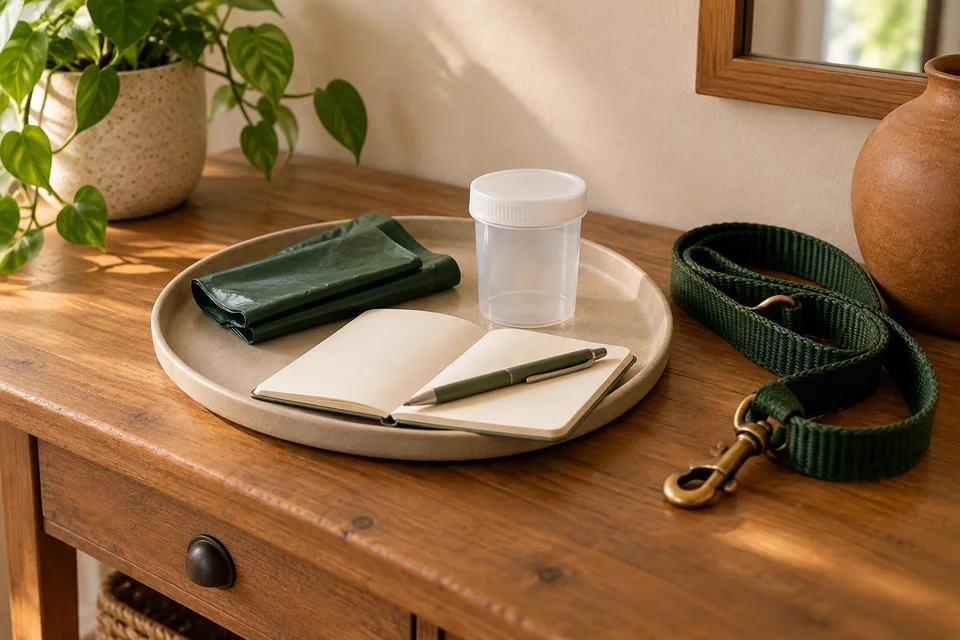
Use the clinic’s pot and scoop if provided. Collect freshly passed stool without adding soil or water. Close the container firmly, then label it with your dog’s name and the collection date and time.
After handling waste, wash your hands with soap and running water, even if you used a bag. Dispose of remaining waste properly.
Sources: PDSA: collecting a poo sample from your dog · CDC: dogs, waste cleanup and handwashing
Keep the specimen and its story together.
- Ask: container, amount, storage and drop-off.
- Label: dog’s name, collection date and time.
- Explain: observations and any missing details.
How much dog poop does the vet need?
Ask the clinic how much it needs. Cornell’s laboratory lists amounts by procedure; those submission requirements are not one rule for every appointment.
- Which container should I use?
- How much do you need for the requested test?
- When can I drop it off, and how should I keep it until then?
Sources: Cornell Animal Health Diagnostic Center: parasitology protocols
How fresh should it be, and should I refrigerate it?
Arrange prompt delivery. If delayed, ask about storage and the latest acceptable collection time. Cornell refrigerates specimens for several procedures; others need different handling. This guide cannot set one deadline for all tests.
Tell the clinic when you collected the sample and how it was kept. Let the team decide whether it is suitable or needs replacing.
Sources: Cornell Animal Health Diagnostic Center: parasitology protocols
TAKE SOMETHING USEFUL WITH YOU
Prepare the sample handoff
Tick the preparation steps you have done. Save this guide to keep the checklist for your next visit.
0 of 3 preparation steps checked · Not a health or safety score
Saved only on this browser. No account or reminder is created. Clearing browser data removes the saved list.
What if the stool is watery or difficult to collect?
Watery stool can be difficult to gather. Collect what you can without soil or water contamination and tell the clinic what you managed to obtain. A smaller collection is a question for the clinic, not a reason to delay the call.
What information should travel with the sample?
The sample is one part of the appointment. VCA explains that investigating diarrhea starts with history and examination, with testing chosen to add information. Bring a short account of frequency, urgency, appearance, unusual food or possible exposures, and accompanying changes such as vomiting or poor appetite.
Keep observations separate from guesses: “three small loose stools” is more useful than “a parasite problem.” Add any gaps in what you saw. A clear account helps the clinic interpret the specimen without making you identify the cause first.
| Part of the note | Example wording |
|---|---|
| Observed | Two loose passages this morning; breakfast left uneaten. |
| Uncertain | Nobody watched the overnight yard visit. |
| Question for the clinic | Is this specimen suitable given its collection and storage history? |
THE NEXT QUESTIONS
What else might you be wondering?
Can I use a poop bag if I do not have a sample pot?
PDSA describes a securely closed dog-waste bag or clean plastic container as alternatives. Confirm what your clinic accepts.
Should I freeze a sample to keep it longer?
Ask the clinic before changing the storage method. Do not assume freezing will extend the suitability of a sample for its requested test.
Sources: Cornell Animal Health Diagnostic Center: parasitology protocols
Can a photo replace the stool test?
No. A photo records appearance. Laboratory methods investigate particular evidence, while the veterinarian considers the examination and history. Send a photograph if the clinic requests one, and ask separately whether it needs a specimen.
LOOK CLOSER AT THE EVIDENCE
Sources & what they establish
Official guidance, research findings and PetCheck’s practical interpretations have different roles. These notes explain how the sources were used.
Owner guidance
PDSA: collection basics
The collection advice informs the gathering, container, labeling and delivery steps.
Limit: Your clinic’s instructions take priority for the ordered test.
Laboratory protocols
Cornell: requirements belong to the test
Different procedures have specific submission requirements.
Limit: Laboratory protocols are not a universal home-storage schedule.
Sources: Cornell Animal Health Diagnostic Center: parasitology protocols
Health and hygiene guidance
Cornell and CDC: care and cleanup
Cornell informs the accompanying signs that need veterinary advice. CDC supports handwashing and waste disposal.
Limit: Neither provides an individual assessment through this article.
Sources: Cornell Riney Canine Health Center: diarrhea · CDC: dogs, waste cleanup and handwashing
Veterinary explanation
VCA: a specimen needs a history
History, examination and selected tests contribute different information.
Limit: A sample or photo alone does not establish a cause.
Sources checked 2026-10-12. Examples are fictional and illustrate reasoning, not patient outcomes. This is an editorial source review, not independent veterinary review. How we prepare these guides →
FOR ANOTHER VISIT
Keep this guide close.
Save it to read again, or copy a link to share.
ONE QUESTION CAN LEAD TO ANOTHER
A useful next read.
Choose the question that fits what you want to understand next.
 AI-generated editorial scene
Loose or watery stool
If stool is loose, prepare the pattern of episodes and other changes to discuss with the clinic.
Read the guide AI-generated editorial scene
Worm-like pieces in dog stool: what can you tell?
Understand the separate roles of visible material, a photograph and a veterinary test.
Read the guide