OUTDOORS · WARM WEATHER
How should I plan a warm-weather outing with my pet?
Check the forecast, route, surface, shade, water and individual risk—then keep a shorter backup plan.
THE DIRECT ANSWER
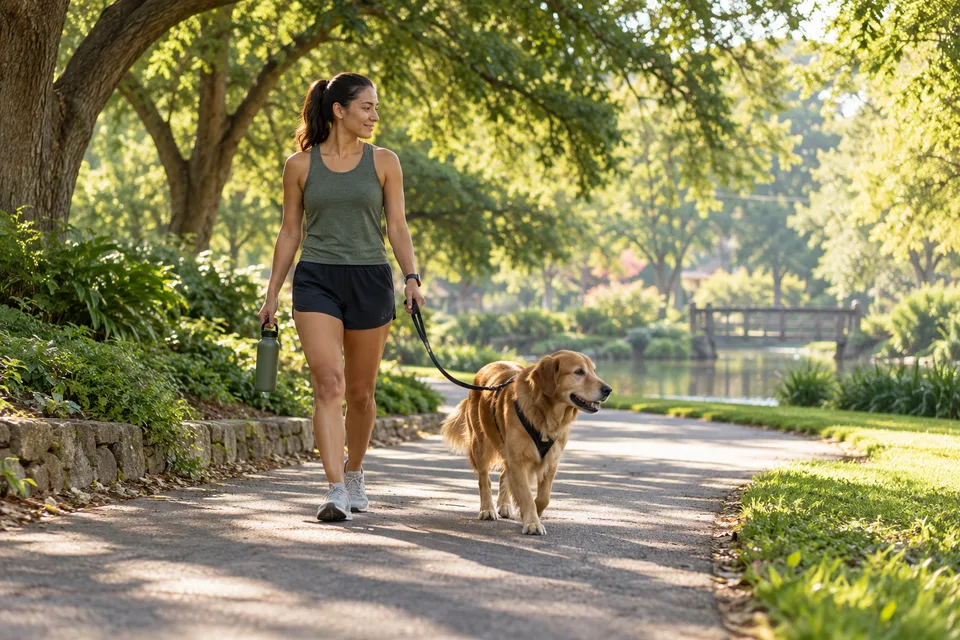
Check the hourly forecast and humidity, sun exposure, walking surface, shade, water access, route length, transport, and a quick exit before leaving. Match the plan to your pet's age, breed, coat, fitness, health and heat tolerance with veterinary advice when needed. Choose a cooler time and a shorter shaded route, carry water, watch the pet rather than the planned distance, and stop when behavior or breathing changes. Never leave a pet unattended in a vehicle. There is no single outdoor temperature or duration that is safe for every pet, so keep an indoor or very short alternative.
Sources: AVMA: Warm weather pet safety · AVMA: First aid tips for pet owners
Check weather, route, pet and exit as four separate layers
The forecast is only one layer. A sunny paved route can differ from a shaded route at the same air temperature, and an individual pet's risk can differ from another's.
AVMA advises adjusting intensity and duration, providing shade and water, and taking extra care with animals at greater risk. Ask the veterinary team about individual limits rather than borrowing another pet's routine.
Write the exit trigger before leaving: turn back, enter a cooled space, call for pickup or seek veterinary help.
| Layer | Check | Backup |
|---|---|---|
| Weather | Hourly heat/humidity and alerts | Cooler time or cancel |
| Route | Shade, surface, water, distance | Short shaded loop |
| Pet | Health, age, coat, current behavior | Veterinary advice/indoor plan |
| Exit | Phone, transport, clinic route | End early without completing distance |
Sources: AVMA: Warm weather pet safety
Treat the ground and vehicle as separate hazards
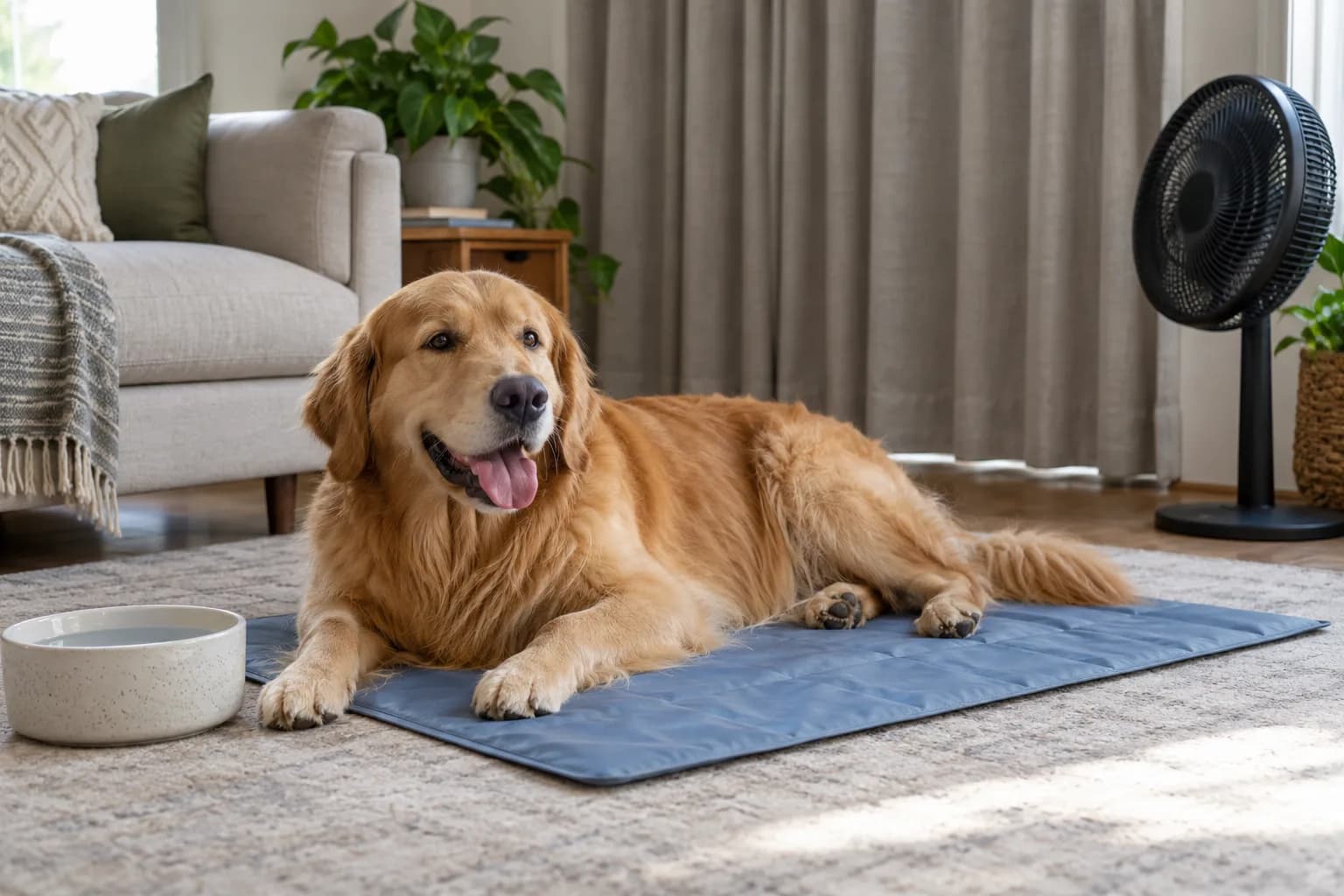
AVMA warns that hot asphalt can burn paws and contribute to overheating. Choose shade and suitable surfaces, and reassess as sun exposure changes.
Never leave a pet unattended in a vehicle. Parking in shade or cracking windows does not make a parked vehicle a safe waiting place.
Arrange the whole trip so no errand leaves the pet waiting in the car. If that cannot be done, change the outing.
Sources: AVMA: Warm weather pet safety
A fictional route comparison
Fictional example: Rowan replaces a noon 45-minute paved loop with a 7 am, 15-minute shaded loop near home, carries water and identifies a two-minute exit back to air conditioning.
At the halfway point, the plan is to reassess Rowan's behavior and the surface—not to declare 15 minutes safe regardless of conditions.
The times illustrate planning only. They are not universal safety thresholds or a prescription for another pet.
| Choice | Original | Revised |
|---|---|---|
| Time | Noon | 7 am after forecast check |
| Route | 45-minute exposed pavement | 15-minute shaded loop |
| Exit | Far point | Within two minutes of home |
| Decision | Complete planned distance | Stop when pet or conditions change |
Let the pet's current signs end the plan
Watch breathing, pace, coordination, responsiveness and willingness to continue. Do not make the pet finish a distance, pose for a photo or drink on command.
AVMA lists heatstroke signs that require urgent action. Move to a cooler area, contact veterinary help and follow professional cooling and transport instructions.
A notes app is not a heat monitor. If you are worried, act before documenting every field.
Sources: AVMA: First aid tips for pet owners
Save the next check, not a promise
My Pet Notes can hold the planned route, backup and veterinary questions locally. It cannot read weather, surface temperature or the pet's condition.
Recheck the forecast and pet immediately before departure. A saved plan becomes stale when weather, health, medication, route or transport changes.
After a comfortable outing, record what was actually done and any unobserved intervals without declaring the plan proven safe.
- Hourly conditions, shade and surface were checked.
- Water and a short exit are available.
- No part of the outing leaves the pet in a parked vehicle.
- Current signs override the planned distance.
FROM THE GUIDE · INTO THEIR EVERYDAY
A warm-weather outing check
Check conditions, route, individual risk and a quick exit. This does not declare a safe temperature.
Draft my outing checkChoose their notebook, add your own details, then save. Free, no account. Notes stay in this browser.
THE NEXT QUESTIONS
What else might you be wondering?
What outdoor temperature is safe for every pet?
There is no single universal number. Conditions, surface and individual risk differ; ask your veterinarian about your pet and keep a cooler, shorter alternative.
Sources: AVMA: Warm weather pet safety
Is a shaded parked car safe with the windows cracked?
No. AVMA advises never leaving a pet unattended in a vehicle.
Sources: AVMA: Warm weather pet safety
Should I finish the route if my pet slows down?
No. End the outing when the pet or conditions change. Concerning breathing, weakness, collapse or neurological signs require urgent veterinary direction.
Sources: AVMA: First aid tips for pet owners
LOOK CLOSER AT THE EVIDENCE
Sources & what they establish
Official guidance, research findings and PetCheck’s practical interpretations have different roles. These notes explain how the sources were used.
Veterinary association safety guidance
AVMA warm-weather pet safety
Supports shade, water, adjusted activity, hot-surface awareness and never leaving pets unattended in vehicles.
Limit: It does not provide a universal safe temperature or route duration for every pet.
Sources: AVMA: Warm weather pet safety
Veterinary first-aid guidance
AVMA heatstroke response
Supports recognizing heat illness as urgent and seeking veterinary care.
Limit: An online list cannot determine severity or replace live professional direction.
Sources: AVMA: First aid tips for pet owners
Sources checked 2026-10-25. Examples are fictional and illustrate reasoning, not patient outcomes. This is an editorial source review, not independent veterinary review. How we prepare these guides →
FOR ANOTHER VISIT
Keep this guide close.
Save it to read again, or copy a link to share.
ONE QUESTION CAN LEAD TO ANOTHER
A useful next read.
Choose the question that fits what you want to understand next.
 AI-generated editorial scene
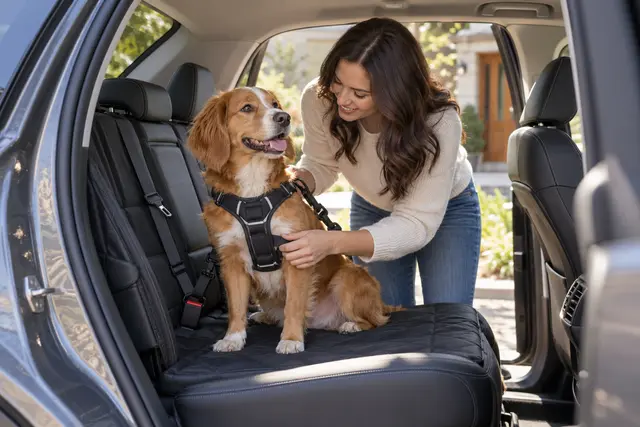
How should I prepare my pet for a car trip?
Check restraint, route and vehicle logistics without ever leaving the pet unattended in the car.
Read the guide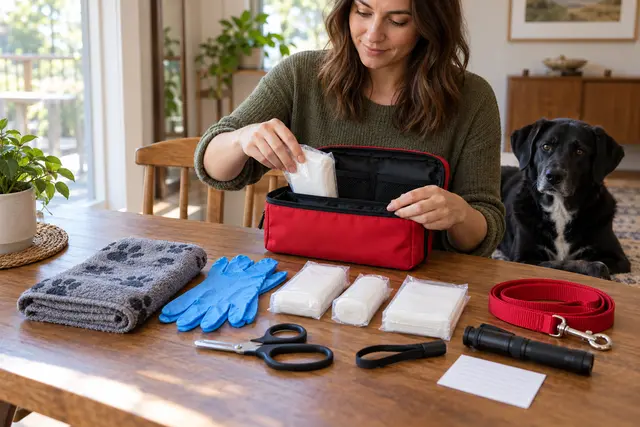 AI-generated editorial scene
How should I build and check a pet first-aid kit?
Keep current emergency contacts and transport basics ready as a separate preparedness task.
Read the guide