TRAVEL · VEHICLE SAFETY
How should I prepare my pet for a car trip?
Separate restraint, route, comfort and emergency contacts so a short drive does not become an improvised one.
THE DIRECT ANSWER
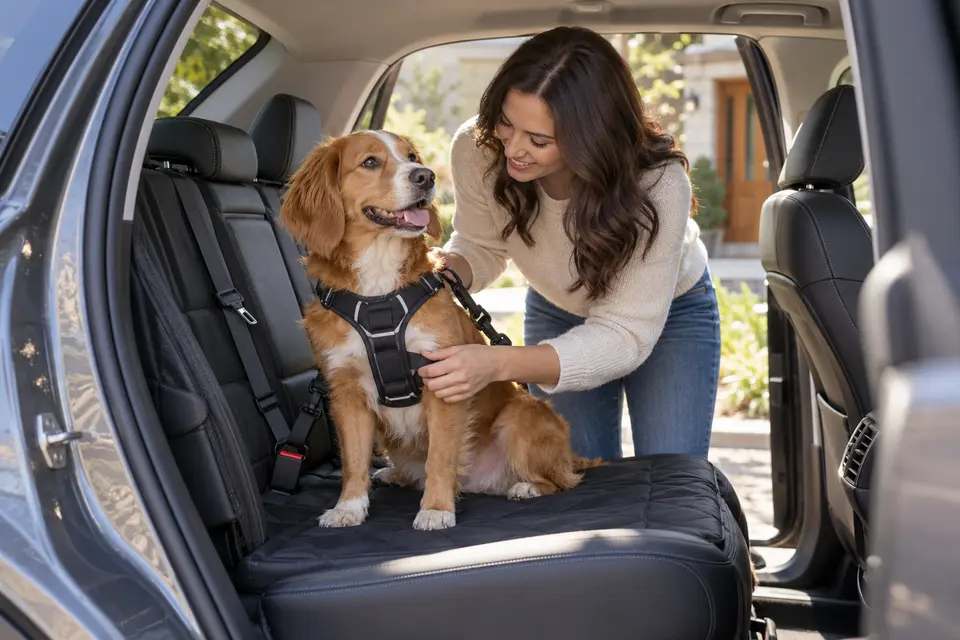
Before departure, confirm that the pet's carrier or vehicle restraint fits, is secured in the vehicle and keeps the pet away from the driver's lap and active airbags. Practice with the stationary car before a longer trip, plan safe stops and climate control, carry water, cleanup supplies, identification and accessible veterinary contacts, and never leave a pet unattended in a vehicle. Ask the veterinarian about individual health, motion-sickness, feeding or medication questions rather than inventing a universal trip routine.
Sources: AVMA: Pet safety in vehicles · AVMA: Traveling with your dog or cat · CDC: Pet Travel Safety
Separate restraint, route, care and documents
A secure carrier or restraint addresses movement in the vehicle. It does not confirm destination rules, teach carrier comfort or answer a medical question.
AVMA warns that a pet on the driver's lap can obstruct driving and that unrestrained pets face vehicle and airbag hazards. Choose and fit equipment for the actual animal and vehicle according to its instructions.
Keep the destination, stops, emergency hospital and return plan beside—but not inside—the physical restraint decision.
| Check | Question | Not established |
|---|---|---|
| Restraint | Does the exact carrier or restraint fit and secure in this vehicle? | Crash performance not independently tested by PetCheck |
| Vehicle | Is the pet away from driver controls and active airbags? | That the pet will remain calm |
| Route | Where are safe stops and a backup route? | That conditions will remain unchanged |
| Care | Water, climate, cleanup and emergency contacts ready? | A universal feeding or medication schedule |
| Documents | What does the destination actually require? | Travel authorization from this checklist |
Sources: AVMA: Pet safety in vehicles · AVMA: Traveling with your dog or cat
Practice with the car parked first
Let the pet approach the carrier, restraint and stationary vehicle in small steps. Do not begin with a long trip or trap a frightened animal in a running car for practice.
Check door closure, ventilation, tether length and whether the carrier shifts before starting the engine. Keep loose bags and supplies from falling onto the pet.
For cats, carrier comfort is its own process. A quiet carrier at home does not automatically mean the car movement will be comfortable.
Sources: AVMA: Pet safety in vehicles · AVMA: Traveling with your dog or cat
A fictional pre-trip check
Fictional example: Lian plans a two-hour drive with dog Sol. In the parked car, the first tether lets Sol reach the front-seat gap, so Lian does not depart and returns to the manufacturer's fitting instructions.
The revised setup keeps Sol in the rear area without pressure on the neck. Lian records the route, a planned safe stop and the destination emergency clinic. No medication or feeding interval is guessed.
The example is a planning workflow, not a product test or claim that a restraint prevents injury.
| Item | Observed | Decision |
|---|---|---|
| Initial fit | Dog could reach front-seat gap | Do not depart; recheck instructions |
| Revised fit | Rear position maintained without neck pressure | Record setup; no crash claim |
| Route | One safe stop and backup route identified | Recheck conditions before departure |
| Health | No individual plan recorded yet | Ask veterinarian if one is needed |
Keep trip supplies reachable without creating loose hazards
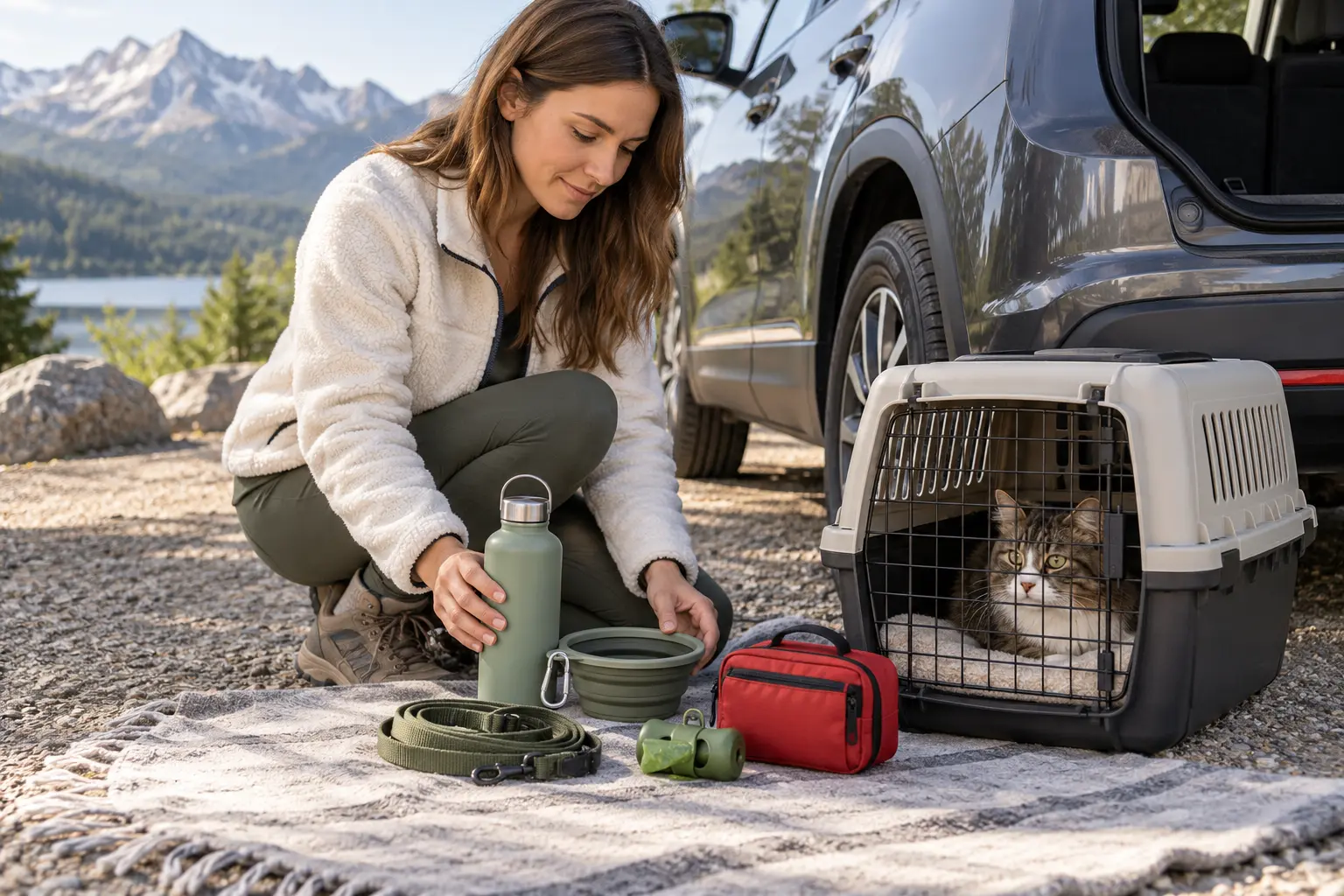
CDC advises supervision, carrier or leash use, daily health checks on trips and accessible veterinary and emergency numbers. Keep water, waste and cleanup supplies available without placing loose objects beside the pet.
Check identification and bring the documents the destination requires. This article does not repeat or replace the route-specific travel-document ledger.
At stops, attach the leash before opening an exterior door or move a secured carrier as a unit. Never open a carrier beside moving traffic.
Sources: CDC: Pet Travel Safety · AVMA: Traveling with your dog or cat
Record the actual response before the next trip
Note when the car was stationary or moving, trip length, restraint, temperature control, behavior and recovery. Avoid labels such as loves the car when only one short parked session occurred.
My Pet Notes keeps the text locally. It does not track the vehicle, inspect equipment or reserve services.
Use the record to ask a specific veterinary question about repeated vomiting, breathing, distress or an individual medical condition.
- Pet is secured away from the driver and airbags.
- Equipment fit and vehicle attachment were checked while parked.
- Stops, water, cleanup and emergency contacts are reachable.
- Medical and document questions stay with their proper sources.
FROM THE GUIDE · INTO THEIR EVERYDAY
A parked-car travel check
Check restraint, route, supplies and the pet's response before departure. This is not a crash-safety claim.
Draft my car-trip checkChoose their notebook, add your own details, then save. Free, no account. Notes stay in this browser.
THE NEXT QUESTIONS
What else might you be wondering?
Can my dog ride on my lap for a short trip?
No. A pet can interfere with driving and is exposed to airbag and collision hazards. Secure the pet away from the driver's lap using appropriate equipment and instructions.
Sources: AVMA: Pet safety in vehicles
Does PetCheck recommend one harness or carrier?
No. PetCheck has not crash-tested products. Check fit, vehicle attachment and manufacturer instructions, and ask your veterinarian about individual needs.
Should I give food or medicine before the drive?
Do not invent a universal schedule. Ask the veterinarian about the individual pet, trip and prescribed products, especially after previous vomiting, distress or illness.
Sources: AVMA: Traveling with your dog or cat
LOOK CLOSER AT THE EVIDENCE
Sources & what they establish
Official guidance, research findings and PetCheck’s practical interpretations have different roles. These notes explain how the sources were used.
Veterinary association guidance
AVMA vehicle safety
Supports keeping pets off the driver's lap and using appropriate vehicle restraint or carriers.
Limit: PetCheck has not tested a restraint or certified crash performance.
Sources: AVMA: Pet safety in vehicles · AVMA: Traveling with your dog or cat
Public-health travel guidance
CDC pet travel safety
Supports supervision, carrier or leash use, health checks and accessible emergency contacts.
Limit: Does not replace veterinary advice or destination-specific regulations.
Sources: CDC: Pet Travel Safety
Original editorial workflow
Lian and Sol's fictional check
Shows how a parked-car fit problem stops departure and becomes a specific repair.
Limit: Not a product test, real trip or injury-prevention claim.
Sources checked 2026-10-23. Examples are fictional and illustrate reasoning, not patient outcomes. This is an editorial source review, not independent veterinary review. How we prepare these guides →
FOR ANOTHER VISIT
Keep this guide close.
Save it to read again, or copy a link to share.
ONE QUESTION CAN LEAD TO ANOTHER
A useful next read.
Choose the question that fits what you want to understand next.
 AI-generated editorial scene
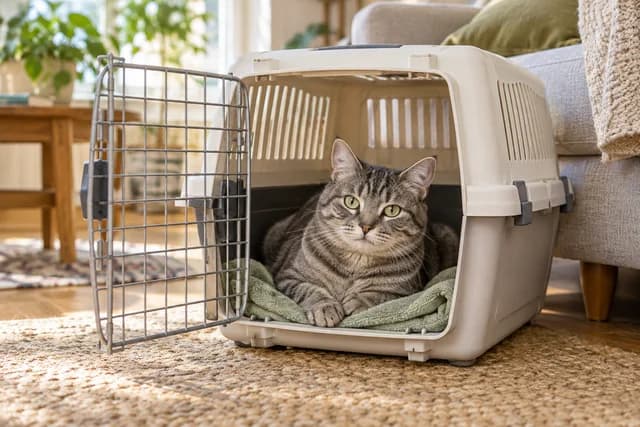
How can I help my cat get comfortable with a carrier?
For cats, prepare familiar carrier access separately from the vehicle setup.
Read the guide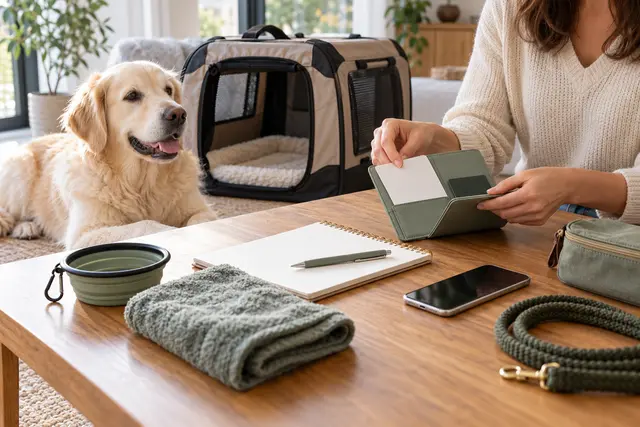 AI-generated editorial scene
How should I organize my pet’s travel documents?
Keep destination and return requirements in their own route-specific ledger.
Read the guide