PREPAREDNESS · FIRST AID
How should I build and check a pet first-aid kit?
Keep basic supplies, current contacts and pet-specific instructions together—and know which items require professional direction.
THE DIRECT ANSWER
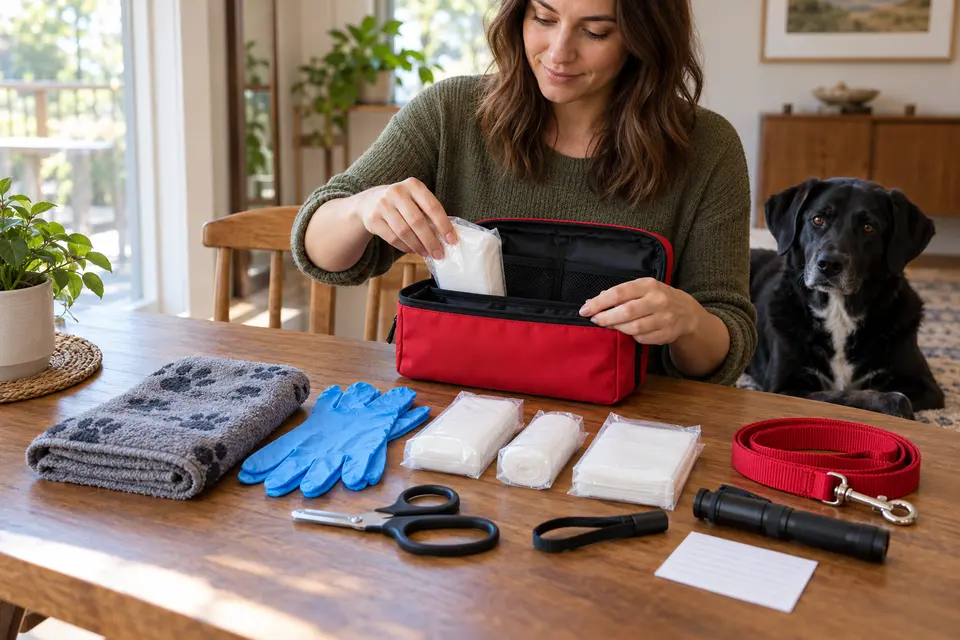
Start with current veterinary and emergency contacts, a copy of the pet's medical and medication information, spare restraint and transport items, clean towels, gloves, gauze, nonstick bandage material, tape, blunt scissors and a flashlight. Ask your veterinarian which pet-specific additions belong in the kit and how to use them. Keep the kit accessible, inspect seals and dates, and never treat a stocked item as permission to improvise treatment; some items should be used only under veterinary or poison-control direction.
Sources: AVMA: First aid tips for pet owners · AVMA: Pet First Aid brochure and kit checklist
Organize the kit by job, not by shopping list
The AVMA checklist combines contacts, records, transport and basic supplies. Keep those jobs visible so another caregiver can find the right category without emptying the entire pouch.
A household first-aid item may be physically similar to a pet item but still require veterinary guidance. Packaging and instructions should stay intact.
Write the veterinarian, emergency hospital, poison service and animal-control details on a separate card that remains readable if a phone battery is unavailable.
| Job | Examples | Limit |
|---|---|---|
| Contact | Veterinarian, emergency hospital, poison service | A number is not a treatment plan |
| Identify | Medical summary, medication list, pet and owner details | Copies must be kept current |
| Protect and contain | Gloves, clean towel, spare leash or carrier | A painful pet may still be unsafe to handle |
| Basic materials | Gauze, nonstick dressing, tape, blunt scissors, flashlight | Technique must be learned before an emergency |
| Directed-use item | Anything the veterinarian says to use only after a call | Presence in the kit is not standing permission |
Sources: AVMA: First aid tips for pet owners · AVMA: Pet First Aid brochure and kit checklist
Keep instructions and restrictions with the item
The AVMA brochure says activated charcoal and inducing vomiting require professional direction. This guide does not recommend stocking or using a drug, chemical or oral product without individualized advice.
Do not decant products into unlabeled containers. A clear pouch can show contents while preserving original labels and sealed packaging.
Ask the veterinarian to demonstrate any bandaging, temperature or transport technique you are expected to use; a checklist cannot teach safe technique.
A fictional six-month kit audit
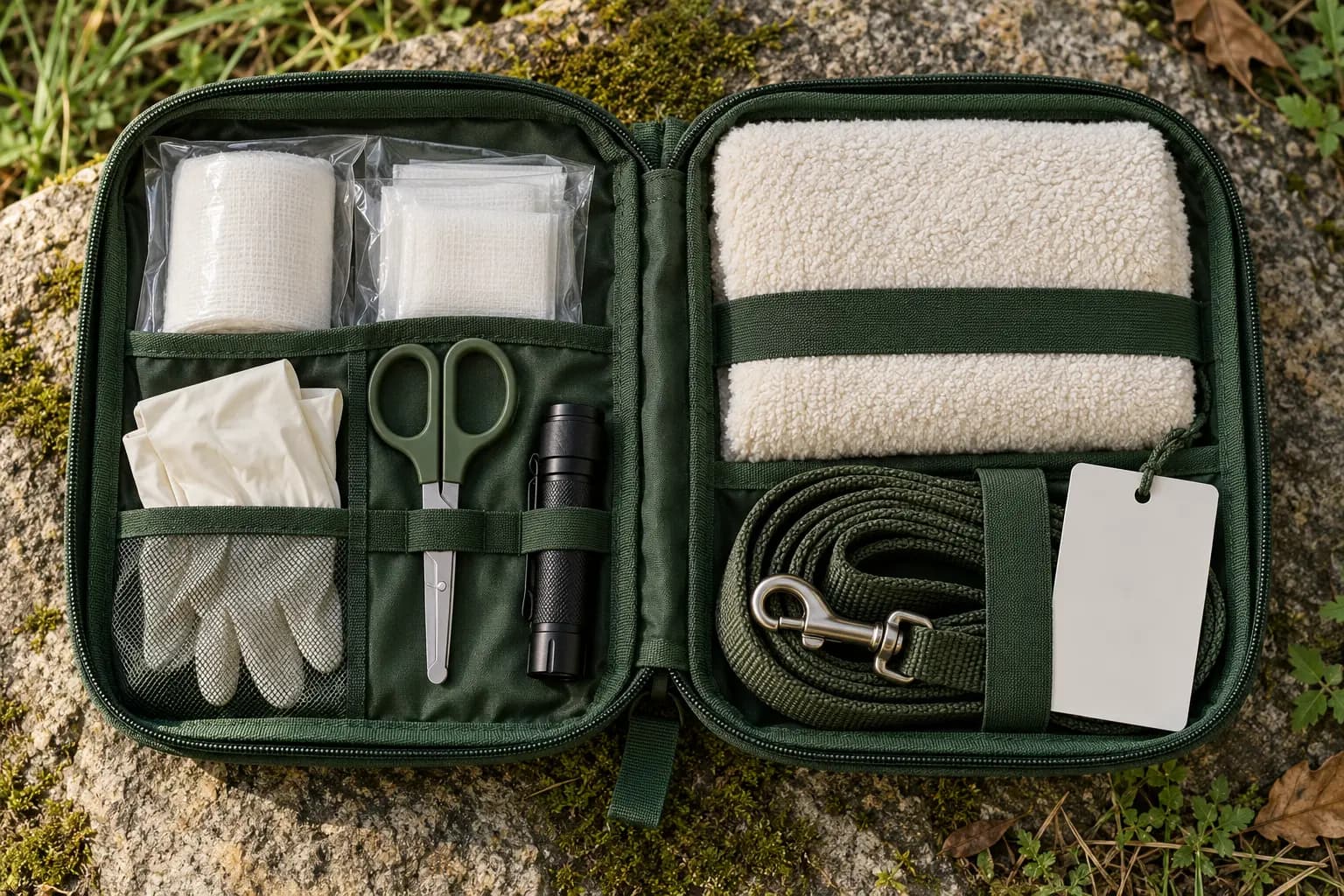
Fictional example: Priya opens the household kit before storm season. The emergency clinic number has changed, one glove packet is torn and the spare leash fits the dog but not the cat carrier setup.
She replaces the damaged packet, updates the contact card and asks the veterinarian which pet-specific items and instructions should be included. She does not add leftover medicines.
The audit checks readiness, not medical competence. It does not certify that the kit can manage an emergency.
| Check | Finding | Action |
|---|---|---|
| Contacts | Emergency clinic number outdated | Verify and replace card |
| Seals | One glove packet torn | Replace unopened supply |
| Transport | Dog leash present; cat-carrier plan incomplete | Add the correct nonmedical transport item |
| Medicines | Leftover product considered | Do not add; ask veterinarian |
Keep first aid and evacuation supplies connected but distinct
A first-aid pouch supports an injury handoff. A disaster kit also needs food, water, medications, sanitation, documents and temporary housing supplies. One pouch should not be described as the entire emergency plan.
Store the first-aid pouch where it can move with the carrier or evacuation kit, but keep food and medication rotation records separate.
For travel, check the destination's emergency hospital and replace the contact card rather than assuming the home clinic can direct local care.
Sources: AVMA: First aid tips for pet owners · AVMA: Pet First Aid brochure and kit checklist
Make the next audit specific
Choose a review date and name the person responsible. Check contacts, packaging, dates, fit of transport gear and whether written veterinary instructions still match the pet.
My Pet Notes stores only the audit text in this browser. It does not inspect supplies, send reminders or contact a clinic.
Replace used or compromised supplies after an event and record what still needs professional guidance.
- Contacts and medical summary are current.
- Packages are sealed, readable and within date.
- Transport gear fits the actual pet.
- Directed-use items remain tied to professional instructions.
FROM THE GUIDE · INTO THEIR EVERYDAY
A pet first-aid kit inventory
Keep contacts, records, transport gear and supply limits together. This is not treatment instruction.
Draft my kit inventoryChoose their notebook, add your own details, then save. Free, no account. Notes stay in this browser.
THE NEXT QUESTIONS
What else might you be wondering?
Can I use a human first-aid kit for my pet?
Some basic materials overlap, but a pet kit also needs pet contacts, records, transport items and veterinarian-approved instructions. Do not assume human medicines or techniques are appropriate.
Sources: AVMA: First aid tips for pet owners · AVMA: Pet First Aid brochure and kit checklist
Should I put leftover pet medicine in the kit?
No. Keep medicines in their labeled storage system and follow the veterinarian or dispenser's instructions; do not repurpose leftovers for a future emergency.
Does having the kit mean I can treat an injury at home?
No. First aid is temporary support while arranging veterinary care. Poorly applied splints, bandages or oral products can cause harm.
LOOK CLOSER AT THE EVIDENCE
Sources & what they establish
Official guidance, research findings and PetCheck’s practical interpretations have different roles. These notes explain how the sources were used.
Veterinary association guidance
AVMA first-aid supplies
Supports basic contacts, records, restraint, transport and dressing materials.
Limit: A supply list cannot teach technique or replace emergency care.
Sources: AVMA: First aid tips for pet owners
Veterinary association brochure
AVMA directed-use warnings
Explicitly places limits on muzzling and products used for poisoning or vomiting.
Limit: Individual pets may need different supplies and instructions.
Original editorial workflow
Priya's fictional audit
Shows contacts, seals, fit and medication boundaries as separate checks.
Limit: Not a certified kit or real emergency outcome.
Sources checked 2026-10-23. Examples are fictional and illustrate reasoning, not patient outcomes. This is an editorial source review, not independent veterinary review. How we prepare these guides →
FOR ANOTHER VISIT
Keep this guide close.
Save it to read again, or copy a link to share.
ONE QUESTION CAN LEAD TO ANOTHER
A useful next read.
Choose the question that fits what you want to understand next.
 AI-generated editorial scene
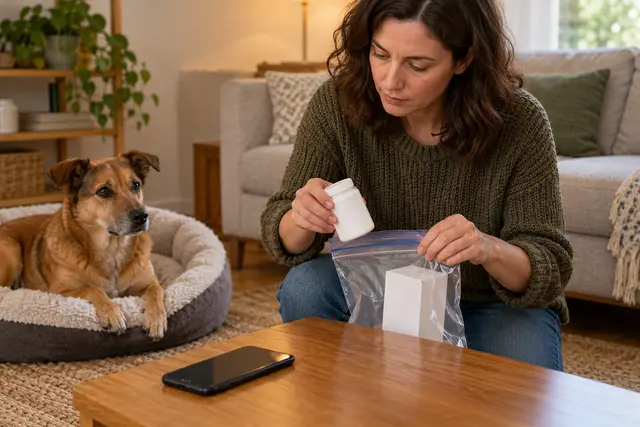
What information should I collect after a possible pet poisoning?
Know which exact facts and packages belong in an urgent exposure handoff.
Read the guide AI-generated editorial scene
How should I organize and store pet medicines at home?
Keep prescribed products, labels and unresolved medicine questions organized outside the kit checklist.
Read the guide