MEDICATION · CAREGIVER HANDOFF
What medication instructions should I leave a pet caregiver?
Keep the exact label, administration record and veterinarian's exception plan together so two people do not create a new dose.
THE DIRECT ANSWER
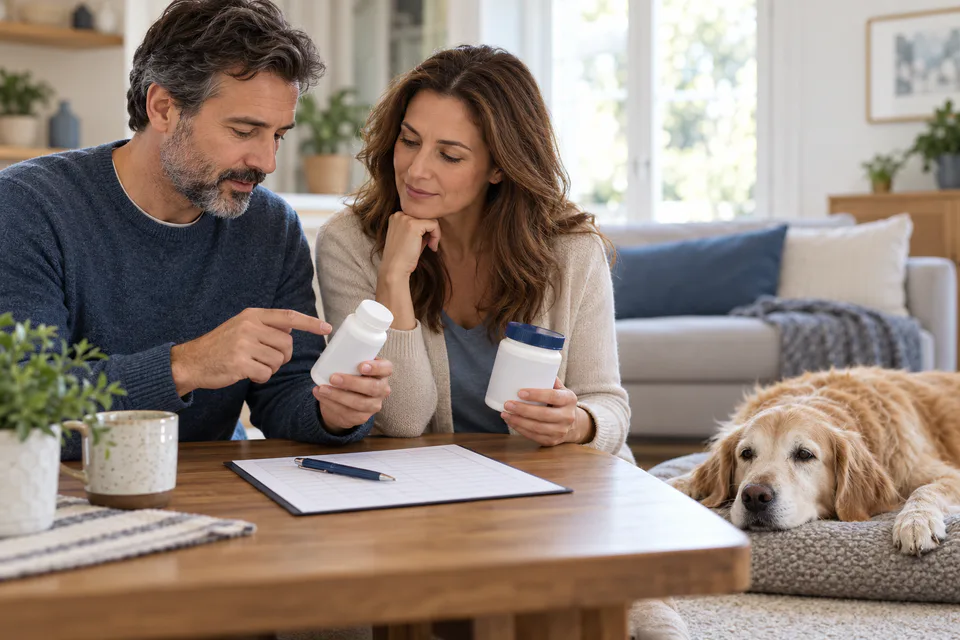
For each pet, copy the exact current prescription label into a dated handoff: medication name, strength and form, the veterinarian-prescribed amount and unit, route, timing, food relationship, storage, treatment dates and the prescribing clinic's contact. Keep the original labeled container with the medication and demonstrate any measuring device exactly as the clinic taught you. Add a completion log and obtain the veterinarian's instructions for a missed, late, vomited or spit-out dose before you leave. The caregiver should never double, repeat, crush, substitute or share a medication unless the veterinarian has specifically directed it.
Sources: FDA: Veterinary Medication Errors · FDA: Medication Errors Happen to Pets, Too
Keep the pet, product and prescription inseparable
FDA describes medication errors from look-alike or sound-alike names, confusing labels, unclear abbreviations and measuring devices. A handoff should remove opportunities for guessing rather than create a shorter informal version.
Name the individual pet, medication, strength, dosage form, exact amount with unit, route and timing exactly as prescribed. Photographing the label can supplement but should not replace a readable original container.
Store animal drugs separately from human medicines and from another pet's drugs. Color or bottle shape is not a reliable identifier.
| Field | Copy exactly | Unsafe shortcut |
|---|---|---|
| Pet | Name and identifying detail | The small dog |
| Product | Drug name, strength and form | The white bottle |
| Amount | Prescribed number plus unit | One syringe |
| Route | Where and how the vet directed | Give normally |
| Schedule | Exact timing and date range | Morning-ish |
| Contact | Prescribing clinic and emergency route | Ask the internet |
Sources: FDA: Veterinary Medication Errors · FDA: Medication Errors Happen to Pets, Too
Demonstrate the real container and measuring device
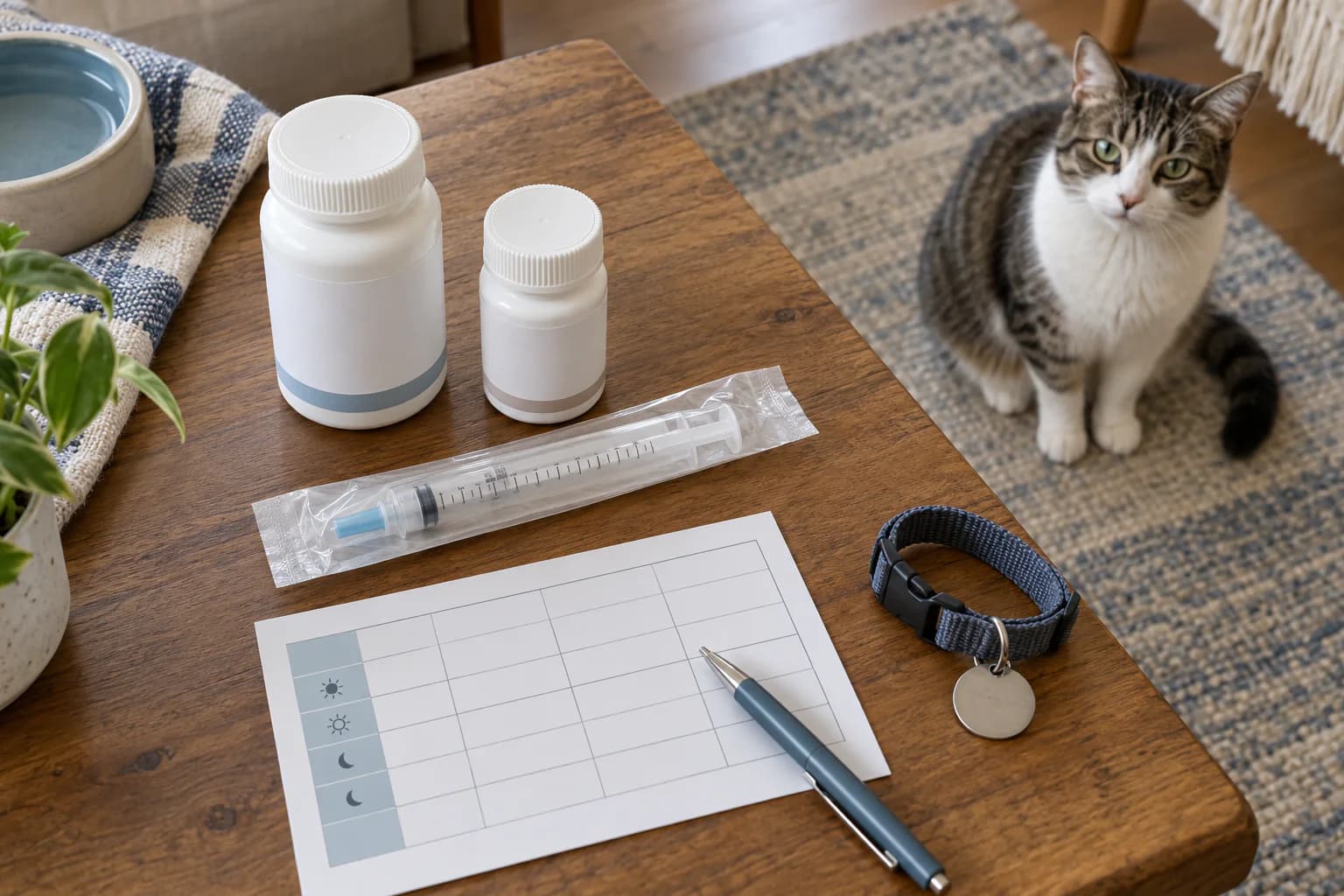
FDA notes that people may be uncertain how to use a syringe or other device. Ask the veterinarian to demonstrate it, then have the caregiver show the same steps back before you leave.
Use only the device paired with the prescription and keep it labeled or packaged as directed. Do not translate milliliters into a kitchen spoon or copy a setting from another product.
Keep medicines in original labeled containers. If storage has temperature, light or handling requirements, copy those exact directions rather than inventing a general rule.
Sources: FDA: Veterinary Medication Errors · FDA: Medication Errors Happen to Pets, Too
A fictional handoff that stops a duplicate dose
Fictional example: caregiver Mina sees an unchecked evening row but also finds a text saying the earlier caregiver visited. The sheet does not prove whether the dose was given.
Mina marks 'status unknown,' separates the medication and calls the prescribing clinic using the written contact plan. She does not give another dose to make the row look complete.
This example demonstrates uncertainty handling. It supplies no medication, dose, missed-dose rule or recommendation for a real patient.
| Time | Record | Boundary |
|---|---|---|
| Morning | Completed; caregiver initials and time | No dose details invented |
| Evening | Status unknown | No automatic repeat |
| Call | Prescribing clinic contacted | Clinic decides the next instruction |
| Update | Exact instruction added with source and time | No verbal memory substituted later |
Ask about exceptions before they happen
FDA recommends asking what to do if a dose is forgotten or if the animal vomits or spits it out. The answer can depend on the drug and patient, so obtain it from the prescribing veterinarian.
Also ask which reactions require an immediate call and what to do after a possible extra dose. Avoid a universal 'skip' or 'repeat' rule.
Record who supplied the instruction and when. A caregiver should not infer the plan from a different pet, medication or earlier prescription.
Sources: FDA: Veterinary Medication Errors · FDA: Medication Errors Happen to Pets, Too
Use a completion log that records uncertainty honestly
Each entry should capture scheduled time, actual time, completed or not, caregiver initials and a short observation if relevant. Blank is not the same as missed, and missed is not the same as status unknown.
My Pet Notes can hold a local draft, but it does not remind the caregiver, verify administration, store a medical record or contact the clinic.
Reconcile the log and remaining medication at handoff changes. Keep the latest prescription distinguishable from discontinued instructions.
- Pet and exact labeled product are paired.
- Amount includes the prescribed unit and route.
- Missed, vomited and extra-dose instructions came from the veterinarian.
- Every administration entry can also say unknown.
FROM THE GUIDE · INTO THEIR EVERYDAY
A pet medication handoff
Copy exact current prescription details and preserve unknown administration status. This does not choose a dose.
Draft my medication handoffChoose their notebook, add your own details, then save. Free, no account. Notes stay in this browser.
THE NEXT QUESTIONS
What else might you be wondering?
Should a caregiver repeat a dose if the pet spits it out?
Not without the prescribing veterinarian's specific instruction. The amount retained may be uncertain and the correct response depends on the medication and patient.
Sources: FDA: Veterinary Medication Errors
Can I move pills into an unlabeled organizer?
FDA advises keeping animal medications in original labeled containers. The handoff should preserve product identity, strength, directions and expiry rather than rely on appearance.
Sources: FDA: Veterinary Medication Errors · FDA: Medication Errors Happen to Pets, Too
Is a blank log box proof that a dose was missed?
No. It may be missed or simply undocumented. Mark the status unknown and follow the veterinarian's contact plan instead of automatically repeating it.
LOOK CLOSER AT THE EVIDENCE
Sources & what they establish
Official guidance, research findings and PetCheck’s practical interpretations have different roles. These notes explain how the sources were used.
Federal medication-safety guidance
FDA veterinary medication errors
Supports exact label identification, clear units, original containers, device instructions and advance questions about missed or rejected doses.
Limit: It does not supply a universal dose, redosing rule or patient-specific response plan.
Sources: FDA: Veterinary Medication Errors
Federal consumer guidance
FDA medication errors happen to pets
Supports keeping a current medication list, separating animal and human drugs and asking the veterinarian to demonstrate devices.
Limit: A checklist cannot verify that a caregiver administered a medication correctly.
Sources checked 2026-10-24. Examples are fictional and illustrate reasoning, not patient outcomes. This is an editorial source review, not independent veterinary review. How we prepare these guides →
FOR ANOTHER VISIT
Keep this guide close.
Save it to read again, or copy a link to share.
ONE QUESTION CAN LEAD TO ANOTHER
A useful next read.
Choose the question that fits what you want to understand next.
 AI-generated editorial scene
How should I organize and store pet medicines at home?
Keep original labels, separation and storage conditions correct before the caregiver handoff.
Read the guide AI-generated editorial scene
What feeding instructions should I leave a pet sitter?
Coordinate food timing without turning the meal sheet into a new medication instruction.
Read the guide