EVERYDAY CARE · ORAL HEALTH
How do I start brushing my dog or cat’s teeth at home?
Ask what is appropriate for your pet, introduce the tools without force, and record what your dog or cat comfortably accepts.
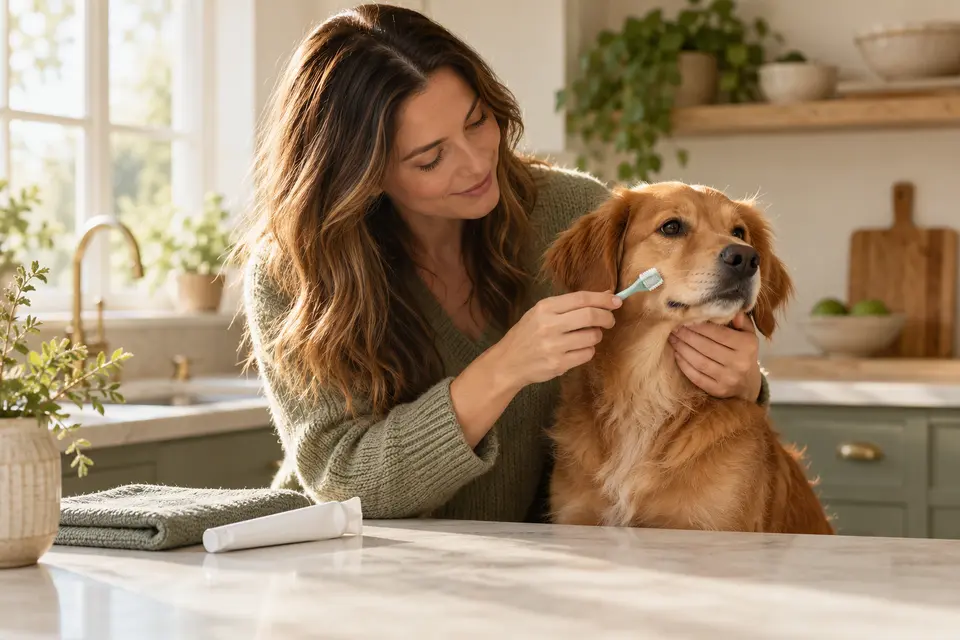
THE DIRECT ANSWER
Ask your veterinarian whether brushing is appropriate now and which pet-safe tools to use. Begin with brief, calm exposure to the brush and toothpaste rather than forcing a full-mouth session. Target the accessible outer tooth surfaces only as your veterinary team demonstrates, stop if your pet shows pain or distress, and build frequency from a plan your veterinarian has confirmed. Home brushing helps control plaque; it does not replace an oral examination or professional treatment.
Sources: AVMA: Pet dental care · AAHA: Recommending home oral hygiene and products · Veterinary Oral Health Council: Brushing
Start with the mouth you have—not an internet schedule
AVMA describes regular brushing as the most effective action owners can take between dental cleanings and says daily brushing is best, while several times a week can still be effective. That frequency statement is general preventive guidance, not a finding that every painful or untreated mouth should be brushed today.
Ask the veterinary team to identify a suitable brush, pet toothpaste and technique for this animal. Human toothpaste and an improvised tool are not assumed safe by this guide. If the pet already has oral signs, resolve those first rather than treating brushing as a home repair.
Write the starting point in plain language: 'allows lip lift for two seconds' is more useful than 'good at brushing.' The record is about cooperation and questions, not a score for dental health.
| Layer | Record | Do not infer |
|---|---|---|
| Veterinary plan | Whether to start; demonstrated tools and target surfaces | That a generic online method suits this pet |
| Equipment | Exact pet product and brush you will use | That any toothpaste or chew is interchangeable |
| Pet response | What the pet accepted without restraint | That stillness proves comfort or a healthy mouth |
| Session | What was actually completed | That an attempted full-mouth routine was completed |
| Follow-up | Question, oral sign or next veterinary check | That brushing replaces examination or treatment |
Sources: AVMA: Pet dental care · AAHA: Recommending home oral hygiene and products
Let the first success be smaller than a full brush
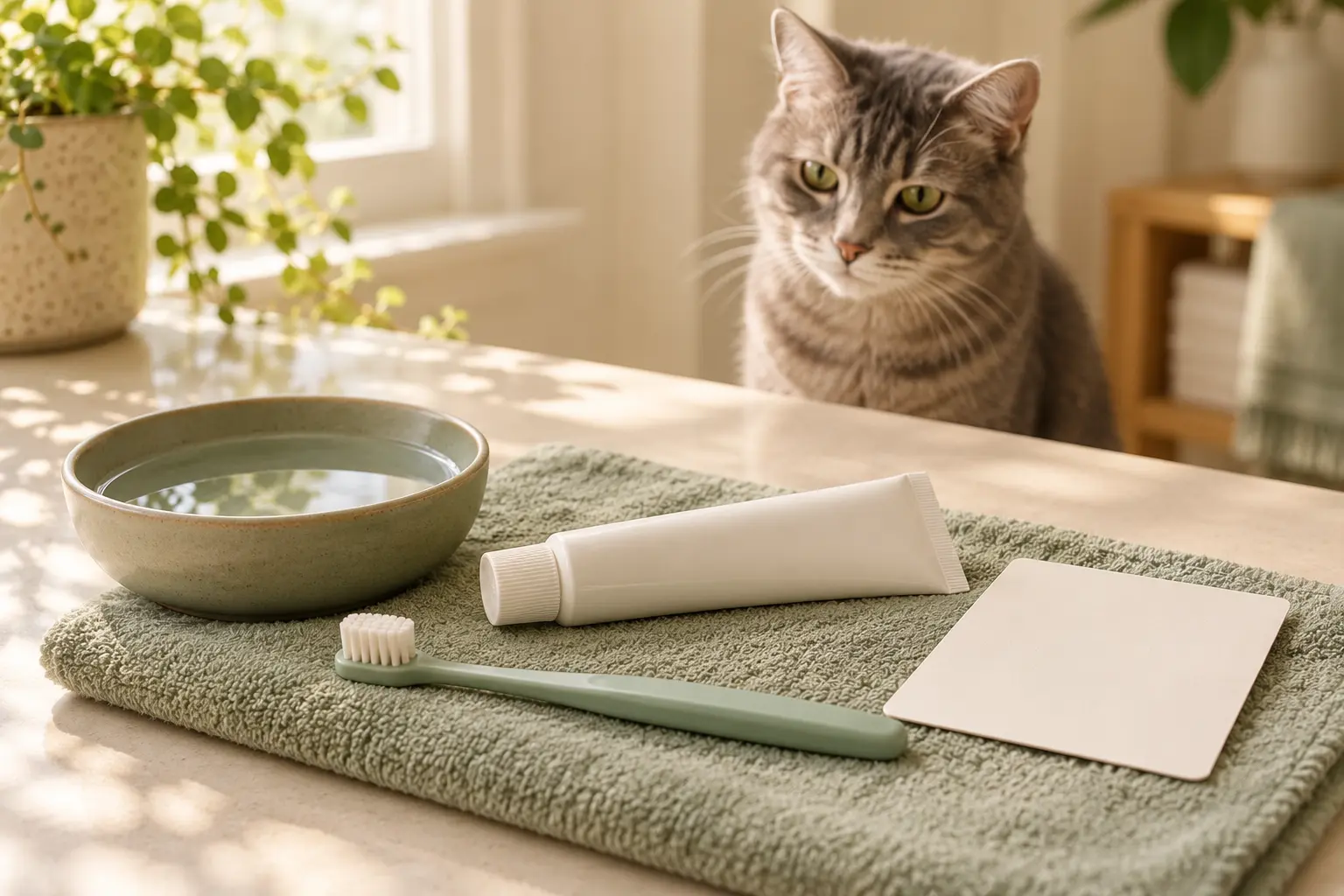
Introduce one element at a time: the chosen location, the towel or mat, the brush, and then the touch your veterinarian showed you. Keep the pet free to move away. Do not pry the jaw open, chase a retreating pet or continue simply to complete a timer.
VOHC notes that plaque and tartar accumulate rapidly on the cheek-facing surfaces of upper teeth and advises owners to ask whether its standardized approach is appropriate for their pet. That supports a focused conversation; it is not permission to copy a trial protocol without guidance.
End the entry with what happened, not what you intended. If only the brush was sniffed, record that. A modest true observation is more useful than a completed checkbox that hides distress.
A fictional first-week record without a deadline
Fictional example: Sam's veterinarian has examined dog Maple and demonstrated a pet toothbrush routine. On the first evening Maple approaches the mat and sniffs the brush. Two days later she accepts a brief lip lift, but turns away when the brush nears a back tooth.
Sam stops at the turn-away and records the distinction. 'Accepted the brush' would be inaccurate; 'accepted lip lift, moved away before brushing' gives the clinic a concrete question. No dental condition or progress timetable is inferred.
The next step in this imaginary example is a call or a gentler stage agreed with the veterinary team—not a forced repeat. Maple's response does not predict how a cat, puppy, senior pet or animal with mouth pain will respond.
| Session | Observed | Status |
|---|---|---|
| 1 | Approached mat; sniffed brush | Exposure only |
| 2 | Allowed brief lip lift | No brushing attempted |
| 3 | Moved away when brush approached rear teeth | Stopped; question for clinic |
| Follow-up | Sam asks how to adjust the plan | Await professional guidance |
Keep brushing, products and professional care separate
The VOHC seal identifies products accepted for a specified plaque or tartar claim after review under its protocols. It does not mean every listed item is appropriate for every animal or that one product provides every dental benefit.
AAHA states that even daily brushing does not remove the need for anesthetized examinations, radiographs and treatment when indicated. A cleaner-looking visible surface cannot show what is happening below the gumline.
If you use a chew, diet, wipe, additive or toothpaste, record the exact item and the claim you verified. Do not call all of them 'the dental product,' and do not add calories, ingredients or a new routine without considering the pet's wider plan.
Keep the note short enough to use again
A useful entry can contain date, tool, surfaces attempted, response, reason for stopping and one question. Record oral changes separately from the training step so a concern is not buried in a habit tracker.
My Pet Notes can hold this browser-local record and export selected notes. It does not inspect the mouth, send data to a clinic, judge technique or remind you automatically.
Review the note before a dental visit. Bring the actual product name and what the pet tolerated; leave diagnosis and treatment decisions with the veterinary team.
- The veterinary team confirmed an appropriate starting plan.
- The exact pet product and tool are identifiable.
- The entry says what was completed and why it stopped.
- Any oral sign or question has a separate follow-up.
FROM THE GUIDE · INTO THEIR EVERYDAY
A calm brushing note
Record the small step your pet accepted and any question for the veterinary team. This does not assess dental health.
Draft my brushing noteChoose their notebook, add your own details, then save. Free, no account. Notes stay in this browser.
THE NEXT QUESTIONS
What else might you be wondering?
Do I have to brush every tooth on the first day?
No. Follow the staged approach your veterinary team recommends and stop before force or distress. Record the small step actually completed.
Can a dental chew replace brushing?
Do not treat different home-care options as identical. Ask which products and claims fit your pet, and remember that home care does not replace veterinary examination.
What if my pet's gums bleed during brushing?
Stop and contact your veterinarian for advice. Do not use a bleeding area as a reason to scrub harder or diagnose the cause at home.
Sources: AVMA: Pet dental care
LOOK CLOSER AT THE EVIDENCE
Sources & what they establish
Official guidance, research findings and PetCheck’s practical interpretations have different roles. These notes explain how the sources were used.
Veterinary association guidance
AVMA and AAHA dental care
Supports regular home brushing alongside professional oral care.
Limit: Does not establish that brushing is suitable for a particular painful or untreated mouth.
Sources: AVMA: Pet dental care · AAHA: Recommending home oral hygiene and products
Dental product program
VOHC brushing and accepted claims
Explains targeted surfaces and product-specific plaque or tartar claims.
Limit: A seal or trial method is not an individual treatment plan.
Original editorial workflow
Maple's fictional brushing log
Separates exposure, completed brushing and an unresolved question.
Limit: Not a tested training schedule, patient case or outcome claim.
Sources checked 2026-10-21. Examples are fictional and illustrate reasoning, not patient outcomes. This is an editorial source review, not independent veterinary review. How we prepare these guides →
FOR ANOTHER VISIT
Keep this guide close.
Save it to read again, or copy a link to share.
ONE QUESTION CAN LEAD TO ANOTHER
A useful next read.
Choose the question that fits what you want to understand next.
 AI-generated editorial scene
What should I write down before my pet’s vet visit?
Bring the actual response and oral-health questions to the veterinary conversation.
Read the guide AI-generated editorial scene
How should I organize and store pet medicines at home?
Keep approved oral-care products identifiable and separate from medicines.
Read the guide