SAFETY · LOST PET
What should I do first when my pet goes missing?
Search the home, fix the time and place, contact local services and keep every public update consistent.
THE DIRECT ANSWER
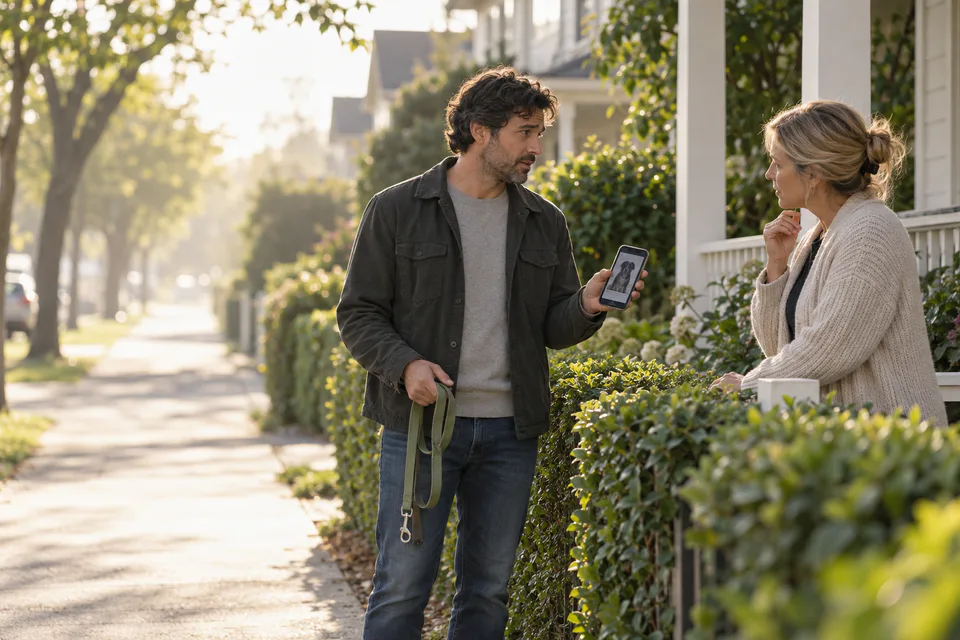
First confirm when and where the pet was last seen, search the home and immediate property carefully, and ask household members separately what they observed. Then search the nearby area with a recent photo and contact local animal control, municipal and private shelters, veterinary hospitals and rescue groups; follow each organization's current reporting and recheck process. Notify the microchip registry and verify the contact information if your pet is chipped. Use one dated description, recent clear photo, distinguishing features and two reachable contact numbers across flyers and local online posts, while keeping a log of places checked and leads that remain unverified.
Sources: ASPCA: Finding a Lost Pet · AVMA: Microchipping FAQ
Fix the last verified point before rumors multiply
Ask each household member when and where they last personally saw the pet, which doors or windows were open and what the pet was wearing. Keep inference separate from observation.
Search inside first: closets, under beds, behind large furniture, garages, sheds and other quiet enclosed places. A pet reported missing may still be hidden or accidentally shut in.
Use one last-seen time and location until better verified information appears. A forwarded sighting is a lead, not a new fact.
| Field | Verified record | Keep separate |
|---|---|---|
| Last seen | Person, time, exact place | Assumed escape route |
| Appearance | Recent photo and distinguishing features | Generic breed image |
| Equipment | Collar, harness or tag actually worn | What the pet usually wears |
| Lead | Who reported what, when and where | Unconfirmed social repost |
| Contact | Two numbers that are being answered | Private home-access details |
Sources: ASPCA: Finding a Lost Pet
Search nearby and work the local contact list in parallel
ASPCA recommends bringing a recent photo, asking neighbors and checking under porches and shrubs, as well as asking about sheds and garages where a pet could be shut in.
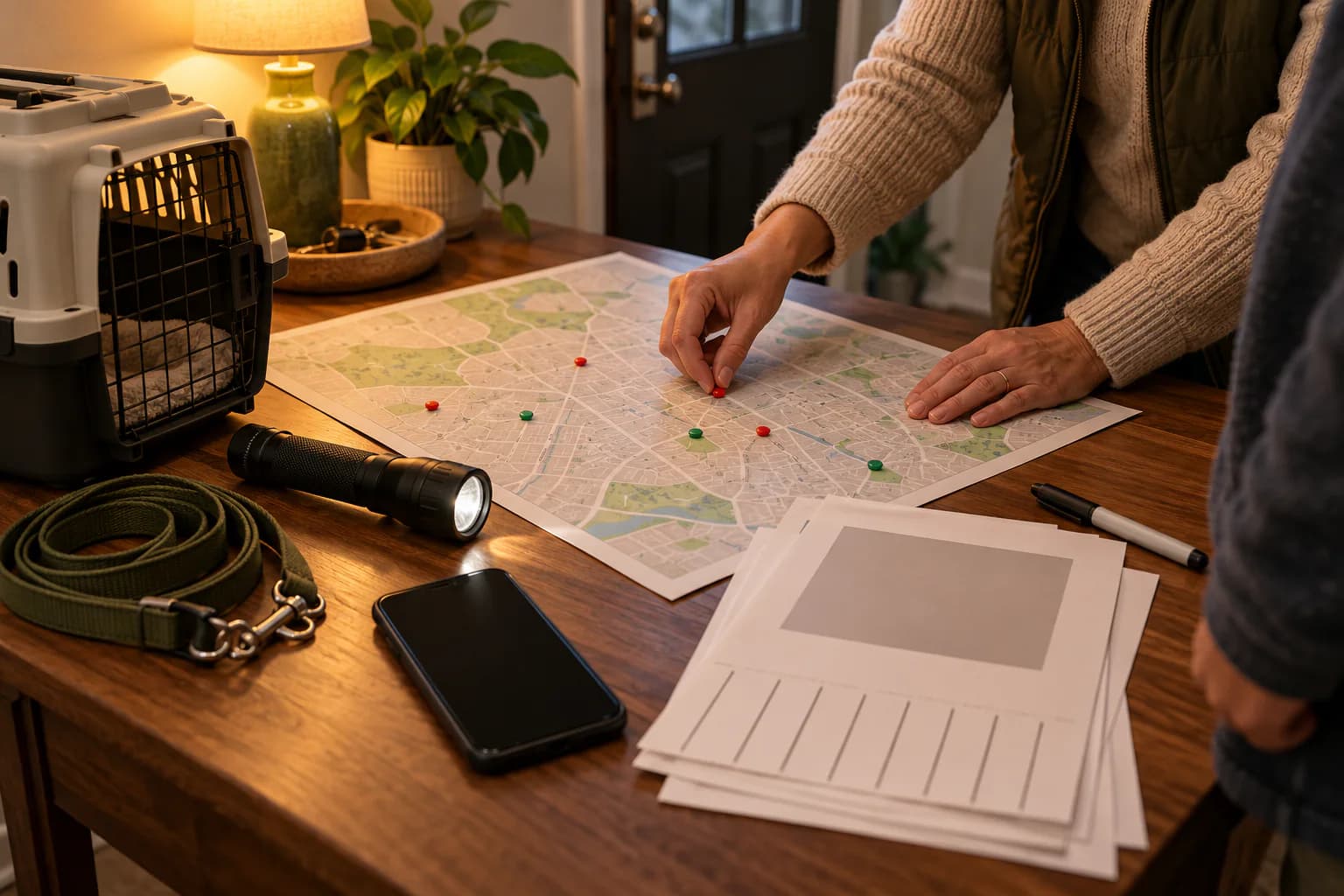
Contact local animal control, veterinary hospitals, municipal and private shelters and rescue groups. Ask each one how often to recheck and whether an in-person visit, photo or formal lost report is needed.
Notify the microchip registry and verify your current contact information. A microchip does not broadcast location, so it complements rather than replaces the physical and local search.
Sources: ASPCA: Finding a Lost Pet · AVMA: Microchipping FAQ
A fictional search log that rejects one false update
Fictional example: indoor cat Pico was last verified in the upstairs hall at 6:40 pm. A neighbor reports a gray cat two blocks away at 7:15 pm but has no photo and cannot confirm Pico's white chest patch.
The family logs the report as unverified, continues the home and immediate-property check, contacts local shelters and updates the registry contact. They do not change every flyer to the unconfirmed location.
This example shows information control. It does not prescribe a search radius or predict where an individual lost pet will be found.
| Time | Entry | Status or action |
|---|---|---|
| 6:40 pm | Pico seen upstairs by household member | Verified last seen |
| 7:00 pm | Home, garage and yard search begun | Locations logged |
| 7:15 pm | Gray cat reported two blocks away | Unverified lead; description incomplete |
| 7:25 pm | Shelters and registry contacted | Current instructions and contact data checked |
Publish one consistent card without exposing the household
Use a clear recent photo, species or breed description, sex, color, age, approximate size, distinguishing features, and exact last verified time and place. Add two reachable phone numbers.
Keep the core message consistent across flyers and local social channels, and timestamp corrections. Avoid publishing door codes, travel plans, full medical details or a claim that a sighting is confirmed when it is not.
When someone claims to have the pet, verify distinguishing information and follow safe local guidance before sharing money or additional private details.
Sources: ASPCA: Finding a Lost Pet
Run a living contact and area log
Record each shelter, clinic, agency, neighbor and area checked, the date and time, the next recheck requested and the outcome. This prevents duplicated effort while a missed contact remains visible.
My Pet Notes stores this draft only in the current browser. It does not broadcast an alert, contact a registry or shelter, track a pet, or back up the search record online.
Update the working team from the log, then preserve the original last-seen entry rather than overwriting history.
- Home and immediate property were searched first.
- Last-seen fact and later leads remain separate.
- Local shelters, animal control, clinics and registry processes were checked.
- Public posts omit access codes and unverified claims.
FROM THE GUIDE · INTO THEIR EVERYDAY
A lost-pet search log
Keep the verified last-seen point, contacts and unconfirmed leads separate. This does not broadcast an alert.
Draft my search logChoose their notebook, add your own details, then save. Free, no account. Notes stay in this browser.
THE NEXT QUESTIONS
What else might you be wondering?
Should I search outside before checking the whole house?
Start by confirming household observations and searching hiding and confinement places inside and on the immediate property. Then expand the search and contacts without delay.
Sources: ASPCA: Finding a Lost Pet
Does a microchip show my pet's live location?
No. A microchip is identification read with a compatible scanner; it is not a live GPS tracker. Current registry contact information helps a finder or facility reach you.
Sources: AVMA: Microchipping FAQ
Should I move the last-seen point after every social-media comment?
No. Log reports as leads until details are verified. Keep the original verified point and timestamp any confirmed correction.
LOOK CLOSER AT THE EVIDENCE
Sources & what they establish
Official guidance, research findings and PetCheck’s practical interpretations have different roles. These notes explain how the sources were used.
Animal-welfare search guidance
ASPCA lost-pet steps
Supports immediate home and neighborhood search, recent-photo outreach, local agency and shelter contacts, and consistent flyers.
Limit: It does not guarantee recovery, prescribe one search radius or verify a social-media sighting.
Sources: ASPCA: Finding a Lost Pet
Veterinary professional identification guidance
AVMA microchipping FAQ
Supports microchip registration and current contact information as part of reunification.
Limit: A microchip is not live location tracking and does not replace active searching or visible identification.
Sources: AVMA: Microchipping FAQ
Sources checked 2026-10-24. Examples are fictional and illustrate reasoning, not patient outcomes. This is an editorial source review, not independent veterinary review. How we prepare these guides →
FOR ANOTHER VISIT
Keep this guide close.
Save it to read again, or copy a link to share.
ONE QUESTION CAN LEAD TO ANOTHER
A useful next read.
Choose the question that fits what you want to understand next.
 AI-generated editorial scene
How do I update my pet’s microchip contact details?
Verify the registry contact record while remembering that a microchip is not live location tracking.
Read the guide AI-generated editorial scene
How should I practice an emergency evacuation with my pet?
After the immediate search, repair household roles, access and escape-prevention gaps in a calm drill.
Read the guide