PREPAREDNESS · EVACUATION
How should I practice an emergency evacuation with my pet?
Assign people, carriers, exits and a backup destination, then rehearse calmly enough to find the weak link.
THE DIRECT ANSWER
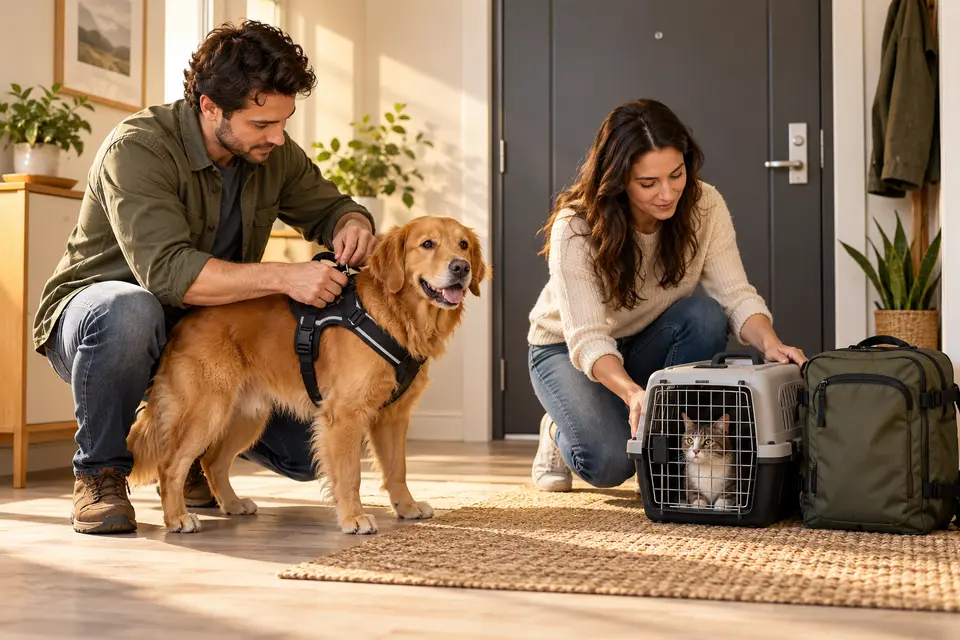
Practice a calm start-to-exit sequence: who locates each pet, who closes doors and windows if safe, who carries the go-bag, which carrier or leash belongs to each pet, and which primary and backup routes and destinations accept animals. Include a trusted buddy for times nobody is home. The rehearsal should test access and coordination—not frighten the pet, simulate a disaster with alarms, or promise a fixed evacuation time.
Sources: CDC: Be Prepared—Pet Safety in Emergencies · Ready.gov: Prepare Your Pets for Disasters
Give every person, pet and item one role
CDC advises planning where pets can stay, creating a buddy system and practicing evacuation and transport. Put those decisions into a household handoff rather than a generic intention to 'take the pets.'
Choose a primary and alternate exit, a meeting point and destinations that actually accept the animals. General public shelters may not accept pets other than service animals.
Use the real carrier, harness or leash for each pet. The exercise can reveal a blocked closet, missing key or carrier that no longer fits.
| Element | Question to test | Evidence to keep |
|---|---|---|
| Pet access | Where does this pet hide and who retrieves them? | Observed location and safe approach |
| Equipment | Does the actual carrier, leash or harness fit and open quickly? | Item and storage location |
| Route | Are primary and backup exits usable? | Obstacle or locked point found |
| Destination | Does the place currently accept this species and household? | Name, contact and check date |
| Buddy | Can a trusted person access the pet when nobody is home? | Agreed access and contact method |
Sources: CDC: Be Prepared—Pet Safety in Emergencies · Ready.gov: Prepare Your Pets for Disasters
Rehearse the motions without staging danger
Use an ordinary cue and a quiet walk to the closed exit. Do not add smoke, alarms, shouting or forced capture to make the drill realistic.
Carrier familiarity and vehicle travel are separate training tasks. If the pet cannot enter the equipment calmly, record that gap and work on it outside the evacuation drill.
End when the planned sequence is complete or the pet becomes distressed. A shorter, honest rehearsal is more useful than a forced time target.
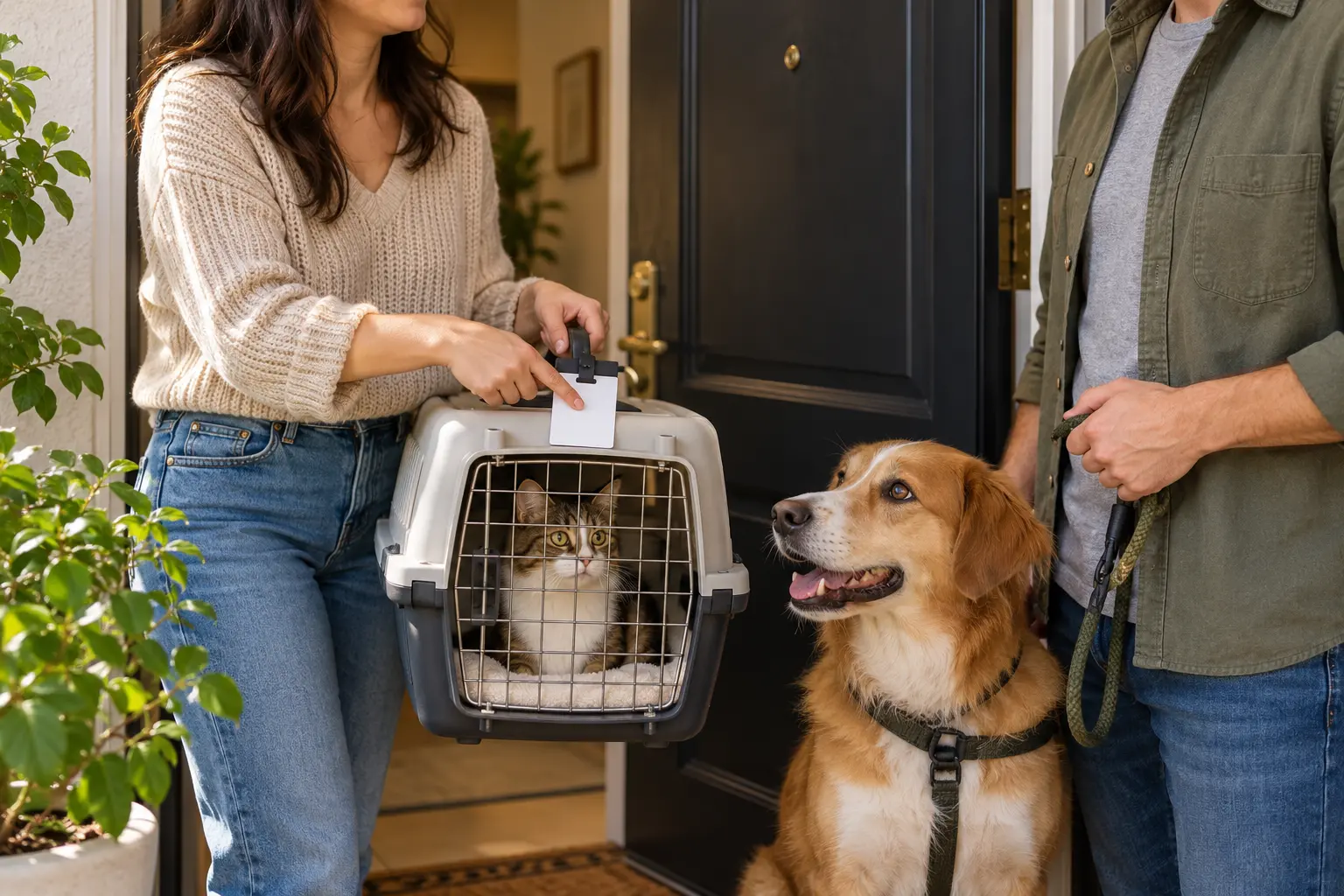
A fictional apartment drill
Fictional example: Rae retrieves cat Olive's carrier while Sam clips dog Bean's harness and picks up the go-bag. At the door they discover the backup key is not on its hook and the carrier blocks the narrow stair turn.
They stop, return the pets to their normal spaces, move the carrier storage and assign a replacement key. The result is two specific fixes—not a claim that the home can evacuate in three minutes.
The following week the buddy practices only the access and contact handoff without removing the pets from the home.
| Step | Observed gap | Repair |
|---|---|---|
| Equipment | Carrier awkward at stair turn | Choose accessible storage and retest the route |
| Access | Backup key missing | Replace and document location |
| Roles | Go-bag owner was clear | Keep assignment |
| Buddy | Access method not yet practiced | Schedule a separate handoff |
Verify destinations instead of writing ‘shelter’
CDC notes that many evacuation centers do not accept pets. Record a pet-friendly destination, an alternative and the local animal or veterinary contact that can clarify current arrangements.
Check transport options if the household does not have a car. A plan that depends on one person, one road or one facility needs a backup.
Rules can change during an event. Date the check and follow current local instructions rather than treating the notebook as authorization.
Sources: CDC: Be Prepared—Pet Safety in Emergencies · Ready.gov: Prepare Your Pets for Disasters
Keep the weak link visible until it is repaired
Record only what was actually rehearsed: equipment access, pet response, route, buddy, vehicle or destination. Mark untouched parts as not tested.
My Pet Notes stores the plan locally. It does not alert the buddy, book shelter space or track changing emergency orders.
Revisit the plan after a move, new pet, equipment change or contact change.
- Every pet has named equipment and a responsible person.
- Two routes and two destination options are recorded.
- A buddy handoff exists for an empty home.
- Untested steps and unresolved obstacles remain visible.
FROM THE GUIDE · INTO THEIR EVERYDAY
A pet evacuation drill record
Find the weak link in access, roles, transport and destination checks before an emergency.
Draft my drill recordChoose their notebook, add your own details, then save. Free, no account. Notes stay in this browser.
THE NEXT QUESTIONS
What else might you be wondering?
Should I time the evacuation drill?
You may note elapsed time, but do not turn it into a pass/fail target. Finding an inaccessible carrier, frightened pet or unclear role is the useful outcome.
Can I assume a public evacuation shelter will take my pet?
No. Many general shelters do not accept pets other than service animals. Verify pet-capable options and backups in advance and recheck during an event.
Sources: CDC: Be Prepared—Pet Safety in Emergencies · Ready.gov: Prepare Your Pets for Disasters
What should my emergency buddy know?
Agree on safe access, each pet's likely location, the exact equipment, contact methods and where to go. Do not put sensitive access details in a public share link.
LOOK CLOSER AT THE EVIDENCE
Sources & what they establish
Official guidance, research findings and PetCheck’s practical interpretations have different roles. These notes explain how the sources were used.
Public-health guidance
CDC pet emergency planning
Supports destinations, buddy systems, labeled equipment and practiced transport.
Limit: Local conditions and shelter rules change; the page does not certify one household plan.
Emergency-management guidance
Ready.gov pet disaster planning
Supports evacuation plans, contacts, identification and rehearsed readiness.
Limit: Follow current local authority instructions during a real event.
Original editorial workflow
Rae and Sam's fictional drill
Shows how a rehearsal surfaces route and access problems without forcing pets.
Limit: Not an actual evacuation or time standard.
Sources checked 2026-10-23. Examples are fictional and illustrate reasoning, not patient outcomes. This is an editorial source review, not independent veterinary review. How we prepare these guides →
FOR ANOTHER VISIT
Keep this guide close.
Save it to read again, or copy a link to share.
ONE QUESTION CAN LEAD TO ANOTHER
A useful next read.
Choose the question that fits what you want to understand next.
 AI-generated editorial scene
How do I plan food supplies for a pet emergency kit?
Check the separate food, packaging and rotation layer inside the broader evacuation plan.
Read the guide AI-generated editorial scene
How do I update my pet’s microchip contact details?
Verify the separate registry contact record instead of assuming a drill updates it.
Read the guide