DOG OBSERVATION · EXPLAINED
Food-like pieces in dog poop: what can you tell?
Describe visible pieces without guessing their identity. Learn what food history, repeated changes and a veterinary sample can add to a photograph.
AI-assisted educational writing. Not independently veterinarian-reviewed. Editorial method
THE DIRECT ANSWER
The direct answer
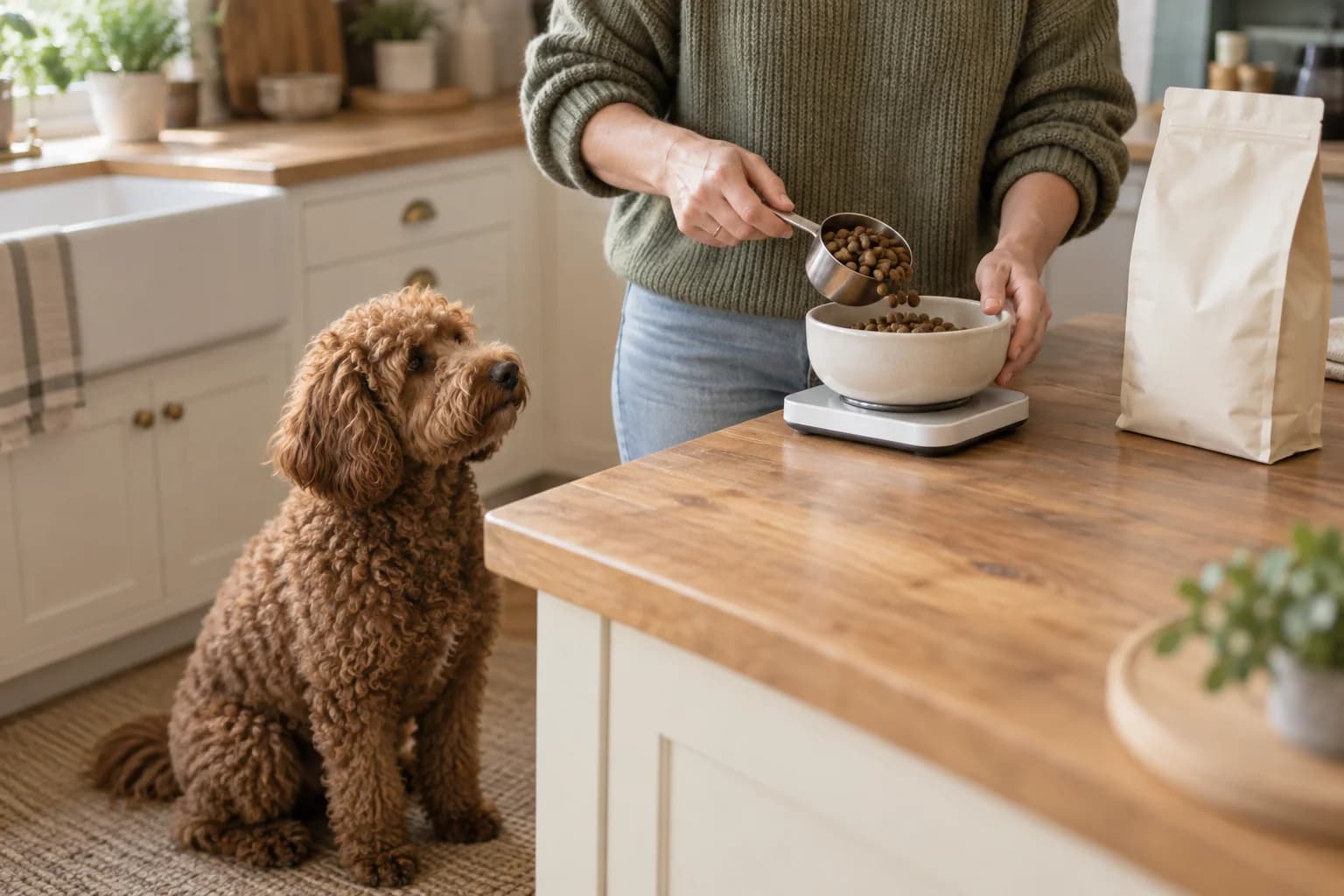
Something that resembles food is an observation, not proof of what it is or how well the whole meal was digested. Describe the pieces, the stool around them and when they were seen. Repeated changes with weight loss or appetite changes need veterinary assessment; suspected swallowed objects need prompt advice.
Sources: [1] Merck Veterinary Manual[2] Cornell Riney Canine Health Center
All sections, questions & sources
Dotted terms open a short explanation. Stay on the page as you read.
01 · UNDERSTAND THE QUESTION
Begin with shape and location, not an ingredient name
“Small pale pieces on the surface” tells the clinic what you saw. “Undigested rice” adds an identity you may not know. Record approximate size and whether the material was scattered through the stool, sitting on top or found nearby.
PUT THE OBSERVATION IN CONTEXT
Keep three food records separate.
What was offered, what was eaten and what appeared later are connected questions, not identical observations.
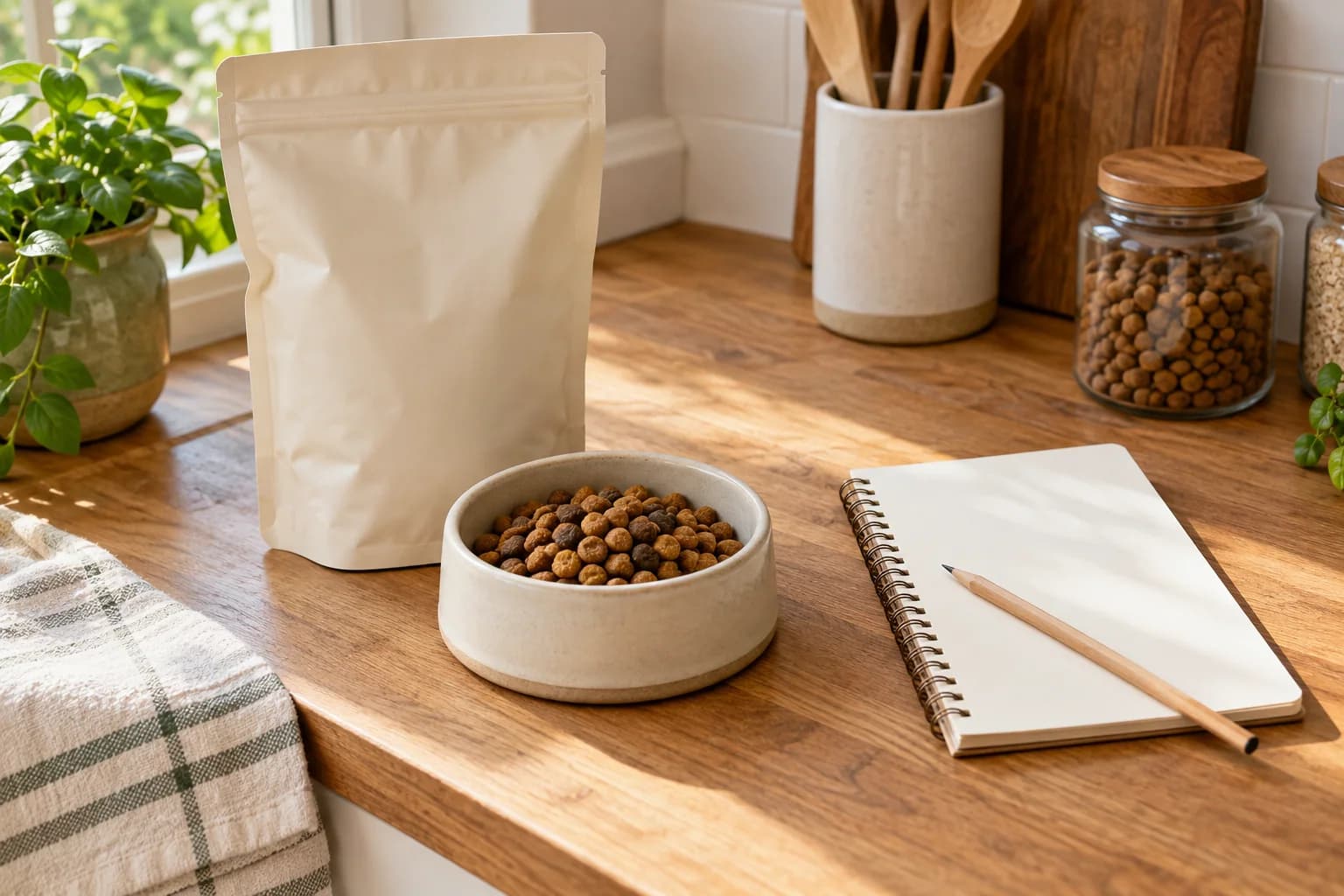
Offered
Record the actual food and any recent treats or changes.
Eaten
Distinguish the portion prepared from what was actually seen to be eaten.
Observed later
Describe the visible pieces without identifying an ingredient or digestive disorder from appearance.
The kitchen scene shows record keeping, not a recommended food, portion or feeding amount.
Establish whether somebody saw the passage. Material found on old waste has a different context from something noticed immediately afterward. If movement was seen, describe when and what moved. A still image cannot establish movement, and no movement does not settle identity.
A wide view plus one clear close view, if practical, can preserve the scene better than many highly cropped images. Do not handle or break apart waste to create a better photograph. Ask the clinic whether they want the material itself and how to collect it.
02 · UNDERSTAND THE QUESTION
Resemblance can point you toward the wrong explanation
Cornell describes tapeworm segments that can resemble rice grains and appear in stool, fur or bedding. That does not mean every grain-like piece is a parasite. It shows why the familiar name of a food should not become a diagnosis from a quick look.
Likewise, a pale fragment does not establish that it came from a chew, toy or bone. If you know something may have been swallowed, give the clinic that exposure history directly. Finding a piece later does not prove that all of an object has passed.
Separate what was witnessed from what was inferred: “saw the dog swallow…” versus “part of the toy is missing.” Both can matter, but they carry different certainty. Keep any packaging or a similar object available if the clinic asks for details.
Sources: [4] Cornell Riney Canine Health Center[2] Cornell Riney Canine Health Center
Observation first. Interpretation second.
These distinctions help you avoid filling gaps in the history with a guess.
| What is known | What is not established | Useful next step |
|---|---|---|
| Food-like pieces are visible | Their identity or the meal they came from | Describe shape, location, form and freshness. |
| Grain-like pieces on stool or bedding | Food versus other material | Ask the clinic about examination or a sample. |
| Part of an object is missing | Whether it was swallowed or has fully passed | Give the clinic the possible ingestion history promptly. |
| Pieces recur with other changes | Whether digestion or absorption is affected | Bring the repeated pattern, appetite and weight records. |
Sources: [4] Cornell Riney Canine Health Center[2] Cornell Riney Canine Health Center[1] Merck Veterinary Manual
03 · UNDERSTAND THE QUESTION
One visible piece does not measure digestion
Nutrient uptake cannot be read from a visible fragment. Merck describes IN PLAIN ENGLISHMalabsorptionFailure to take up nutrients properly from the digestive tract into the body.Eating food, breaking it down and absorbing its nutrients are separate steps.Merck Veterinary Manual Source checked as a problem involving digestion or IN PLAIN ENGLISHAbsorptionThe transfer of nutrients and fluid from the digestive tract into the body.An empty food bowl shows intake; it does not measure how much was absorbed.Merck Veterinary Manual Source checked and explains that the clinical pattern can include persistent diarrhea, weight loss or altered appetite. That broader pattern requires assessment rather than a visual tally of pieces.
Food offered, food eaten and material later observed are three different records. Keep them separate. A resemblance to breakfast is not a validated measure of transit time, and a photograph cannot assign every visible piece to a specific meal.
The useful question is whether the observation is isolated or part of a continuing change. Include dated weight records if available, a plain account of appetite and the stool’s overall form. These help the clinician understand more than the fragment alone.
Sources: [1] Merck Veterinary Manual
04 · UNDERSTAND THE QUESTION
Make a food history that survives a busy household
Use food names or photos of the packages instead of “the usual kibble.” Include treats, chews, table food and supplements already given. Ask other people who feed or walk the dog before assuming the list is complete.
Add approximate dates and amounts where known, and mark what is uncertain. If a food transition is underway, include the sequence rather than only the current food. Avoid starting several new products just to see whether the pieces disappear; that makes the account harder to interpret.
The original package can make the food and batch easier to identify. Keeping it available is an organizational step, not a treatment. Once the clinic has addressed the immediate concern, the storage guide can help make future food details easier to find.
MAKE THE CONVERSATION EASIER
Put the scene beside the food history
Ask about a sample before collecting one. Seeking care comes before completing these prompts.
- Material and scene
- Approximate size, shape, location and any witnessed movement.
- Freshness
- Observed passage or found later; known time versus an estimate.
- Feeding and exposure
- Actual foods eaten, extras and possible swallowed objects.
- Wider pattern
- Recurrence, overall stool form, appetite and dated weight records.
TAKE SOMETHING USEFUL WITH YOU
Prepare the scene and feeding history
Tick the preparation steps you have done. Save this guide to keep the checklist for your next visit.
0 of 3 preparation steps checked · Not a health or safety score
Saved only on this browser. No account or reminder is created. Clearing browser data removes the saved list.
THE NEXT QUESTIONS
What else might you be wondering?
Does visible food mean my dog cannot absorb nutrients?
A fragment is not a measurement of nutrient absorption. Veterinary assessment considers the wider pattern, including persistent changes and appetite or weight history. Describe what you saw without converting it into a diagnosis.
Sources: [1] Merck Veterinary Manual
Are rice-like pieces always worms?
No. Cornell explains that some tapeworm segments resemble rice, which is a reason to ask about identification rather than assume either food or parasites. The location and timing of the observation help the clinic decide how to examine it.
If a toy fragment comes out, is the problem over?
It does not prove that the entire object passed or that there is no obstruction. Tell the veterinarian what may have been swallowed and what appeared afterward. Keep the current symptoms in the account even if some stool or material was passed.
Should I add a supplement or change the food?
The visible pieces alone do not establish a need for either. Keep a clear list of current food and products, and ask for a plan suited to the actual pattern. Multiple new additions make it harder to interpret what changes afterward.
FOLLOW THE EVIDENCE
Sources & what they establish
These are veterinary references and public-health guidance. PetCheck’s comparisons, note prompts and fictional examples explain how to organize observations; they are not clinical studies or tested diagnostic tools.
Merck Veterinary Manual
Malabsorption Syndromes in Small Animals ↗
Digestion, nutrient uptake and the significance of weight and appetite changes.
Limit: Clinical patterns overlap and require assessment; appearance cannot measure nutrient absorption.
Cornell Riney Canine Health Center
Gastrointestinal foreign body obstruction in dogs ↗
Foreign-body obstruction, possible symptoms and veterinary assessment.
Limit: Stool output alone cannot rule an obstruction in or out.
Cornell University Hospital for Animals
Emergency and Critical Care ↗
Emergency signs including collapse, severe pain and difficulty urinating.
Limit: Examples of urgent signs, not an individual triage assessment.
Cornell Riney Canine Health Center
Tapeworms ↗
Rice-like segments can be found in stool, fur or bedding.
Limit: Resemblance is not identification; a veterinarian interprets the material and history.
Source review: . Independent veterinary review has not been completed.
FOR ANOTHER VISIT
Keep this guide close.
Save it to read again, or copy a link to share.
ONE QUESTION CAN LEAD TO ANOTHER
A useful next read.
Choose the question that fits what you want to understand next.
 AI-generated editorial scene
White specks
Compare the limits of identifying pale pieces and food-like material by sight.
Read the guide AI-generated editorial scene
Can changing dog food cause diarrhea?
When the food also changed, keep the feeding history beside your observation without assuming a cause.
Read the guideHave a photo to organize?
Use the photo flow to describe visible features. Bring the timing, behavior and other observations into the conversation too. Veterinary care comes first when your pet needs help.
Choose a photo →