DOG OBSERVATION · EXPLAINED
Why is my dog pooping more often?
Separate more stool from more attempts. Understand frequency, urgency, consistency and the details worth sharing with your veterinarian.
AI-assisted educational writing. Not independently veterinarian-reviewed. Editorial method
THE DIRECT ANSWER
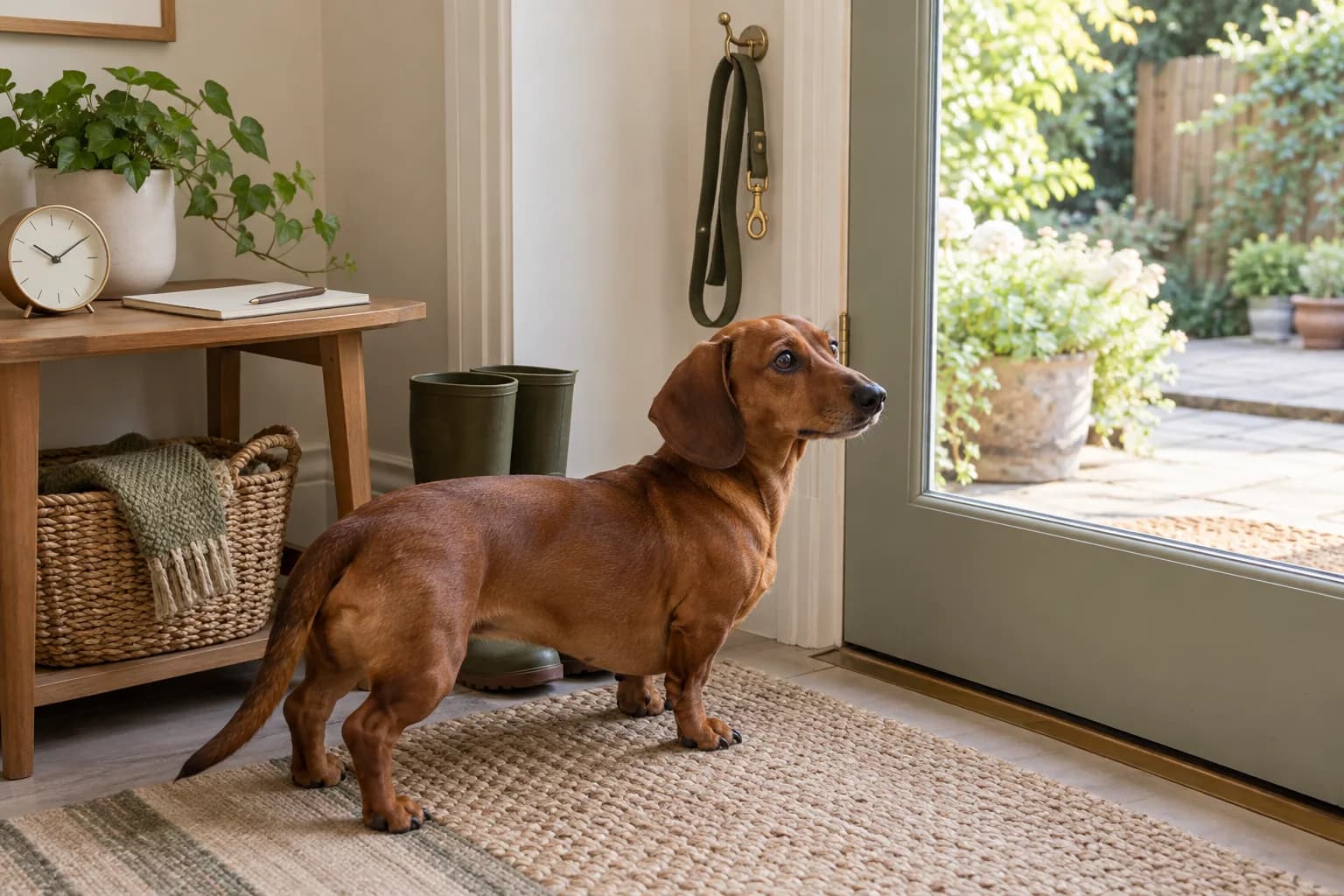
The direct answer
First separate extra bowel movements from repeated attempts that produce very little. Compare the amount and texture with your dog’s usual pattern, then add appetite, energy, vomiting and recent changes. A count becomes useful when you know what happened at each visit. A new, persistent or uncomfortable pattern deserves veterinary advice; a familiar stool color does not settle the question.
Sources: [1] Merck Veterinary Manual[2] Cornell Riney Canine Health Center
All sections, questions & sources
Dotted terms open a short explanation. Stay on the page as you read.
01 · UNDERSTAND THE QUESTION
Three meanings of “more often”
One owner means more full bowel movements. Another means repeated small amounts. A third means the dog keeps asking to go out, but nobody has watched what passes. Writing all three as “five poops” loses the distinction that could make the conversation useful.
PUT THE OBSERVATION IN CONTEXT
Six outings. Two observed stools.
Fictional record: outings 1, 3, 4 and 6 had no observed stool; outings 2 and 5 had an observed stool. The counts answer different questions.

Outings: 6
Count opportunities to observe, not assumed bowel movements.
Observed stools: 2
Record what actually passed at each observed event.
Attempts and gaps
Note effort separately. An unwatched period remains unknown.
These invented numbers explain record keeping. They are not a normal frequency range.
Use the same observation window when comparing days. Yesterday’s evening walk and today’s entire day are different samples of your dog’s routine. If a family member or walker saw another event, add their time and description. Leave an unwatched period marked unknown instead of treating it as zero.
There is also a difference between noticing a change and counting more carefully. If you have just started accompanying every toilet trip, explain that. Your record can show more observed events without proving that the underlying pattern has changed.
02 · UNDERSTAND THE QUESTION
Why small, urgent passages are useful information
The colon stores feces and helps manage water. Inflammation there can change storage and movement, producing urgency, frequent small passages, straining or IN PLAIN ENGLISHMucusA slippery secretion made by the bowel lining. Mucus-producing cells help protect and lubricate that surface.Describe a coating you noticed separately from the stool underneath it.MSD Veterinary Manual Source checked . Merck describes this cluster in large-bowel diarrhea. “More often” therefore does not necessarily mean a larger total amount.
This explanation gives you better questions to ask: was there a normal-sized passage, a little soft material, or effort with nothing seen? The resulting account helps a veterinarian assess the pattern; it cannot identify inflammation or its cause at home.
Use your dog’s ordinary bowel movement as the comparison for size. You do not need to weigh waste or invent a precise volume from a picture. “Much smaller than usual” plus a time is more honest than an unsupported measurement.
Sources: [1] Merck Veterinary Manual
Describe the pattern before naming a cause
Use these contrasts to make your description clearer. They are not diagnoses or safe waiting periods.
| What changed | Separate these details | Useful next step |
|---|---|---|
| Extra formed passages | Amount per passage and the period you actually watched | Compare with usual; note food and routine changes. |
| Repeated tiny or loose passages | Output, urgency and effort at each visit | Contact the clinic about a new or continuing pattern. |
| Repeated attempts with little seen | An attempt versus a completed bowel movement | Ask for prompt advice rather than counting attempts as stool. |
| The dog also seems unwell | Appetite, vomiting, weakness, pain or blood | Let these signs determine urgency with veterinary help. |
Sources: [1] Merck Veterinary Manual[2] Cornell Riney Canine Health Center
03 · UNDERSTAND THE QUESTION
Put food and routine changes on the same timeline
List what actually changed: meal portions, a new food, treats, a chew, scavenging, medication, travel or a different walking schedule. Include when it happened. A recent event is a possible lead to discuss, not proof of the cause.
Keep amounts concrete where you know them: the portion on the package, the number of chews offered, or a photograph of a new ingredient list. “The same scoop” is less clear if the food or the person filling it changed. If someone else fed the dog, ask rather than fill in the gap.
A rushed food transition can accompany diarrhea, but adding several new remedies creates another timeline to untangle. Ask the clinic what feeding plan fits this episode, particularly if the dog already eats a prescribed diet.
04 · UNDERSTAND THE QUESTION
Lead the conversation with the change that matters
Start with the contrast: “usually two formed passages on the walks; today several small loose passages and repeated urgency.” Then describe the rest of the dog. This gives the person answering the phone a usable picture before you discuss possible explanations.
Ask what would change the plan and when they want an update. If the clinic recommends observation, agree what to watch and how to get help if the pattern worsens. A monitoring plan should belong to this dog and this episode.
Keep one representative photograph if available. Sending many similar close-ups can crowd out the missing information about effort, output and behavior. Photos support the account; the sequence makes it understandable.
MAKE THE CONVERSATION EASIER
A short note for the clinic
Copy these headings into your own note if useful. Seeking care takes priority over completing it.
- Usual pattern
- Your normal observation window and typical output.
- Today’s sequence
- Times; what passed; effort or urgency; unwatched periods.
- The rest of the dog
- Appetite, activity, vomiting, discomfort and drinking changes.
- Recent changes
- Meals, extras, medicines, environment and who observed them.
TAKE SOMETHING USEFUL WITH YOU
Prepare a clearer account
Tick the preparation steps you have done. Save this guide to keep the checklist for your next visit.
0 of 3 preparation steps checked · Not a health or safety score
Saved only on this browser. No account or reminder is created. Clearing browser data removes the saved list.
THE NEXT QUESTIONS
What else might you be wondering?
Is there one normal number of bowel movements?
A single number would hide the differences this guide is trying to preserve. Start with your dog’s usual routine and compare similar periods. More full, formed passages and repeated painful attempts need different descriptions. If a new pattern persists or worries you, ask the veterinarian how to interpret it for your dog.
Can brown stool still be diarrhea?
Color and consistency describe different features. Say whether the material holds its shape, is loose or spreads like liquid, and add the amount and frequency. A familiar brown shade does not cancel a change in those other features. The loose-stool guide below explains that distinction in more detail.
Does the timing prove a new food caused it?
Timing makes the food change worth mentioning. It does not isolate it from a new chew, something eaten outdoors or another event. Write down the changes in order and discuss the feeding plan with your veterinarian instead of making several additional changes to test a theory.
Should I wait until I have a complete diary?
No. Give the clinic the observations you have now and identify what you do not know. A useful call can begin with one sentence about the change and the dog’s current condition. The note is a communication aid, not a requirement before asking for help.
FOLLOW THE EVIDENCE
Sources & what they establish
These are veterinary references and public-health guidance. PetCheck’s comparisons, note prompts and fictional examples explain how to organize observations; they are not clinical studies or tested diagnostic tools.
Merck Veterinary Manual
Colitis in Small Animals ↗
Large-bowel function and clinical signs.
Limit: Overlapping signs cannot identify a cause.
Cornell Riney Canine Health Center
Diarrhea in dogs ↗
The importance of appetite, activity, vomiting, stool appearance and persistence.
Limit: General education cannot set an individual safe waiting period.
Cornell University Hospital for Animals
Emergency and Critical Care ↗
Emergency signs including collapse, severe pain and difficulty urinating.
Limit: Examples of urgent signs, not an individual triage assessment.
Source review: . Independent veterinary review has not been completed.
FOR ANOTHER VISIT
Keep this guide close.
Save it to read again, or copy a link to share.
ONE QUESTION CAN LEAD TO ANOTHER
A useful next read.
Choose the question that fits what you want to understand next.
 AI-generated editorial scene
Loose or watery stool
Add consistency and amount to the count of bowel movements.
Read the guide AI-generated editorial scene
A sudden change
Place the change in frequency beside what you actually know about the recent routine.
Read the guideHave a photo to organize?
Use the photo flow to describe visible features. Bring the timing, behavior and other observations into the conversation too. Veterinary care comes first when your pet needs help.
Choose a photo →