DOG OBSERVATION · EXPLAINED
My dog has not pooped in 24 hours. What should I check?
A missed stool, repeated unsuccessful straining and possible obstruction are different situations. Learn what to tell your vet and when to seek help.
AI-assisted educational writing. Not independently veterinarian-reviewed. Editorial method
THE DIRECT ANSWER
The direct answer
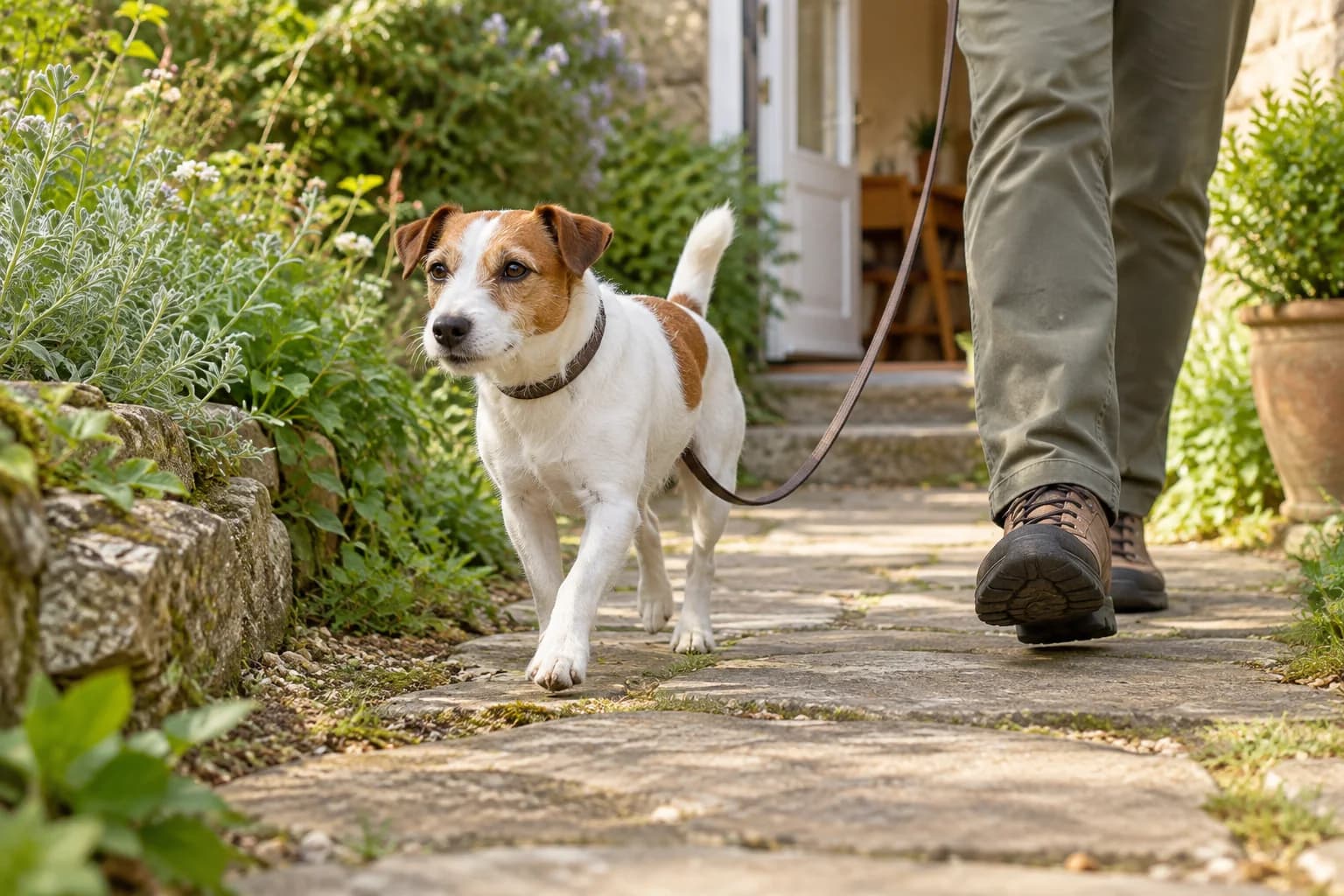
A day without an observed stool is a reason to check the circumstances and contact your veterinarian for advice, especially if it is unusual for your dog. The first distinction is a quiet gap versus repeated effort with little or no output. Pain, vomiting, poor appetite, weakness or a possible swallowed object changes the concern. Do not use a fixed countdown to decide that those signs can wait.
Sources: [1] Merck Veterinary Manual[2] Cornell Riney Canine Health Center
All sections, questions & sources
Dotted terms open a short explanation. Stay on the page as you read.
01 · UNDERSTAND THE QUESTION
Start with the last stool someone actually saw
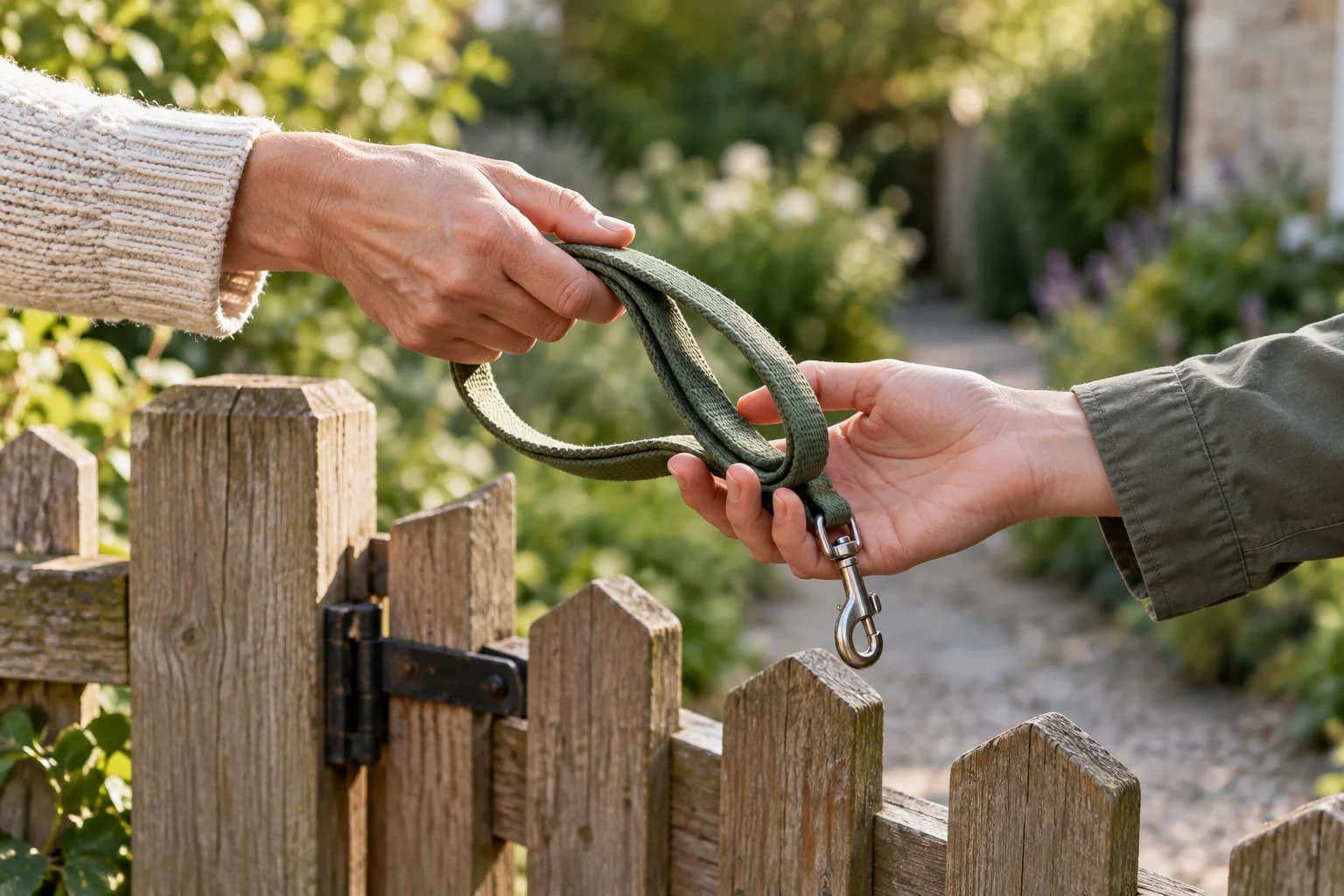
“No stool since yesterday” can mean a continuously observed gap, an unsupervised garden visit, or a household in which someone else did the morning walk. These are different levels of certainty. Ask who saw the last completed bowel movement and roughly when.
PUT THE OBSERVATION IN CONTEXT
A gap in the record is not always a gap in output.
A household handoff can reveal what someone saw and what nobody watched.
Last observed stool
Write the last passage that someone actually saw, with an approximate time if needed.
Unwatched time
Mark an unsupervised period as unknown instead of assuming zero output.
Current effort
Describe repeated attempts and any output seen now. Keep the dog's condition in the account.
This is an observation handoff, not advice to wait for a fixed number of hours.
Then describe that stool and the effort involved. Was passage comfortable? Was it unusually small, dry or hard-looking? If you only found waste later, record when you found it and keep the time of passage uncertain. An estimate presented as a fact can make the interval look longer or shorter than it is.
Mention recent changes in eating, walks, travel, medication or surgery. Those details help frame the question. They should not become a reason to dismiss an uncomfortable dog.
02 · UNDERSTAND THE QUESTION
What constipation means beyond the clock
IN PLAIN ENGLISHConstipationPassing stool less often or with difficulty, with feces retained in the colon or rectum.An unwitnessed bowel movement and difficulty passing stool are different observations.MSD Veterinary Manual Source checked involves infrequent or difficult passage, often of dry, hard feces. Material retained in the colon can lose more water and become harder to pass. Merck describes diagnosis using the history and evidence of retained feces on examination or imaging.
That is why elapsed time, stool appearance and effort belong together. A photo taken yesterday cannot show what is retained inside today. Equally, a longer interval alone does not tell you whether stool is present and difficult to pass.
Keep the everyday words first: “tried repeatedly,” “nothing seen,” “small hard pieces,” or “last passage seemed comfortable.” A veterinarian can translate the history into a clinical assessment. You do not need to choose a medical label before calling.
Sources: [1] Merck Veterinary Manual
A gap and a failed attempt are different observations
These descriptions help explain the situation when you contact the clinic.
| Situation | What to establish | How to use it |
|---|---|---|
| No stool witnessed | Last confirmed passage; any unobserved outings | Explain the gap and the limits of your observation. |
| Repeated effort, little output | What actually passed; discomfort during attempts | Request prompt advice about the difficulty. |
| Vomiting, pain or a missing object | Symptoms and possible ingestion timeline | Seek urgent veterinary guidance; do not test with a remedy. |
| Stool or urine is unclear | Which output you actually saw | Tell the clinic about the uncertainty immediately. |
Sources: [1] Merck Veterinary Manual[2] Cornell Riney Canine Health Center
03 · UNDERSTAND THE QUESTION
Could passing some stool still leave a concern?
Yes. Cornell lists diarrhea among possible signs of foreign-body obstruction, alongside vomiting, poor appetite, pain and lethargy. The amount coming out is therefore not a reliable home test for whether the digestive tract is clear. Assessment may require examination and abdominal imaging.
If a toy, sock, bone or another item may have been swallowed, tell the clinic what is missing and when it was last seen. Include whether you witnessed swallowing or only noticed the missing object. Keep packaging or a similar object available if the clinic asks about size or material.
A reassuring-looking bowel movement does not erase that exposure history. Ask for advice about the suspected ingestion rather than waiting to see whether the next stool contains the item.
04 · UNDERSTAND THE QUESTION
Choose a plan with the clinic before trying a remedy
A home remedy chosen only from the word “constipation” skips the assessment of what is causing the difficulty. Discuss food changes, laxatives, enemas or other products with your veterinarian before using them. Existing prescriptions also belong in the conversation; do not change them on the basis of this guide.
If the clinic advises observation, ask for a clear next contact point and the signs that should bring it forward. Write that plan beside the observations, with the time of the call. Different household members can then follow the same advice.
You can make the handoff easier by saying what you know, what remains uncertain and what worries you most. The purpose of the note is to speed up that discussion, not to postpone it until another day has passed.
MAKE THE CONVERSATION EASIER
Give the clinic a usable timeline
A short account is enough to start the conversation.
- Last confirmed passage
- Time, witness, appearance and whether passage looked comfortable.
- Attempts since then
- What came out, if anything; uncertainty about stool versus urine.
- Current condition
- Appetite, vomiting, pain, energy and any rapid change.
- Relevant history
- Possible ingestion, medicines, surgery and previous episodes.
TAKE SOMETHING USEFUL WITH YOU
Prepare the conversation
Tick the preparation steps you have done. Save this guide to keep the checklist for your next visit.
0 of 3 preparation steps checked · Not a health or safety score
Saved only on this browser. No account or reminder is created. Clearing browser data removes the saved list.
THE NEXT QUESTIONS
What else might you be wondering?
Does 24 hours automatically mean constipation?
No. It describes elapsed time since an observed event. Your veterinarian also considers difficulty passing stool and whether feces are retained. Confirm what was actually seen, include any gaps in observation, and ask for advice if the interval is unusual. Symptoms matter even before a full day has passed.
Sources: [1] Merck Veterinary Manual
Can I wait for 48 hours if the dog is straining?
Do not use a longer countdown to override repeated unsuccessful effort or discomfort. Contact the clinic promptly and describe the attempts. A generic time rule cannot account for possible ingestion, other illness or uncertainty about urination.
Does one small stool prove there is no blockage?
No. Some output does not establish that everything is moving normally. Keep the current signs and possible ingestion history in the account. If an object may have been swallowed, veterinary assessment addresses a different question from whether any stool has passed.
Should I send a photo even if there is no stool?
Explain the event in words first: what the dog tried to do, what output you saw and how the dog is acting. An empty patch of ground adds little. The clinic can tell you whether a brief recording of the behavior or a later sample would be useful.
FOLLOW THE EVIDENCE
Sources & what they establish
These are veterinary references and public-health guidance. PetCheck’s comparisons, note prompts and fictional examples explain how to organize observations; they are not clinical studies or tested diagnostic tools.
Merck Veterinary Manual
Constipation, Obstipation, and Megacolon in Small Animals ↗
Retained stool, difficult passage and the role of examination in assessing constipation.
Limit: A clock or photograph cannot establish retained stool or select a treatment.
Cornell Riney Canine Health Center
Gastrointestinal foreign body obstruction in dogs ↗
Foreign-body obstruction, possible symptoms and veterinary assessment.
Limit: Stool output alone cannot rule an obstruction in or out.
Cornell University Hospital for Animals
Emergency and Critical Care ↗
Emergency signs including collapse, severe pain and difficulty urinating.
Limit: Examples of urgent signs, not an individual triage assessment.
Source review: . Independent veterinary review has not been completed.
FOR ANOTHER VISIT
Keep this guide close.
Save it to read again, or copy a link to share.
ONE QUESTION CAN LEAD TO ANOTHER
A useful next read.
Choose the question that fits what you want to understand next.
 AI-generated editorial scene
Hard, dry stool
If stool was eventually passed, separate its texture from the earlier gap in observation.
Read the guide AI-generated editorial scene
A sudden change
Build a clearer sequence of observed events without filling unknown intervals with guesses.
Read the guideHave a photo to organize?
Use the photo flow to describe visible features. Bring the timing, behavior and other observations into the conversation too. Veterinary care comes first when your pet needs help.
Choose a photo →