Food & home
How should you store dry pet food?
Original packaging, sensible storage and a usable lot number come before a new container.
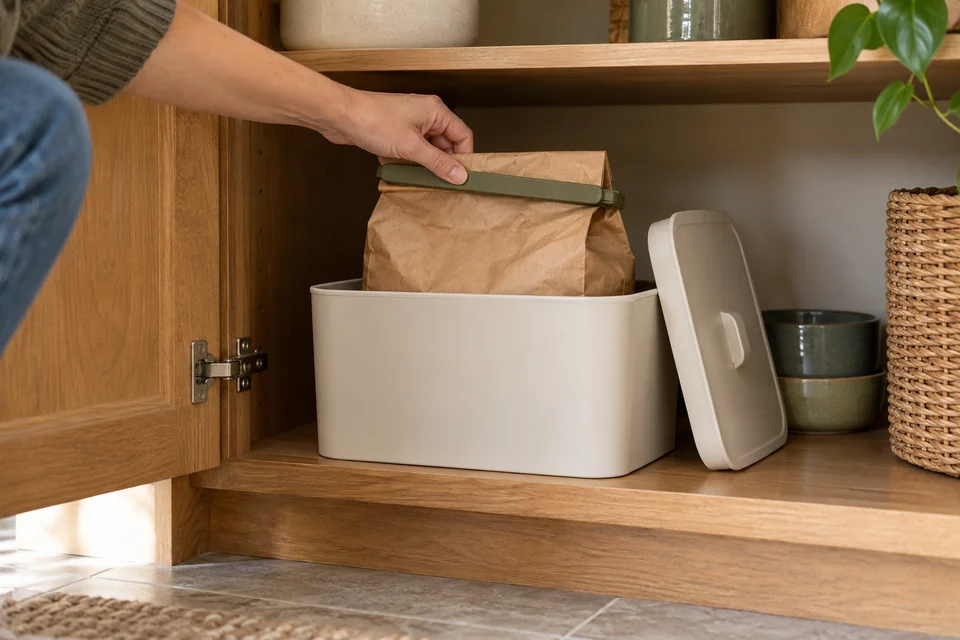
THE DIRECT ANSWER
Keep dry pet food in its original bag, close the top and store it in a cool, dry place. If you use an outer container, FDA recommends putting the whole bag inside it. Retain the product and batch details, keep food out of pets’ reach, and clean and dry the container between bags. A storage bin adds handling convenience; it does not extend shelf life by a guaranteed number of days.
Sources: FDA: storing pet food and treats · FDA: safe handling of pet food
The bag connects this meal to a particular batch
The brand name identifies a product line; the lot number identifies a production batch. FDA asks owners to retain the product name, manufacturer, UPC, lot number and best-by date. These details can help connect a complaint or recall to the food actually being fed.
A useful backup photo shows the identifiers clearly and stays associated with the current bag. A close-up of the front design alone may miss the small lot code printed elsewhere. Replace the backup when the bag changes; an old label can be as confusing as no label.
Our practical rule is one current bag, one matching record. This is about traceability: being able to work backward from today’s meal to the package it came from. It does not establish that the food is safe or that it caused a symptom.
Sources: FDA: storing pet food and treats
The bag goes inside. The details stay with it.
- Keep the original bag and its batch details.
- Check the opening, filled bag and lid clearance.
- Clean and fully dry the bin between bags.
Bag in a bin: solve fit before buying capacity
FDA prefers keeping the original bag inside an outer container. If decanting is necessary, it advises using a clean, dry container with a closely fitting lid and saving the package identifiers. Cleaning and drying between bags removes the old fat and crumbs left on the surfaces.
A “25 lb” capacity claim does not describe the dimensions of your filled bag. A bag can be wide, rigid at the seams or tall when folded. The opening may also be narrower than the container body. Those are fit questions you can answer before checkout.
Measure the bag as you will actually store it, including the folded top. Then check the inner opening, internal space and room for the lid to move. A bin that fits only when the bag is emptied into it does not support a bag-in-bin routine.
| Arrangement | What to check | What it does not solve |
|---|---|---|
| Original bag, folded closed | Stable, cool, dry placement and secure access. | A folded bag alone may not keep a determined pet out. |
| Original bag inside an outer bin | Bag shape, opening width and lid clearance. | The bin cannot compensate for a hot or damp location. |
| Food poured into a bin | Matching label information; cleaning and complete drying between batches. | A new container does not reset the food’s age. |
| Old and new bags combined | Whether the contents can still be traced to a batch. | A label from only the newest bag cannot describe the whole mixture. |
Sources: FDA: storing pet food and treats
Make the next refill easier.
Three choices. A storage routine you can use again when the next bag arrives.
Preparing your planner… · No account neededAdvice becomes easier when it fits your day.
Choose an answer in each group. You’ll get a practical sequence and a clear “keep or compare” next step.
Use again when you open a new bag.
Choices follow you between these guides in this tab. Unsaved choices reset on reload. Only kept for later when you choose Save. Find saved routines in My saved guides on this browser; no account sync or reminders. Clearing browser data removes saved routines.
Choose the location, then organize the refill
FDA’s dry-food guidance specifies a temperature below 80°F, about 27°C, in a dry location. That is a storage recommendation, not a sharp border at which every food instantly becomes unsafe. Follow any more specific instructions on the product.
For your own space, consider the warmest part of the day rather than only how the cupboard feels in the morning. Sunlight through a window, nearby cooking and damp utility areas can make an apparently convenient spot a poor choice.
A useful refill sequence is: finish the current bag; remove it; wash and fully dry the container as directed; add the next bag; update the identifying information. Do not rush the drying step merely to clear the kitchen counter. FDA also recommends a dedicated clean scoop rather than using the feeding bowl to collect food.
Sources: FDA: storing pet food and treats · FDA: safe handling of pet food
When the food itself looks wrong
FDA lists problems such as an abnormal odor, damaged or leaking packaging, foreign material, or illness after eating. Stop feeding a suspect product and seek appropriate veterinary advice. Retain the details needed to report the concern to the manufacturer and FDA.
Do not mix questionable food into a fresh bag, disguise an odor with a topper, or assume a new container has fixed the problem. Changing the storage vessel changes the vessel; it does not show what happened to the contents.
A report is stronger when it separates the observation from the conclusion. “An unusual smell when this bag was opened” is something you can describe. “This brand poisoned my dog” asserts a cause that an observation alone does not establish.
Sources: FDA: storing pet food and treats
A small storage audit before you spend
Open the storage area and rehearse one normal serving. Can you read the current label, open the lid without moving heavy objects, reach the food with a clean scoop and close everything securely? Then rehearse the empty-container wash. Daily access and occasional cleaning both matter.
Our purchase rule is to name the problem first: bag falling over, pet access, difficult lifting or poor cleaning access. Compare designs against that problem. An impressive seal claim is not a substitute for dimensions you can check or surfaces you can reach.
If the arrangement already works, a new bin is optional. The next guide compares everyday handling tradeoffs and presents an identified product example, without claiming a freshness extension or hands-on test.
- Keep the current batch information readable.
- Check the actual bag and lid clearance.
- Choose a consistently cool, dry location.
- Allow time to clean and fully dry between bags.
THE NEXT QUESTIONS
What else might you be wondering?
How many weeks is dry food good after opening?
There is no single interval established by the FDA pages used here for every product and storage condition. Follow the manufacturer’s instructions for that food. A bin advertisement should not replace them.
Sources: FDA: storing pet food and treats
Can I throw away the bag after taking a photo?
Keeping the bag is FDA’s preferred approach. If you need to decant, preserve all identifying information and ensure it matches the contents. A front-of-bag photo may not include the lot or best-by code.
Sources: FDA: storing pet food and treats
Does a larger container always make sense?
No. Check the filled bag, opening and cleaning access. Extra capacity that creates difficult lifting or inaccessible corners may make your routine less convenient, even if the bag technically fits.
LOOK CLOSER AT THE EVIDENCE
Sources & what they establish
Official guidance, research findings and PetCheck’s practical interpretations have different roles. These notes explain how the sources were used.
Official storage guidance
FDA: retain the bag and batch details
FDA addresses packaging, container cleaning, temperature, secure access and reporting problems.
Limit: It does not establish one universal number of safe days after opening or certify an accessory.
Sources: FDA: storing pet food and treats
Official handling guidance
FDA: the serving routine matters too
The handling guide covers clean hands, dedicated utensils, closing the bag and a suitable location.
Limit: Good handling lowers avoidable risk; it cannot make a defective food safe.
Sources: FDA: safe handling of pet food
Sources checked 2026-09-21. Examples are fictional and illustrate reasoning, not patient outcomes. This is an editorial source review, not independent veterinary review. How we prepare these guides →
Preparation checklist Optional · separate from your routine
TAKE SOMETHING USEFUL WITH YOU
Make your next refill easier
Tick the preparation steps you have done. Save this guide to keep the checklist for your next visit.
0 of 3 preparation steps checked · Not a health or safety score
Saved only on this browser. No account or reminder is created. Clearing browser data removes the saved list.
PUT THIS GUIDE TO USE
Make the next refill easier.
Turn the bag, label and cleaning checks into a storage routine you can keep on this browser. Start with the supplies you already have.
Build my storage routineKeep the guide for another visit, too.
ONE QUESTION CAN LEAD TO ANOTHER
A useful next read.
Choose the question that fits what you want to understand next.
 AI-generated editorial scene
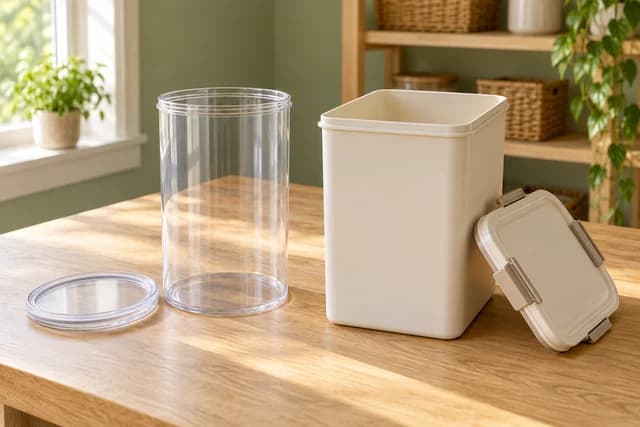
Pet food storage containers: compare bag fit & access
Use your bag size and available space to compare containers. Keeping a suitable container is an option.
Explore the buying guide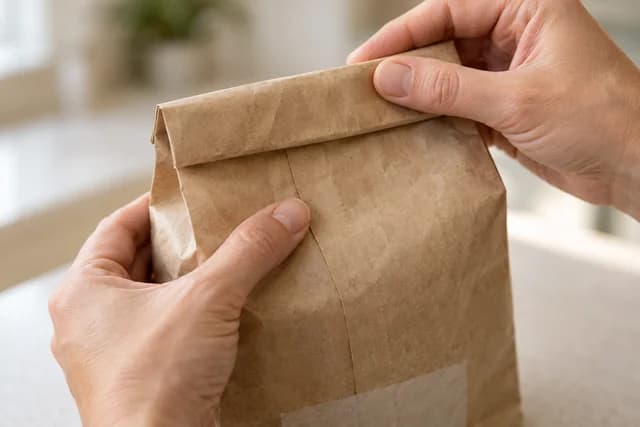 AI-generated editorial scene
Should dog food stay in its original bag?
Work through bag fit and batch-label details before your next refill.
Read the guide